Supreme Court agrees to hear plea against CEC Gyanesh Kumar’s functioning, SIR - The Indian Express
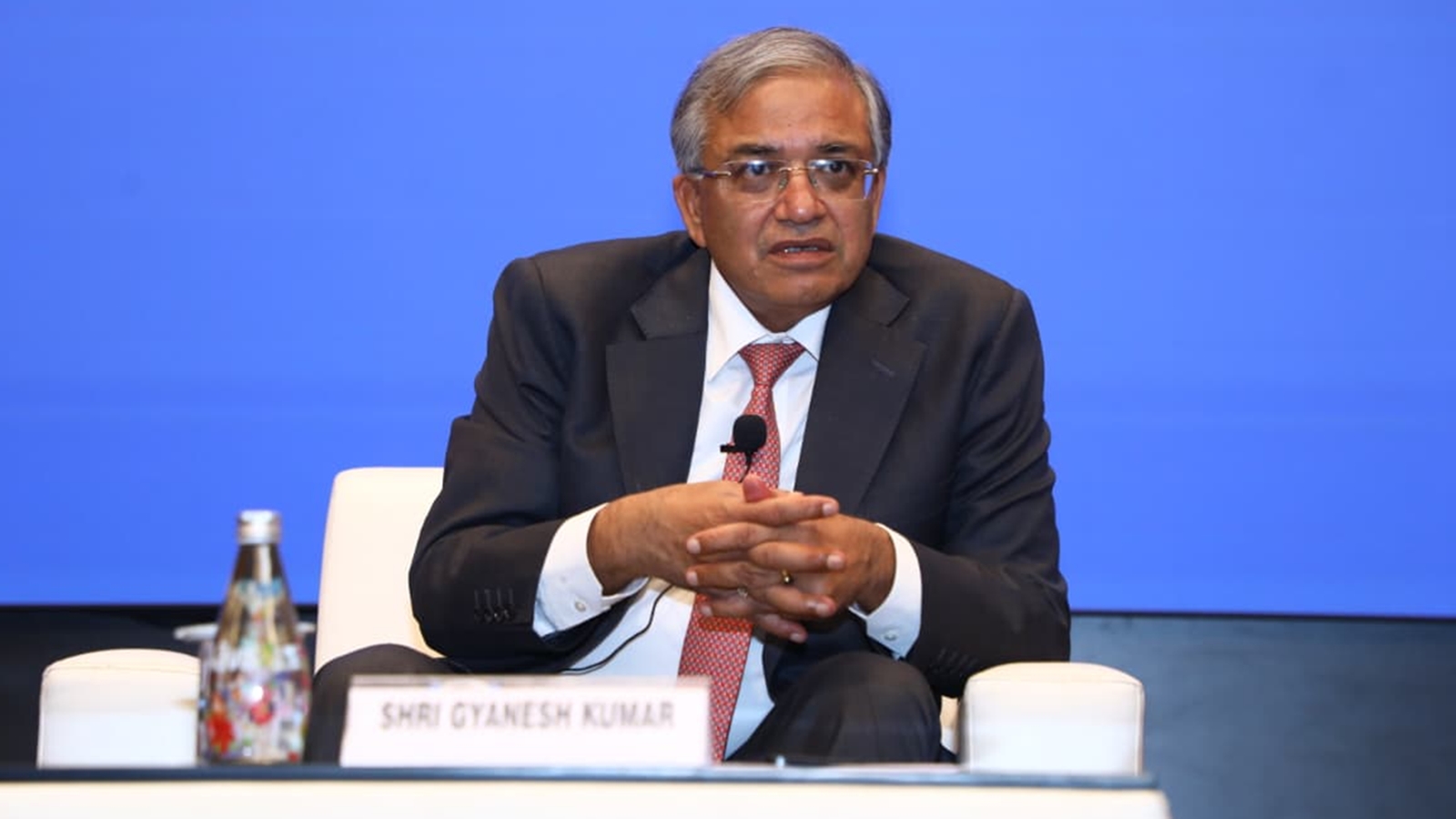
The Supreme Court Tuesday agreed to take up next week a petition questioning the functioning of Chief Election Commissioner Gyanesh Kumar and seeking to declare the nationwide Special Intensive Revision (SIR) of electoral rolls illegal.
The petition comes days after The Indian Express reported that Election Commissioners Sukhbir Singh Sandhu and Vivek Joshi had recorded objections at least 14 times over the past 10 months to decisions and orders concerning the SIR of electoral rolls. The two commissioners said some of the decisions were taken without their knowledge or recommendation.
The Election Commission, however, said the letters sent by Sandhu and Joshi to the Cabinet Secretary concerned an officer on deputation and were not related to policy or IT division matters.
Senior Advocate Vikas Singh, appearing for petitioner Rakesh Kumar Singh, urged a three-judge bench presided over by Chief Justice of India Surya Kant to hear the matter early.
“The purpose of having a multi-member Commission was that, and the statute says so, that it has to be a decision unanimously or by majority. Now, the way the Election Commission has functioned, there is serious doubt about whether the decision of the Election Commission also was there for this entire exercise of SIR,” Singh said.
“Because if the Commission has not taken a unanimous decision, then this… And what Your Lordship also has decided (is) on the basis that it is a Commission’s decision. So it is a serious issue. I am only requesting an early date for listing,” he added.
The CJI then directed that it be listed next week.
The petition referred to alleged differences between CEC Kumar and Sandhu and Joshi, and the objections they raised.
“Article 324(1) of the Constitution does not vest the superintendence, direction and control of elections in an individual Chief Election Commissioner. It vests those powers in a Commission,” said the plea.
Singh pointed out that Article 324(2) provides that the Election Commission comprises the Chief Election Commissioner and such number of other Election Commissioners as the President may determine from time to time. Article 324(3) further stipulates that, when other Election Commissioners are appointed, the Chief Election Commissioner shall serve as the Commission’s Chairman.
“The constitutional text therefore deliberately separates membership of the Commission from the chairmanship of the Commission, and separates the chairmanship of the Commission from the Commission’s power.”
He said his grievance is not that Kumar exercised the CEC’s powers improperly, “but that he has… held out as entitled to exercise a power, the collective decision-making authority of the Commission under Article 324 and Section 18 of the 2023 Act [Chief Election Commissioner and Other Election Commissioners Act], to which Article 324(3) gives him no individual title, he being Chairman of the Commission and not the Commission itself.”
The plea urged the court to issue a quo warranto writ “calling upon” Kumar “to show under what authority he has acted, and continues to act, as though entitled individually to exercise the collective decision-making power vested by Article 324 of the Constitution in the Election Commission as a body, notwithstanding that Article 324(3) constitutes him only Chairman of the Commission and vests in him no individual title to the Commission’s collective authority”.
It requested the court to seek the “complete original and primary records relating to the matters” from the Commission “and enforce the constitutional and statutory principle that a power vested by Article 324 in the Election Commission as a constitutional body cannot be exercised, or represented to the public, the courts or the country as an act of the Commission, except in accordance with the constitutional and statutory framework governing the Commission, including Section 18 of the Chief Election Commissioner and Other Election Commissioners (Appointment, Conditions of Service and Term of Office) Act, 2023.”
“If the power constitutionally vested in the Election Commission as a multi-member body can, in fact or in substance, be exercised by one office within it without the participation the Constitution and the 2023 Act require, then decisions that determine who is on the electoral roll, and therefore who may vote, raise a serious constitutional question as to whether such decisions are being taken by the constitutional authority the Constitution created for that purpose.”
The plea also said that if “upon examination of the primary record and other material” produced before the court, “it is found that” he has “exercised, or continues to exercise, such collective authority without a decision of the Commission taken in accordance with Section 18 of the 2023 Act,” such exercise of authority must be declared “to be without lawful title”.
It also sought a declaration that “ the powers vested under Article 324 of the Constitution re constitutionally required to be exercised by the Election Commission of India as a multi-member collegial body, in accordance with Article 324(1) to (3) of the Constitution and Section 18 of the 2023 Act, and that no communication, order, direction, appeal or other act may be issued or represented as an act of the Election Commission save pursuant to a decision of the Commission taken unanimously or, upon disagreement, by majority, in the manner prescribed by Section 18 of the 2023 Act”.
The petitioner also asked the court to declare the Special Intensive Revision (SIR), and all actions, decisions, directions, and measures taken under it, invalid from the very beginning and without legal authority. The petitioner argued that the SIR was undertaken without the necessary statutory or constitutional authority and without following the procedure required by law.
He further asked the court to declare that any addition, removal, deletion, restoration, or modification of names in the electoral rolls carried out solely as part of the SIR would have no legal effect. However, this would not prevent or invalidate any changes to the electoral rolls that are otherwise lawfully made under the Constitution, the Representation of the People Act, 1950, and the Registration of Electors Rules, 1960.
Ananthakrishnan G. is a Senior Assistant Editor with The Indian Express. He has been in the field for over 26 years, kicking off his journalism career as a freelancer in the late nineties with bylines in The Hindu. A graduate in law, he practised in the District judiciary in Kerala for about two years before switching to journalism. His first permanent assignment was with The Press Trust of India in Delhi where he was assigned to cover the lower courts and various commissions of inquiry. He reported from the Delhi High Court and the Supreme Court of India during his first stint with The Indian Express in 2005-2006. Currently, in his second stint with the daily newspaper, he reports from the Supreme Court and writes on topics related to law and the administration of justice. Legal reporting is his forte though he has extensive experience in political and community reporting too, having spent a decade as Kerala state correspondent, The Times of India and The Telegraph. He is a stickler for facts and has several impactful stories to his credit. ... Read More