Stelco layoffs raise legal questions over job pledges in Cleveland-Cliffs takeover - Toronto Star
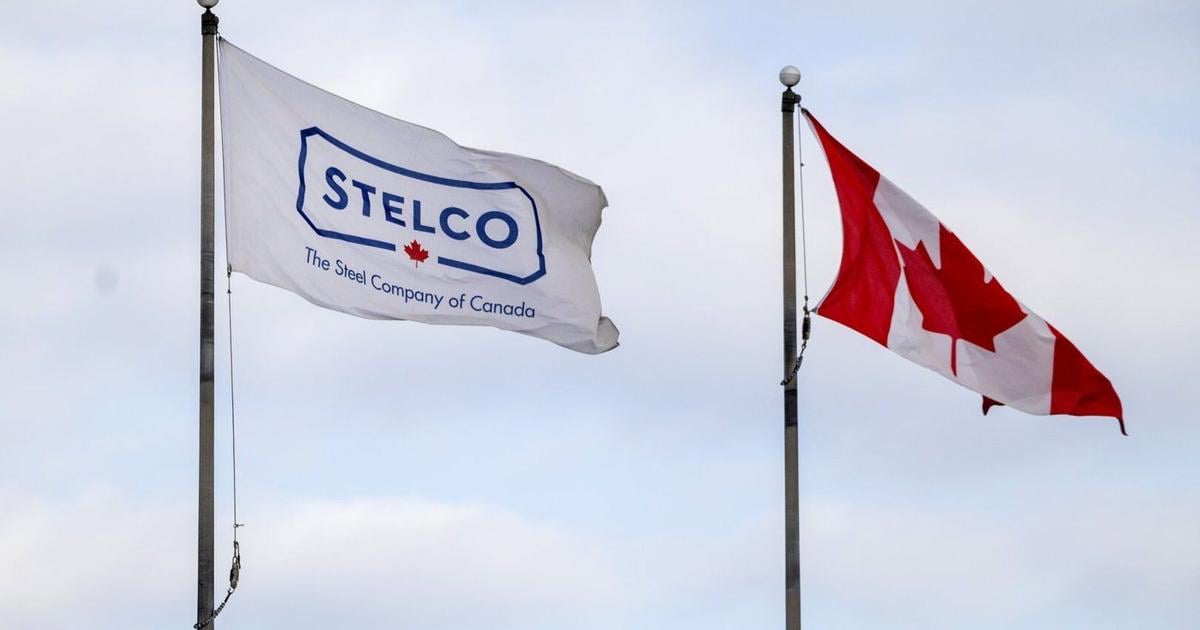
A Stelco flag flies beside a Canadian flag at the steel production facility in Hamilton, Ont., on Monday, February 10, 2025. THE CANADIAN PRESS/Nick Iwanyshyn
Job promises made by Stelco Holdings Inc.‘s American parent company when it acquired the beleaguered steel maker are legally binding — but whether this week’s layoffs violate them depends on terms that have not been made public, according to legal and policy experts.
Cleveland-Cliffs’ takeover of Stelco was approved in 2024 contingent on a number of mandatory, five-year commitments, including maintaining at least the same number of unionized workers and most non-unionized employees as when the deal was announced.
Business lawyer Nassira El Hadri said Wednesday the company’s plan to cut up to 500 workers at its Hamilton and Lake Erie facilities in Ontario could prompt legal action.
If Cleveland-Cliffs has failed to meet its 2024 commitments, she said the industry minister could first issue a formal demand requiring the company to fix or justify the non-compliance.
If that does not resolve the issue, El Hadri said Ottawa could go to superior court where a judge could order the company to comply, impose penalties or even order a sale of the business.
The federal government’s options — and how successful any enforcement action might be — depend on the exact wording of the undertakings agreed to, she said.
“The actual agreement that the federal government made with Cleveland-Cliffs is not public, it’s confidential and privileged,” said El Hadri, founder of Hadri Law in Toronto.
“We only have a summary of those undertakings,” she said. “We don’t know exactly what it was committed to.”
Industry Minister Mélanie Joly said in an interview on Wednesday that the government is evaluating all of its options. She said “everything is on the table because there were clear commitments that were made under the Investment Canada Act” but the company has not abided by them.
However, the investment act does have a loophole of sorts for non-compliance.
It says where the inability to fulfil a commitment is “clearly the result of factors beyond the control of the investor,” they won’t be held accountable.
“The key word, in my opinion here, is ‘clearly,’” El Hadri said. “From a deal perspective, this is why the wording matters so much when these commitments are negotiated.”
Joly also said the federal government has put “a lot of support on the table for the company to prevent these job losses.”
“I had a personal conversation with the CEO of Stelco to offer that, and notwithstanding, he decided to turn down the option and turn down the support.”
When pressed on what the government is doing to address some of the pressure in the steel industry, Joly pointed to commitments by the federal government to use Canadian steel and aluminum in national defence projects.
Drew Fagan, professor at the University of Toronto’s Munk School of Global Affairs and Public Policy, said the company could argue that the escalating trade war and tariffs on steel are circumstances beyond its control.
“There’s a nature of force majeure about this,” he said. “They could argue that the tariffs were unforeseeable.”
However, Fagan said he suspects Stelco’s parent company may be caught up in the broader “politicization” of cross-border trade.
The Stelco decision illustrates how trade policy has become politicized again, he said, leaving companies to make production and investment choices in an environment shaped as much by trade and industrial policy as by ordinary market economics.
“After 40 years of the depoliticization of the border, we are now in the depths of a repoliticization of the border,” he said.
“It is the goal of the (U.S.) administration in important areas of manufacturing to press for and to use tariffs to remove production from Canada and relocate it in the United States.”
Stelco called the layoffs this week “unfortunate but necessary” to ensure its survival, noting U.S. tariffs have significantly shrunk the market for its cold-rolled and galvanized products.
Prime Minister Mark Carney expressed his disappointment at a news conference Tuesday regarding the move by Stelco, saying workers have been “betrayed by the company.”
“There’s money on the table from the federal government ... and the company made representations and has legal obligations for employment. We intend to use all powers that we have and pursue them to the fullest extent of the law,” he said.
Last year, Ottawa and the Ontario government stepped in to provide loan assistance to Algoma Steel Group Inc. to help reorient its business amid U.S. tariffs.
“This situation is caused by the U.S. tariffs and the ultimate owner of Stelco, the CEO of Cleveland-Cliffs, applauded (U.S. President Donald Trump) for putting those tariffs on,” Carney said.
This report by The Canadian Press was first published Sept. 30, 2026.
–With files from Kelly Geraldine Malone in Cocoa Beach, Fla.