Squats, push-ups and strength training: Why women may need to exercise differently from men - CNA Lifestyle
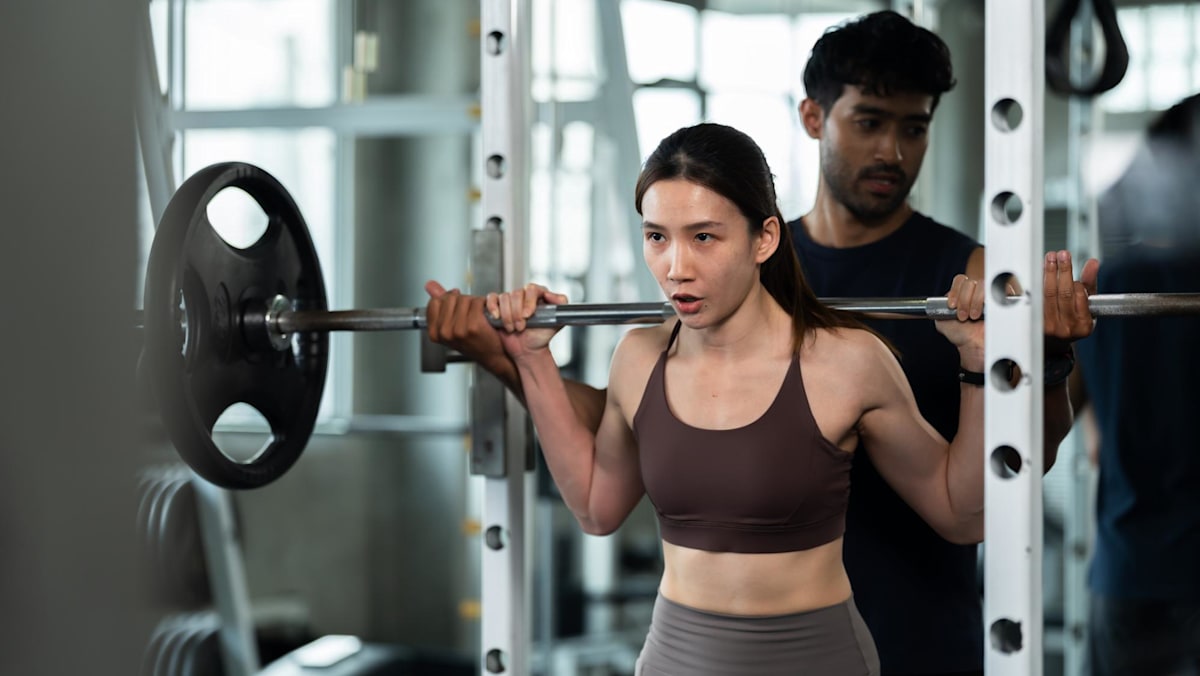
Women’s muscle fibres, joints and anatomy can affect the way they exercise, from doing squats to struggling with push-ups and even their risk of injury. Experts explain what women should know – and the tweaks that could make workouts safer and more effective.
This audio is generated by an AI tool.
Khoo Bee Khim 18 Sep 2026 07:17AM Bookmark Bookmark Share WhatsApp Telegram Facebook Twitter Email LinkedIn Set CNA as your preferred source on Google Add CNA as a trusted source to help Google better understand and surface our content in search results. Read a summary of this article on FAST. Get bite-sized news via a newcards interface. Give it a try. Click here to return to FAST Tap here to return to FAST FAST They say when life gives you lemons, make lemonade. And looking at what female athletes have accomplished throughout sports history, women have been squeezing hard – despite sometimes having to make do with equipment and exercises not designed for their proportions.
You needn’t have studied biology to notice that women generally have narrower shoulders, wider hips and lower physical strength than men – all of which affect their performance.
What’s less apparent is that women also tend to have a higher proportion of slow-twitch muscle fibres than fast-twitch ones, said Dr Ong Joo Haw, a sports physician from Mount Elizabeth Hospital.
Both types of muscle fibres are important. Slow-twitch muscle fibres provide continuous, fatigue-resistant energy for endurance activities such as cycling or brisk walking. Fast-twitch muscle fibres are what power short, explosive bursts of speed and strength.
The rub is, women tend to prefer endurance-type exercises, which explains why you often see them dominating the treadmills and rowing machines in the gym. That’s where they might have missed the opportunity to make lemonade, or work on their fast-twitch muscle fibres – important with age as sarcopenia, age-related muscle loss, hits fast-twitch muscles harder and faster than their slow-twitch cousins.
In strength training, fast-twitch muscle fibres “only get properly challenged through lower-rep, high-intensity training”, said Dr Luqman Haris, Catalyst Performance’s co-founder, who also heads the gym’s Training System & Education.
Think of exercise like driving a car; when cruising at an even speed, it is kept moving by the slow-twitch fibres. To activate the fast-twitch muscle fibres, you'll have to shift to a higher gear, that is, work harder with heavier weights. Think under eight reps to failure or explosive movements, said Dr Luqman, to make sure the fast-twitch fibres are getting challenged, too.
The good news is, while women “have lower absolute and relative strength”, added Dr Ong, “they can tolerate higher training volumes with shorter inter-set rest periods”. So, while the average male gym-goer is still panting from his set, she is already picking up the dumbbells.
More not-so-good news. Women are known to have laxer ligaments than men – especially at certain points of their monthly cycles, said Dr Ong. If you’re wondering when, it’s during the luteal phase just before the period begins when hormones such as oestrogen and progesterone peak.
Flexibility may sound great for yoga but not so for the ligaments and joints. Ligaments are like seatbelts for the joints. When loose, the ligaments can’t stop the joints from moving beyond their normal ranges – and that places extra stress on the cartilage and tendons. In the knee, for example, an excessively loose anterior cruciate ligament (ACL) would allow the shinbone to slide more easily during a squat, putting direct stress on the ACL, said Dr Ong.
Anatomical differences may also pose unique challenges to women that men don’t have to contend with. Take push-ups, for example. Many women lack the upper body strength to push their bodies off the floor – or do they? A trending “hack” on social media (see post below) is changing that notion; the carry angle may play a role.