S'pore man, 53, spends 2 to 3 hours a day looking for bottles & cans, collects close to S$2,000 in refunds since April - Mothership
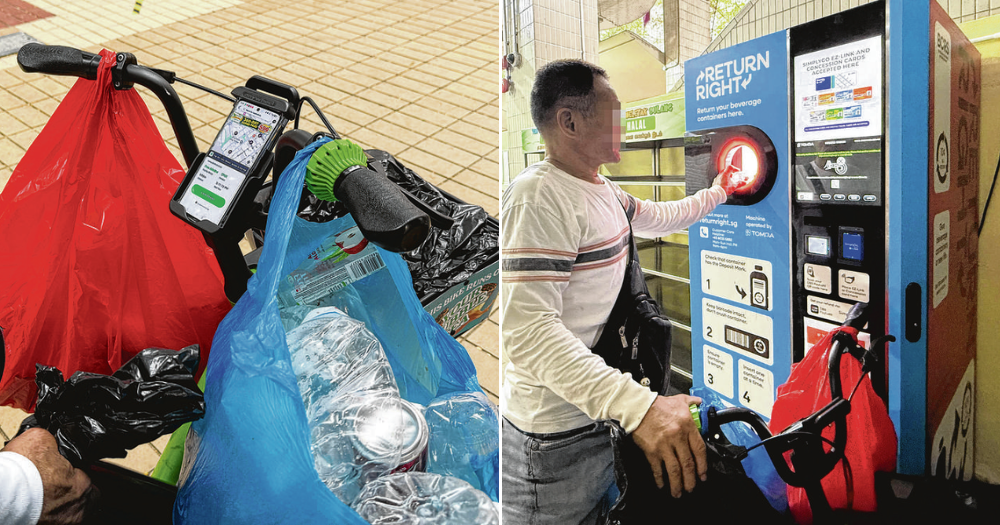
He once collected 400 cans and bottles in a day, which totals S$40 in deposit refunds.
After spending about two to three hours a day going around looking for bottles and cans, one 53-year-old cleaning attendant has amassed close to S$2,000 in deposit refunds under the Beverage Container Return Scheme (BCRS), which was launched on Apr. 1, 2026.
The 53-year-old was one of the few people who were seen by Shin Min Daily News reporters at a Return Right reverse vending machine at Amoy Street Food Centre.
Since the April rollout, more than 33 million bottles and cans have been collected under BCRS.
The 53-year-old, surnamed Zhang (transliteration), told Shin Min that he would go around collecting bottles and cans on his bicycle outside of working hours.
He dedicates two to three hours a day to this.
On weekends and rest days, he might even make up to three trips per day.
Zhang, who resides in Chinatown, focuses on the central region.
He would sift through at least 10 waste bins per trip.
He said he takes care not to leave the area around the bins dirty, and also brings along a bottle of water to wash his hands.
"At times, it would take two hours to fill up one to two bags. Each day I collect about S$10 to S$30 in deposits," Zhang told Shin Min.
Each can or bottle is worth 10 cents in deposit refund.
Once, he collected 400 bottles in a day, amounting to about S$40 in deposit refunds.
When asked why he spent the effort to collect bottles and cans, Zhang said that the deposit refunds he gets not only supplemented his income, but it was also a form of exercise.
"Regardless of what people think, all the money was made by my own effort," he commented.
To date, he has collected close to S$2,000 in deposit refunds.
The money goes towards his daily expenses.
When asked about the best spots to collect the recyclables, Zhang smiled and declined to reveal it.
However, he shared that the back of convenience stores and smoking points are key locations.
Zhang would also frequent nightlife districts such as Geylang or Tanjong Pagar, where people might dispose of their empty cans in bins out of convenience instead of looking for a Return Right machine.
At Golden Mile Food Centre, Shin Min's reporters spoke to a father-son duo who were carrying two bags of beer cans.
The 63-year-old son told Shin Min that his father, 88, had made a habit of picking up used bottles and cans two to three years prior to the implementation of BCRS.
Back then, they would sell the recyclables to waste collection companies.
66 bottles and cans would bring about S$1.40.
"Now, each can or bottle brings in 10 cents. 66 of them would give more than S$6. It's more than before," they told Shin Min.
As his elderly father is unfamiliar with how to use the Return Right reverse vending machines, the 63-year-old would receive the deposits on his card before transferring the money to his father.
So far, the 88-year-old has collected about S$200 to S$300 in deposit refunds.
"It's not a lot, but it can be used as pocket money," the 63-year-old said with smile.
He also shared that his elderly father now has a greater reason to head out to look for "treasures", which keeps him active at the same time.