SpaceX to catch megarocket using 'chopsticks' during Starship Flight 15
SpaceX is preparing for an ambitious attempt to catch both sections of its giant Starship rocket using mechanical arms on its launch tower during its next test flight, potentially marking a major breakthrough in rocket reusability.
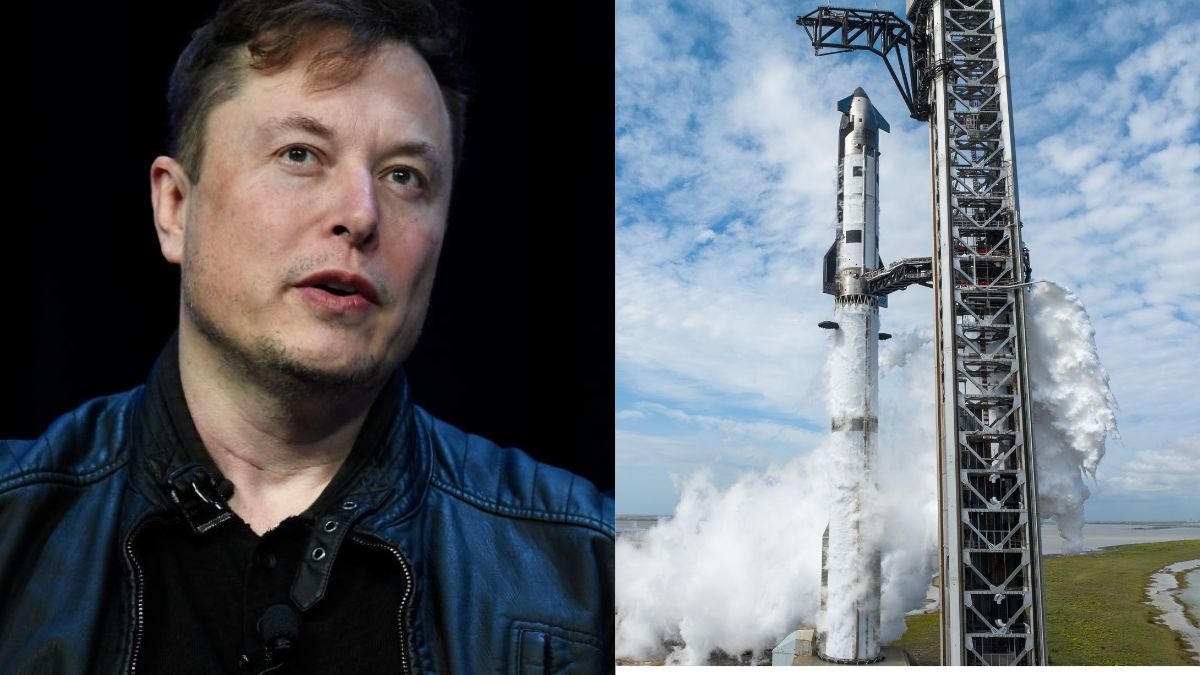
Elon Musk has said the company intends to recover both the Super Heavy booster and the Starship upper stage during the mission. Â The SpaceX Starship and Super Heavy Booster lift off. (Photo: Reuters)
The upcoming flight, identified as Starship Flight 15, is targeting November 13, although the date has not been officially confirmed by SpaceX and remains subject to regulatory approval.
If successful, it would be the first time SpaceX has caught the Starship spacecraft itself using the launch tower, although the company has already demonstrated the technique with its Super Heavy booster. SpaceX will attempt to catch both the Super Heavy booster and Starship on the upcoming flight. If both are successful, it will mark the first time that all parts of an orbital rocket return to Earth intact. This is the critical breakthrough needed to make life multiplanetary.— Elon Musk (@elonmusk) November 6, 2026
The recovery plan relies on two enormous mechanical arms attached to the launch tower at SpaceX's Starbase facility in Texas.
Nicknamed 'chopsticks', the arms are part of a system known as Mechazilla.
After liftoff, Starship's two sections separate, with the Super Heavy booster returning to the launch site after completing its job of powering the rocket through the initial phase of flight.
The upper section, known as Starship, continues towards space before beginning its return journey. Both vehicles are designed to descend towards the launch tower, where the mechanical arms attempt to catch them in mid-air.Thousands of distinct vehicle and pad criteria had to be met prior to catching the Super Heavy booster. Thanks to the tireless work of SpaceX engineers, we succeeded with catch on our first attempt. https://t.co/6wa5v6xHI0— SpaceX (@SpaceX) October 13, 2024
SpaceX first successfully caught a Super Heavy booster in October 2024 during Starship's fifth test flight.
Since then, it has repeated the feat on subsequent flights, but the upper stage has so far returned to the ocean or been lost during testing.
Catching the spacecraft would therefore be an entirely new challenge, particularly because it must withstand the intense heat and forces experienced during its return through Earth's atmosphere.WHAT WILL CATCHING A ROCKET DO?
The idea behind the double catch is to make Starship fully reusable.
Instead of losing or discarding rocket sections after every launch, SpaceX wants to recover them, inspect them and prepare them for another flight.
This could eventually reduce launch costs and allow rockets to fly more frequently.
Starship reached orbit for the first time during its 14th test flight on September 28, 2026, deploying 26 next-generation Starlink satellites.
However, both sections returned through controlled splashdowns rather than being caught.
The upcoming mission will test whether SpaceX can take the next step towards recovering the entire rocket, an important milestone in its ambitions for satellite launches, lunar missions and eventually human journeys to Mars.- Ends