South Africa’s SMMEs survive, but struggle to scale - IOL
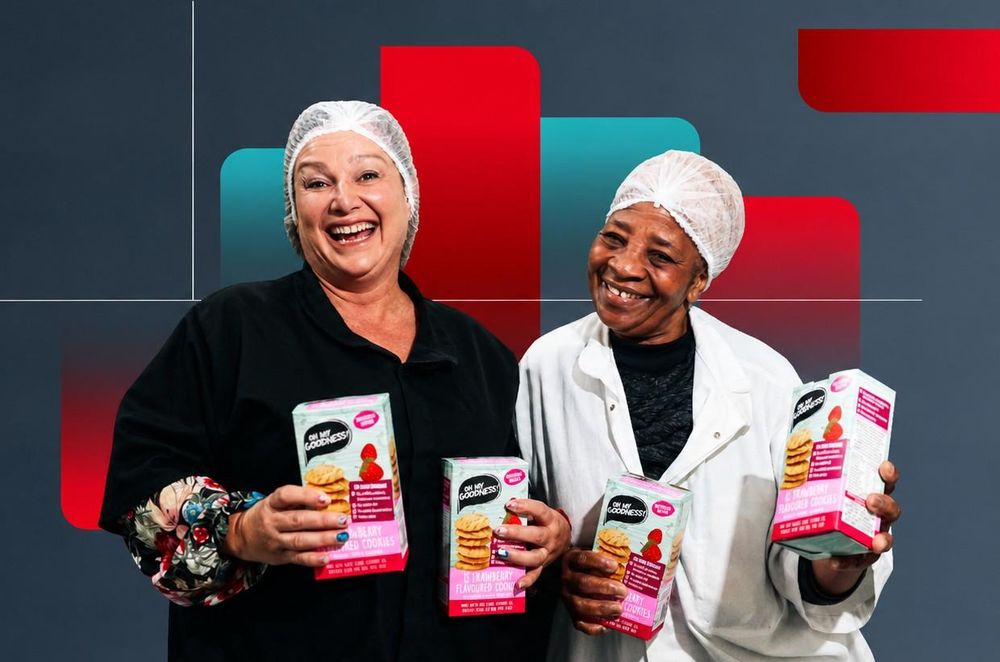
Increasing expenditure with SMMEs, particularly black-owned and black women-owned businesses, aims to help move beyond survival and achieve sustained growth through market access, capability building, and sustainable growth initiatives.
SOUTH Africa’s small, medium, and micro enterprises (SMMEs) have long been hailed as the backbone of the economy, but a sad reality is emerging from the latest State of the SMME in South Africa 2026 report.
While survival rates are climbing, scaling up remains a distant challenge.
The ugly truth is that the funding continues to be a near-impenetrable barrier, according to the report published by the Shoprite Group.
Despite “funding and financial support” being “recurring themes” across locations, sizes, and demographics, the vast majority of businesses remain locked in self-financing mode.
More than 90% of SMMEs rely on “their own resources and personal networks, with limited uptake of bank loans (9.7%) or grants and investors (±2–3%). More than half of respondents (57.4%) have not applied for funding”, leaving growth capital out of reach for most.
This funding gap is not simply a matter of access but of alignment. Shoprite Foundation Director Maude Modise sums it up: “SMMEs are looking for funding that helps them manage growth opportunities and cash-flow pressures, not just long-term debt.”
Yet the dissonance between available financial products and the day-to-day realities of trading businesses is stark. For many, “funding is widely recognised as important yet remains relatively inaccessible or underutilised”.
This bleak picture feeds directly into the sector’s more troubling structural challenge: Longevity does not equate to growth. About one-third of South Africa’s SMMEs have been running for more than 20 years, but most still employ fewer than five people.
“Outlasting the odds is an achievement; converting that endurance into a larger, employment-generating business is a separate challenge — one that the ecosystem around small business has been slower to address,” the report noted.
The data reveal a tough paradox: “SMMEs are becoming more resilient, ambitious and competitive,” yet they remain trapped in a size that limits broader economic impact.
Modise warns: “South Africa’s SMME ecosystem has reached an important transition point. The challenge is no longer simply helping businesses survive difficult conditions but helping resilient businesses convert stability into scale”.
Compounding this challenge is the gender divide. Although women own a significant 37% of businesses surveyed and are “starting businesses, but fewer are scaling them”, the growth stages remain more firmly dominated by men.
“Women remain strongly represented in smaller enterprises, suggesting that the challenge lies in securing the capital and support needed for growth,” the report found. “The gap widens with business size, which points less to barriers at entry and more to barriers at growth,” underscoring systemic inequities in access to capital and supply chains.
Geography adds layers of complexity. The SMME landscape is uneven: Urban businesses “are mostly fighting for finance and procurement access”, while “small-town businesses are struggling with supplier availability and customer reach”, and rural firms are “trying to solve a logistics problem before any of the other problems even become relevant”.
The report recommends against a one-size-fits-all answer: “Addressing geographic disparities requires a targeted, place-based approach rather than a single national model.”
Despite these challenges, the sector’s good news must not be overlooked. There is “hard-won confidence” in the face of two decades marked by “load shedding, rand volatility, Covid 19, and municipal dysfunction”. More businesses than before “describe themselves as expanding”, with profitability and competitiveness on the rise, and an impressive 85% of owners anticipating “moderate to high growth in the year ahead”.
Business maturity is improving too. “More than half (53.6%) of businesses report net profit after tax above 10%, while fewer report merely breaking even. Growth expectations remain strong,” the report stated.
SMMEs are “strengthening internal discipline and responding more effectively to market pressures”, with “stronger operational effectiveness, stronger profitability and growing confidence in their ability to compete”.
Corporate South Africa is stepping up. The Shoprite Group’s commitment shines as a model, having procured “more than R18.5 billion of products from black women-owned small suppliers and R1.7bn of fresh produce from South African SMMEs” in 2026 alone.
Their approach, focused on “increasing expenditure with SMMEs, particularly black-owned and black women-owned businesses”, aims to help move “beyond survival and achieve sustained growth” through market access, capability building, and sustainable growth initiatives.
Arthur Goldstuck, chief executive of World Wide Worx, eloquently summarises the crux of the matter: “South African SMMEs can beat the odds and survive, but growing is a completely different challenge. The big challenge for SMMEs is how to scale”.
Ultimately, the 2026 report makes a clarion call: Helping South African SMMEs survive has been a necessary battle, but the war to convert resilience into scale is only just beginning. Without targeted, stage-specific interventions, the promise of SMMEs remains painfully unfulfilled.