
Sonia Gandhi voter roll case: Court sets aside order dismissing FIR plea - The Indian Express
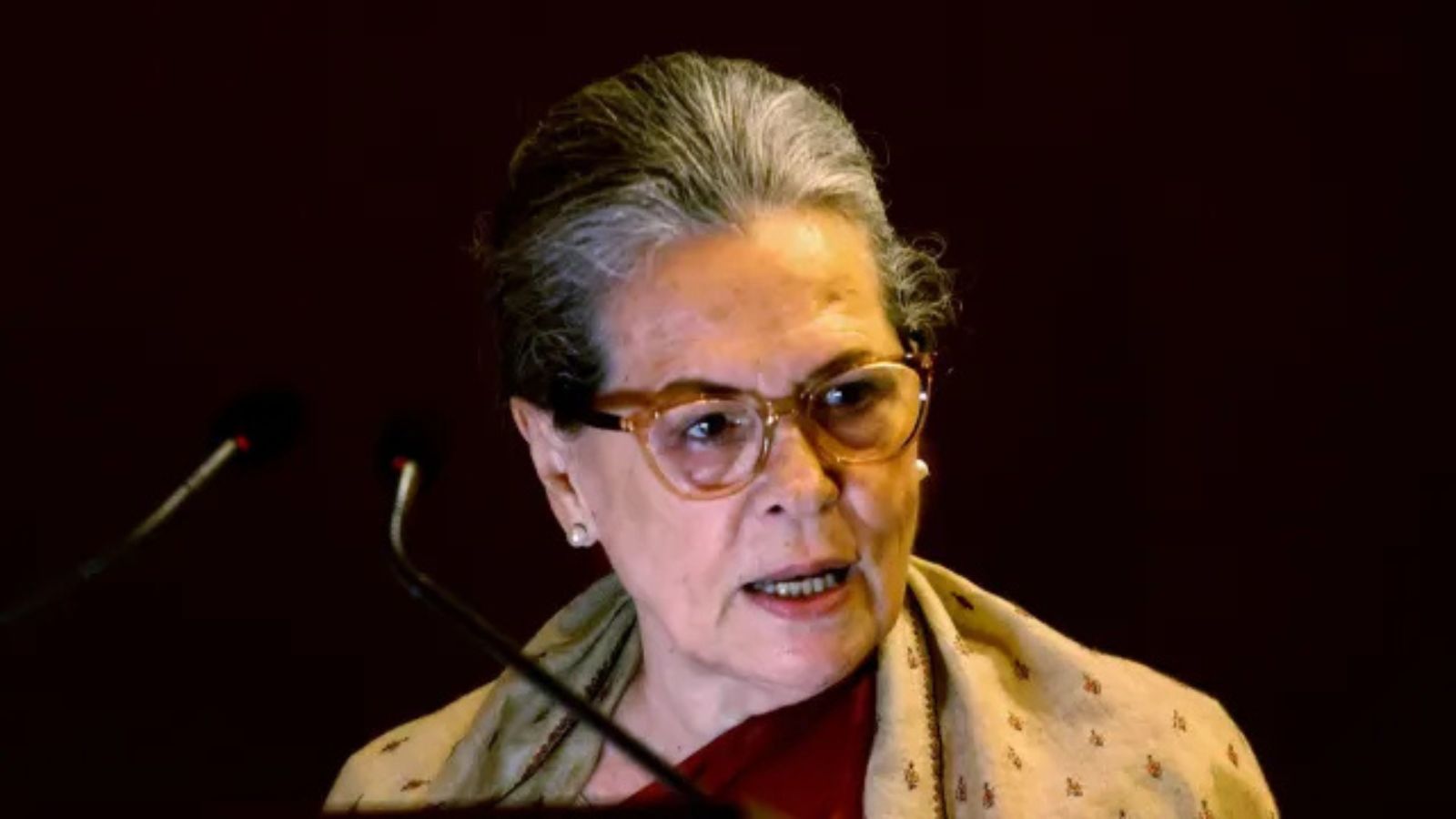
A Delhi sessions court on Monday set aside a lower court’s order from September last year, which had dismissed a plea for an FIR in a case of alleged forgery related to Congress leader Sonia Gandhi’s purported inclusion in the electoral rolls in 1980, three years before she became an Indian citizen.
Special Judge Vishal Gogne of Dwarka Courts called the September 2025 magistrate court order “non speaking” and lacking “appropriate reasoning”. He also remanded the matter back to the Magistrate Court, and directed that an order be passed after hearing the parties and conducting an inquiry. The detailed order is awaited.
“This court is unable to fathom why the power of the ECI is a bar upon the police to act on fraudulent inclusion and submission of forged documents. The power of the police to probe a cognisable offence in inclusion of deletion of name from a voter list cannot be considered consequentially ousted…,” Judge Gogne said.
“The order suffers from non-application of mind and is liable to be set aside. The magistrate had not discussed the implications of the documents presented by the petitioner,” he said, adding that the magistrate “simply branded the complaint as lacking essentials”.
Judge Gogne’s order came on a revision petition filed by senior advocate Ajay Burman and advocate Himanshu Sethi against the magistrate court order.
The complainant in the original case, advocate Vikas Tripathi, who was represented by senior advocate Pavan Narang, had sought the registration of an FIR in the matter. He had moved an application before the magistrate court under Section 175(4) of the BNSS. The section relates to the power of any magistrate, upon receiving a complaint against a public servant arising in the course of the discharge of his official duties, to order an investigation.
The magistrate court had noted that the authority to exclude or include someone in the electoral roll rested solely with the Election Commission of India, and had also said that a civil or ordinary dispute was being projected as criminal.
“Mere bald assertions, unaccompanied by the essential particulars required to attract the statutory elements of cheating or forgery, cannot substitute a legally sustainable accusation as informant is merely relying only upon extract of electoral roll which is photocopy of photocopy of alleged extract of uncertified electoral roll of the year 1980,” it had said.
Narang had contended that documents clearly indicated that Gandhi took citizenship of the country in April 1983. “Her name got included in the electoral roll as a voter in the New Delhi constituency in 1980… which was then deleted in 1982. It re-entered in 1983 when the qualification date was January 1, 1983,” he had argued.
Nirbhay Thakur is a Senior Correspondent with The Indian Express who primarily covers district courts in Delhi and has reported on the trials of many high-profile cases since 2023. Professional Background Education: Nirbhay is an economics graduate from Delhi University. Beats: His reporting spans the trial courts, and he occasionally interviews ambassadors and has a keen interest in doing data stories. Specializations: He has a specific interest in data stories related to courts. Core Strength: Nirbhay is known for tracking long-running legal sagas and providing meticulous updates on high-profile criminal trials. Recent notable articles In 2025, he has written long form articles and two investigations. Along with breaking many court stories, he has also done various exclusive stories. 1) A long form on Surender Koli, accused in the Nithari serial killings of 2006. He was acquitted after spending 2 decades in jail. was a branded man. Deemed the “cannibal" who allegedly lured children to his employer’s house in Noida, murdered them, and “ate their flesh” – his actions cited were cited as evidence of human depravity at its worst. However, the SC acquitted him finding various lapses in the investigation. The Indian Express spoke to his lawyers and traced the 2 decades journey. 2) For decades, the Jawaharlal Nehru University (JNU) has been at the forefront of the Government’s national rankings, placed at No. 2 over the past two years alone. It has also been the crucible of campus activism, its protests often spilling into national debates, its student leaders going on to become the faces and voices of political parties of all hues and thoughts. The Indian Express looked at all court cases spanning over two decades and did an investigation. 3) Investigation on the 700 Delhi riots cases. The Indian Express found that in 17 of 93 acquittals (which amounted to 85% of the decided cases) in Delhi riots cases, courts red-flag ‘fabricated’ evidence and pulled up the police. Signature Style Nirbhay’s writing is characterized by its procedural depth. He excels at summarizing 400-page chargesheets and complex court orders into digestible news for the general public. X (Twitter): @Nirbhaya99 ... Read More

