Shawn Micallef: AI slop is turning Toronto politics into a sci-fi dystopia, but it’s not too late to change course

Shawn Micallef is a Toronto-based writer and a freelance contributing columnist for the Star. Follow him on Bluesky: @shawnmicallef.bsky.social.
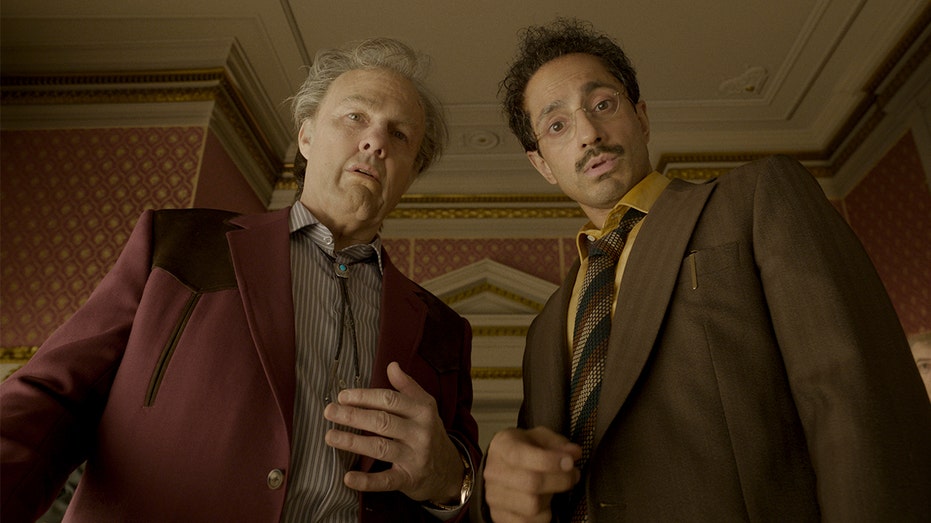
Toronto needs a Blade Runner to help us figure out what’s real and what’s artificial. In the film series, Blade Runners hunt androids disguised as humans. In Toronto, we need them to root out our AI generated politics.
Brad Bradford’s mayoral campaign has come under fire for using an app called Victory that, as an investigation by Canada’s National Observer found, “gamifies” political campaigns by awarding participants points for uploading their contacts with possibly-lax privacy standards around voter data. Further, the app also awards points for posting AI-generated messages to social media.
The Star’s Mahdis Habibinia asked Bradford himself about using the app and he said the reporting was false and that there’s no rewards. In response, the National Observer released audio of a Bradford campaign Zoom meeting where a presenter said a points system would be used and that there will be rewards.
It all creates ethical and trust issues. Beyond the potential privacy breaches around contact collection, an app like this can blur the distinction between heartfelt support and what is sometimes called “AI-slop”: shoddy or thin material passed off as natural or human made.
The Victory app taps into our worst social media impulses to comment on everything, supercharging it, turning supporters into human-machines posting similar messages. A virtual army, as it were. An older term for flooding the zone with provocative, sometimes propagandic, material was “agitprop.” This new version could be called “agitslop.”
Bradford’s dip into AI technology comes a year after a Toronto group used fake, AI-generated residents to oppose transit priority lanes on Bathurst, including a “spokesperson” who also appeared in dozens of unrelated videos supporting different causes and products.
In another recent case, ABC Toronto, a political advocacy group that formed as a conservative-leaning version of Progress Toronto, used what appears to be an AI-generated image to oppose the University Avenue bike lanes back in May. They proclaimed University should be treated as a hospital corridor first, writing “it is a critical access route for patients, ambulances, hospital staff, caregivers, and emergency services.”
The bizarre image ABC used depicted a fantasy University Avenue where the bike lanes became two-way cycling highways, unlike the one-way lanes on either side that actually exist. Inexplicably, the bike lane also had a TTC bus in it, unintentionally demonstrating how, in reality, ambulances can bypass congestion using the wide bike lanes. The buildings ABC depicted alongside the sidewalk don’t exist on University either.
It’s not Toronto. Not our bike lanes. Not real.
Other things are quite real, however, like the coalition of health care workers who rallied on University Avenue this week. There, doctors and nurses unveiled a letter signed by 650 health care workers in support of bike lanes on University and elsewhere in the city.
Also real, as opposed to ABC’s apparent AI-image, was Toronto Fire deputy chief Jim Jessop saying, in 2024, that emergency response times had improved since Bloor bike lanes were installed. Real, too, was the nearly 1000-person-strong Critical Mass ride that cycled Bloor last week in protest of lane removal.
AI is everywhere of course. MPs are even split on using it in Parliament, and the federal government is quite AI-bullish too. While there are surely practical uses for AI as a tool, anything that comes with the evangelical hard sell that AI has should trigger some critical caution, as should some of the mounting harms.
The creeping unreality into the political arena is another thing to be wary of, a cautionary tale for voters, but also the politicians and civic groups creating it. Trust is earned over a long time, but it can disappear overnight.
Notions of political authenticity have always been troublesome. A hackneyed buzzword, authenticity is hard to define. A feeling more than something quantifiable. Even before AI, politicians chased authenticity, a sense of realness and a “what you see is what you get” vibe. Technology confuses things though.
In real, physical life it’s harder to fake things (for now). Imagine the Victory app as a one-on-one conversation: how weird and off-putting it would be if the person you were talking to kept looking at their phone and read a script to you written by AI. Social media insulates us from machine-to-human mimicking, but that’s essentially what AI generated posts are.
There’s also a matter of respect. An organization that puts out sloppy, fake images or robotic, repetitious text, isn’t respecting the intelligence or dignity of the intended recipient. If they can’t bother to take a real photo, making sure an image represents reality, what does it say about everything else they purport to stand for?
As AI slop metastasizes, it could usher in a renaissance of public life and public space. Being around actual humans, in protest or conversation, out in the city may be the last honest place to be, no Blade Runner required.
Error! Sorry, there was an error processing your request.
There was a problem with the recaptcha. Please try again.
You may unsubscribe at any time. By signing up, you agree to our terms of use and privacy policy. This site is protected by reCAPTCHA and the Google privacy policy and terms of service apply.
Opinion articles are based on the author’s interpretations and judgments of facts, data and events. More details
Shawn Micallef is a Toronto-based writer and a freelance contributing columnist for the Star. Follow him on Bluesky: @shawnmicallef.bsky.social.