Shadrack Sibiya’s bail fate hangs in the balance as five charges come before court - IOL
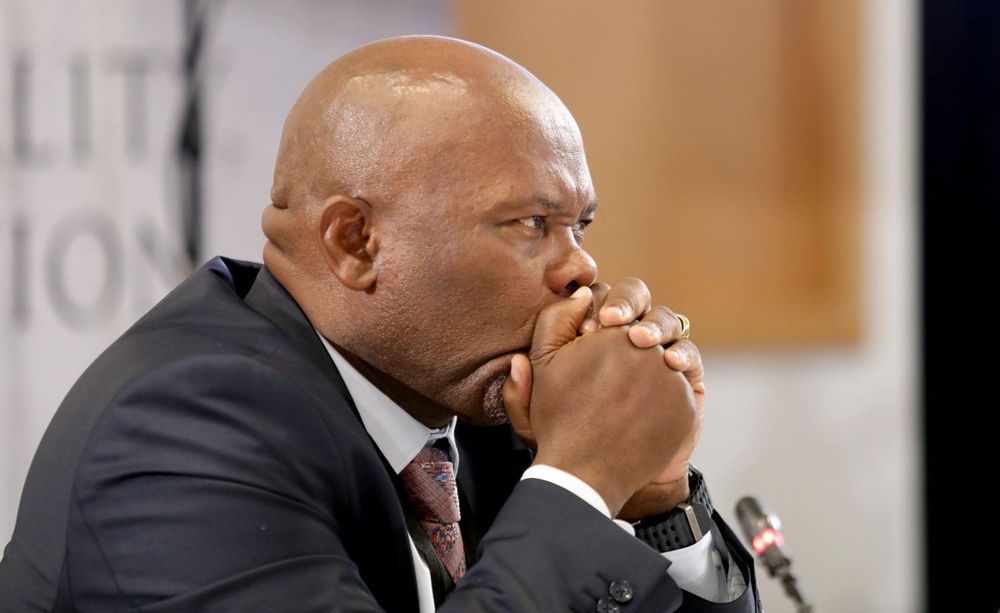
Suspended deputy national police commissioner Lieutenant General Shadrack Sibiya faces five charges, including rape, sexual grooming and trafficking, and is expected in court to learn whether his bail application will be granted or not.
Suspended deputy national police commissioner Lieutenant General Shadrack Sibiya is expected to appear for a formal bail application on five charges, including rape, sexual grooming and trafficking, where he is expected to apply for bail.
The senior police officer will appear before the Randburg Magistrate’s Court, where the case was postponed to Tuesday for a formal bail application.
Sibiya, who has been under investigation by a task team examining matters arising from the Madlanga Commission, was arrested last week on Monday.
He appeared in court last week on Tuesday facing five charges, including rape, human trafficking and sexual grooming of a child.
The state alleges that he raped an 18-year-old woman at a Sandton hotel on May 16, 2026, while she was unconscious after being given alcohol.
According to a charge sheet seen by IOL, Sibiya had taken the woman and two others to The Grand “strip club” in Sandton.
"[Sibiya] bought them food and plied them with liquor at The Grand and continued doing so at the Garden Court Hotel.”
“When the complainant had passed out, the accused raped her and on his way out of the hotel room, he boasted to the complainant's friends that she was very nice and still a virgin,” reads the charge sheet.
Sibiya is also accused of grooming a 16-year-old girl through WhatsApp between July and August 2026.
The charge sheet alleges he sent her nude photographs of herself, persuaded her to send videos of herself masturbating and possessed and distributed sexual images of her.
The State alleges the girl’s father, an associate of Sibiya, gave him her contact details in July to arrange transport.
Sibiya is also accused of trafficking three people for sexual exploitation.
The charges relate to alleged incidents between May 16 and August 3.
Sibiya was remanded in custody at Kgosi Mampuru Il Correctional Centre in Pretoria.
The state said it had intelligence indicating he might escape if held at a police station, including Johannesburg Central Police Station.
IOL previously reported that, legal expert Nthabiseng Dubazana, founder and managing director of Dubazana Attorneys, said Sibiya’s charges are extremely serious and could require him to apply for bail under Schedule 6 of the Criminal Procedure Act.
“This means he would have to show exceptional circumstances for his release on bail,” she said.
Dubazana said Sibiya could face a lengthy prison sentence if convicted.
She said a conviction could also result in Sibiya losing his position in the South African Police Service (SAPS).
She said the case highlighted the need for rigorous vetting of senior police officers.
“It may likely mean the vetting process needs to be strict and in-depth. It cannot be that lifestyle audits are not considered. I’m sure that had his background been investigated, maybe something like this would have been found,” she said.
National police spokesperson Brigadier Athlenda Mathe said the Commission’s Recommendations Task Team (CRTT) had strong evidence in the matter.
“When they bring a matter before court, they’ve got overwhelming evidence against you,” she said.
Mathe said SAPS would stand in solidarity with the alleged victims while intensifying efforts to combat gender-based violence and femicide.
“We will be here in solidarity with the young girls and to assure the nation - not only these two young girls - that we are here as the South African Police Service,” she said.
“We are intensifying our efforts against gender-based violence and femicide.”
Criminologist Professor Kholofelo Rakubu of Tshwane University of Technology said it was important to separate the allegations against Sibiya from the institutional issues raised by the case.
“Lt-Gen Shadrack Sibiya is an accused person and remains presumed innocent unless and until a competent court finds otherwise,” she said.
“The allegations should therefore not be presented as established facts. At the same time, the criminal justice system and SAPS must respond institutionally to the risks created when allegations of this seriousness involve an officer occupying one of the highest positions in policing.”
Rakubu said the case could also affect police morale.
“Junior officers are expected to enforce sexual-offences, trafficking and child-protection laws. If accountability appears inconsistent at senior level, it can undermine organisational discipline and the ethical authority of command structures,” she said.
However, she said the case could also test the resilience of SAPS’s accountability systems.
“Public confidence is not protected by ensuring that senior police officials are never investigated; it is protected when the public can see that even the most senior officials can be investigated independently, lawfully and without interference.”