Scientists Tracked Children for Decades—One Factor Was Linked to Depression - Newsweek
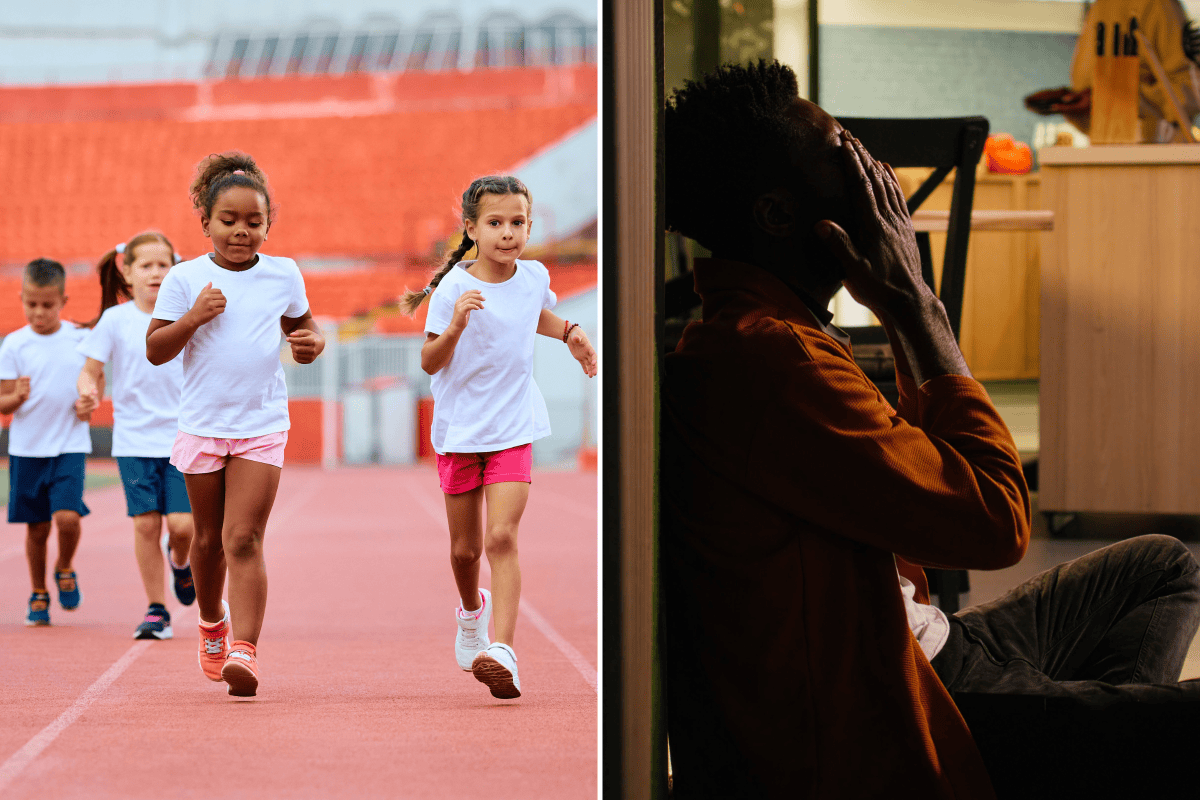
How fit you are as a child could have implications on your mental health well into your adult life, a new study suggests.
Researchers at the University of Tasmania’s Menzies Institute for Medical Research and at Adelaide University found that having better cardiorespiratory fitness as both a child and teenager could reduce risk of depression as an adult.
The association was found to be particularly strong between childhood fitness and adult risk of depression. The study is set to appear in the Journal of Affective Disorders on December 1.
What makes this study "useful" is the fact that, unlike adult-based studies or ones with short follow-up periods, this research covers "a long window," Nicole Avena, a professor of neuroscience at the Icahn School of Medicine at Mount Sinai, told Newsweek. She added that the research "shows an association, not that low fitness in childhood causes depression in adulthood, and the authors are clear about that."
The researchers reviewed the clinical data of Australian children ages 7 to 15 in 1985 and then again when they were ages 36 to 49. More than 1,000 participants were included.
In 1985, the participants' fitness was measured through various tests—including a 1.6-kilometer run to evaluate their cardiorespiratory fitness, a standing long jump to review their muscular power, and cycling. Over 30 years later, they carried out a World Health Organization interview during which their mental health was assessed.
Brooklyn Fraser, one of the authors of the study and a postdoctoral research fellow at the University of Tasmania, told Newsweek they found that "one standard deviation increase in cardiorespiratory fitness in childhood and adolescence (defined by 1.6 km run speed) was associated with a 13 percent lower risk of depression in adulthood."
The researchers also said, "The strongest and most consistent associations in our study were observed for cardiorespiratory fitness, or fitness developed through activities that make you huff and puff."
The association was also found to be stronger in females.
Fraser said, "The combined social, physical, and mental health benefits of cardiorespiratory fitness likely contribute to these findings, rather than a single factor."
"More research is needed to understand the underlying mechanisms and determine how these factors reduce depression risk across the life course," she added. "Importantly, this was an observational study, so we cannot say that low fitness causes depression later in life."
Avena said there may be several possible factors at play behind the association. This includes the biological effects of aerobic fitness on inflammation—as regular exercise has been found to lower chronic inflammation in the body by regulating immune responses. Chronic inflammation is thought to be a contributing factor of depression.
She also said stress-hormone regulation could be involved, as exercise also helps hormones move throughout the body, which can reduce stress and improve mood.
Exercise also increases brain-derived neurotrophic factor levels, Avena said, which is a protein vital for the survival, growth and maintenance of neurons.
She added that "fit kids are more likely to stay active" as well, meaning the habit of exercising regularly is more likely to stay with them into adulthood.
"It is also possible that some of the link runs through shared factors like family income, home environment, or early mental health, which affect both a child's fitness and their later risk of depression," she said.
Karmel Choi, a clinical psychologist and assistant professor at Harvard Medical School, told Newsweek that cardiorespiratory fitness "could also be a snapshot of overall health, reflecting the status of the heart, lungs, and muscle," which could "forecast fewer health problems later in life, which are also known risk factors for depression."
She also said there could be underlying factors, such as social contexts: "Children from higher-income families may have access to organized sports, safe play areas, and green space, while also benefiting from resources that support mental health later in life, like stable housing, quality schooling, and access to care."
However, she added that it's still "too early to conclude that increasing cardiorespiratory fitness in adolescents would delay depression onset or reduce long-term risk, until we have experimental or more causally robust designs. We need better evidence of causality, but what this study suggests is that cardiorespiratory fitness could be an early signal for later depression risk."
Fraser said the findings suggest that childhood fitness may have benefits extending beyond physical health and highlight cardiorespiratory fitness as a "potentially modifiable factor associated with long-term mental health."
"While more research is needed to understand the mechanisms involved, supporting cardiorespiratory fitness in childhood and adolescence may benefit both physical and mental health well into adulthood," she said. "Given the high burden of depression, identifying modifiable early-life factors that may contribute to better long-term mental health is an important public health priority."
"Fitness is modifiable, which is what makes this worth acting on," Avena agreed. "Practically, that means protecting daily physical activity and PE in schools, making organized and unstructured play accessible regardless of family income, and paying attention to girls, who tend to drop out of physical activity earlier."
She added, "On the research side, we need intervention studies that actually change fitness in childhood and track mental health outcomes, so we can move from association to cause."
Smith, K.J., Magnussen, C.G., Cadenas-Sanchez, C., et al. (2026). The long run: Fitness during childhood and adolescence and its association with adult depression. Journal of Affective Disorders, 414. https://doi.org/10.1016/j.jad.2026.122372
Contact Newsweek editors on this story: Marc Vargas and Shakeema Edwards.