Scientists Served Processed and Unprocessed Meals—Then Compared the Effects - Newsweek
The way food is processed, not just its nutritional value, could affect how your body responds to it, researchers at Virginia Tech have found.
The scientists gave participants either a minimally or significantly processed meal and made sure that both had the same nutritional value.
They found those who ate the more processed meal experienced a different metabolic response and even had different activation of the brain region associated with motivation and reward.
The study was published in the journal Nature Metabolism on October 5.
The study included just under 60 healthy adults, all aged between 18 and 45 years old. First, the team at Virginia Tech reviewed the metabolic activity of participants before and after they consumed a highly or minimally processed meal. Each participant fasted overnight before the testing.
The highly processed meal was made up of a small piece of a peanut butter and jelly sandwich, some slices of deli turkey, vegetable chips, a cookie, cereal, instant mashed potatoes and a little sip of water. The other meal consisted of sliced banana, dried cranberries, cheese and hard boiled egg. Both meals were matched within 1 percent for calories, carbohydrates, fats, proteins, water and salt.
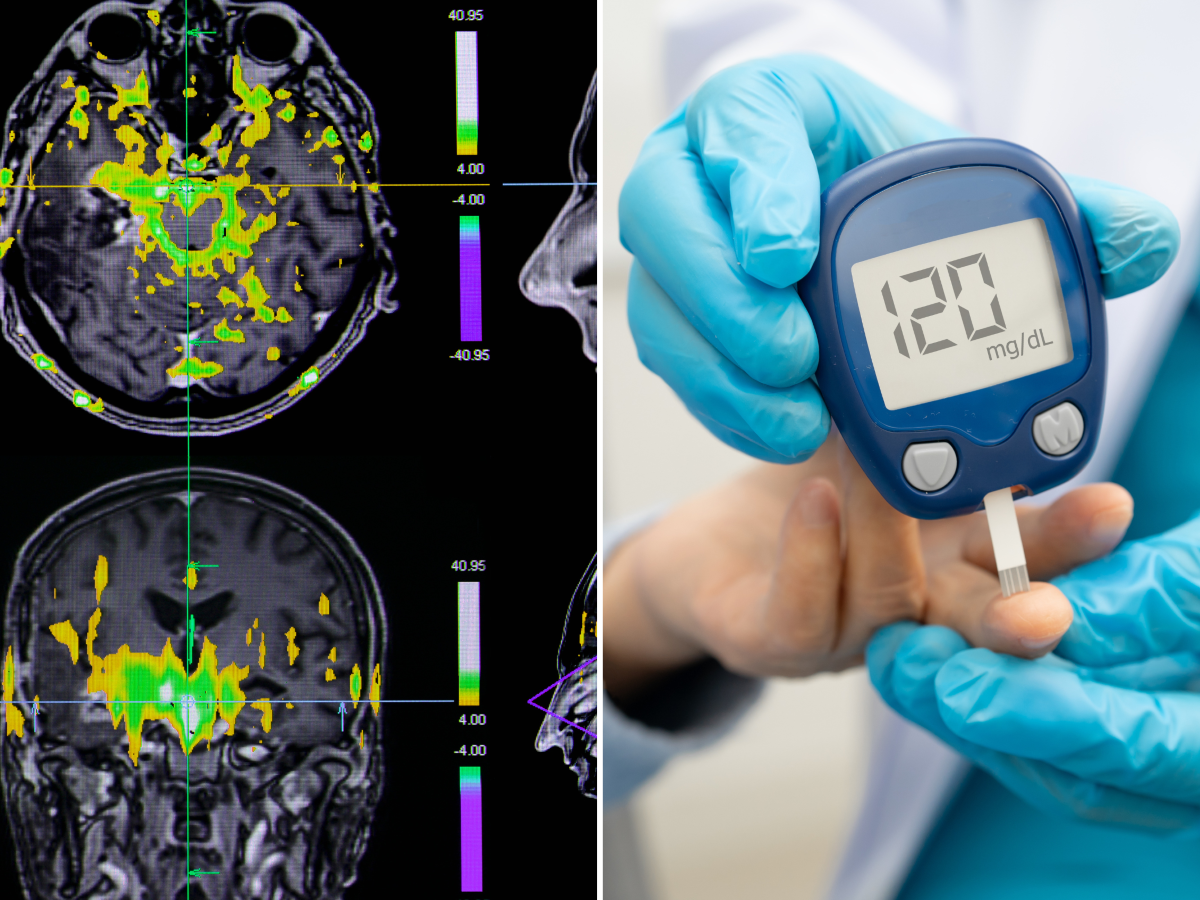
After the participants ate their meals, the researchers measured their blood sugar and insulin levels several times over the course of a few hours.
They found that those who had eaten the highly processed meal experienced a much higher insulin response and had elevated blood sugar levels for much longer than those who had eaten the less processed meal.
This could mean that consumption of ultraprocessed food "is transiently creating a state (higher insulin) that is associated with long-term ultraprocessed food consumption (insulin resistance)," Alex DiFeliceantonio, an associate professor of human nutrition, foods and exercise at Virginia Tech, whose lab led the study, told Newsweek.
"The insulin result was the most surprising to us, I didn't expect it at all," she added. "It's something we hope to follow up on in later studies."
However, she said "we don't know if these short term, immediate changes are what leads to the poor health outcomes associated with ultraprocessed foods. But, a study like this gives us good clues to start looking for causality."
The researchers also separately reviewed how participants' brains responded to highly processed foods, DiFeliceantonio explaining that brain scans were performed while the participants were in a fasted state.
They were shown images of both ultraprocessed foods and minimally processed foods while having a functional MRI scan, to measure the activity in their brain across various regions. The foods the participants ate during the metabolic testing were also included in the images.
While the participants were shown the images, they were also asked if they would be willing to pay for the foods they were looking at, in order to give the researchers an idea of whether the participants' thoughts about the different foods aligned with their brain activity.
They found the brain regions involved in motivation and reward responded differently depending on whether the participants were looking at minimally or highly processed food.
"This tells us that nutrient information is getting to reward areas of the brain," DiFeliceantonio added. She said that because brain activity differed depending on whether it was ultraprocessed food or minimally processed food—in line with how valuable participants saw those foods—it suggests "the brain is encoding the value of these foods differently."
Dr. Lu Qi, director of the Tulane University Obesity Research Center, told Newsweek the study "brings new experimental evidence to explain the adverse effects of ultraprocessed foods on health."
Lindsey Smith Taillie, a nutrition epidemiologist at the University of North Carolina at Chapel Hill, told Newsweek that while there are many studies showing that ultraprocessed foods are "linked to health harms," there are still "a lot of questions about the biological mechanisms," so this study "provides important insight into two different pathways."
The first is that people "metabolize ultraprocessed foods differently," so "when we eat ultra processed foods, we produce higher levels of insulin, and our body uses carbs and fats differently, similar to what is seen during early insulin resistance (though important to note this was only one meal)."
The second is that ultraprocessed food also "affects our brains differently," Smith Taillie said.
She added that even though the foods were matched for calories and macronutrients, the researchers found brain activation in the same regions that are activated by foods high in sugar and fat. Essentially, "even when an ultraprocessed food is nutritionally similar to a non-ultraprocessed food, our bodies and brains respond differently," she said.
She said that "digestion begins when you look at or smell a food, as well as when you put it in your mouth. These findings make sense to me because we know that most ultraprocessed foods are designed to look, smell, and taste different from non-ultra processed foods, through the use of additives like colors and flavors."
"Then, inside your mouth, they are designed to dissolve rapidly to give you that quick flavor burst that rapidly dissipates and keeps you reaching for more," she said.
"These results give us an early indication that these differences in design may translate to differences in metabolism, though more research needs to be done to fully understand the exact mechanisms," she added.
Qi also said that "validation studies are needed," and "further investigations may explore how ultraprocessed food-induced neural responses may affect biological function and health outcomes."
Zach Hutelin et al. (2026) Ultraprocessed foods evoke distinct metabolic and neural responses. Nature Metabolism, https://doi.org/10.1038/s42255-026-01618-5
Contact Newsweek editors on this story: Marc Vargas and Tony Phillips.