
Schools shut, teachers on poll duty: Expert questions India wasting youth power
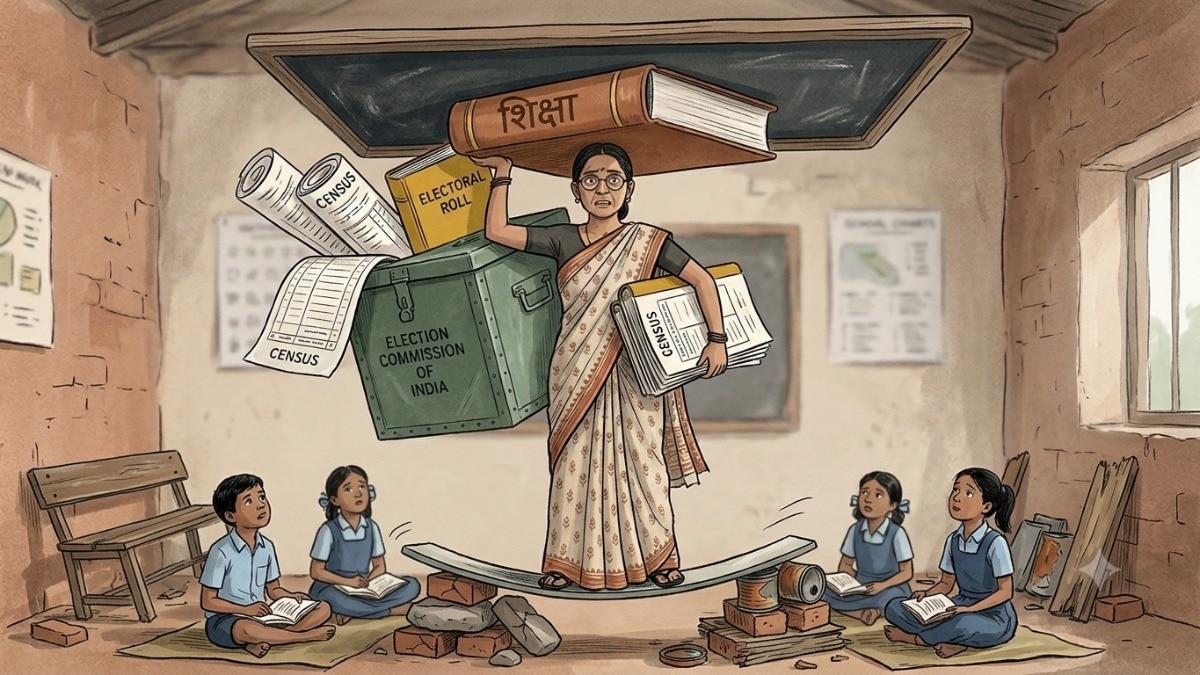
A university holiday to watch a movie. School exams postponed because teachers are busy with census work. Schools shut for political rallies. Teachers pulled out of classrooms for election duties.
These are not isolated complaints about India's education system. They are among the examples cited by education entrepreneur and publisher Maheshwer Peri in a series of posts questioning the country's priorities and its treatment of education.
His central question is hard to ignore: If India hopes to cash in on its demographic dividend, are its schools and colleges getting the attention they need?WHEN CLASSROOMS TAKE A BACK SEATIn a post on X, Peri listed 10 instances from different parts of the country where academic schedules and teaching have reportedly taken a hit because of administrative, political or election-related activities.
Among the examples, he pointed to the postponement of the 2027 Madhyamik examinations in West Bengal because teachers would be deployed for Census duties. The delay was subsequently confirmed by the state education minister. In Bareilly, Uttar Pradesh, schools up to Class 8 were ordered shut for a day during the BJP's 'Loktantra Bachao, Arajakta Hatao' padyatra led by JP Nadda and Keshav Prasad Maurya.
He also cited a school in Mumbai where 24 of its 34 teachers were moved to booth-level officer (BLO) duties. In Karnataka, Peri linked teachers being assigned Special Intensive Revision (SIR) work to students receiving lower scores.
While reports have documented teacher shortages, disrupted classes and uncertainty over mid-term examinations due to SIR duties, the direct link between these disruptions and students' scores has not been independently established.
Maharashtra also featured prominently in his list. Peri referred to election-related instructions that affected teaching schedules for teachers assigned BLO duties. Reports indicate that schools were asked to reorganise or reduce teaching hours to accommodate electoral-roll revision work, although a statewide recommendation for alternate-day schooling could not be established.
He also cited 95 FIRs against teachers who refused election duties. While teacher groups have reported FIRs against those who failed to report for such work, the specific figure of 95 could not be independently verified.
Other examples included the closure of all schools and colleges in Bhubaneswar during Prime Minister Narendra Modi's visit in September 2024. Calcutta University also faced examination disruptions after Central Armed Police Forces (CAPF) personnel were housed in several affiliated colleges.
The university altered examination-centre arrangements in up to 12 colleges and later deferred Semester I examinations scheduled after April 13, 2026, as some campuses could not accommodate examinations.
In Ladakh, Peri referred to the school run by climate activist Sonam Wangchuk. The administration had issued a notice asking Desert Flower School to halt classes and other activities pending a High Court decision, raising concerns about the institution's future.
He also questioned the priorities of higher education institutions, citing reports that Malla Reddy Vishwavidyapeeth College in Hyderabad had reportedly declared a holiday on October 30, 2026, so students could watch the Telugu film Aadarsha Kutumbam House No: 47.
"Demographic dividend, any one?" Peri asked, pointing to the contradiction between India's ambitions for its young population and the disruptions facing their education.STATES ARE ALSO SPENDING A SMALLER SHARE ON EDUCATIONIn a second post, Peri shifted attention from classroom disruptions to government spending.
He cited figures showing that education accounted for 16.6 per cent of total state expenditure in 2010-11, compared with 14.5 per cent in 2025-26.
However, the Reserve Bank of India's January 2026 report, State Finances: A Study of Budgets of 2025-26, puts the combined share for states and Union Territories at 13.1 per cent for 2025-26, against 16.6 per cent in 2010-11.
The RBI data also shows that Assam's share stood at 16.8 per cent in 2025-26, compared with 22 per cent in 2010-11. Maharashtra's share fell from 14.2 per cent to 12.4 per cent, while Uttar Pradesh's rose from 17.2 per cent to 15.3 per cent.
These figures refer to education's share of total expenditure, not necessarily a fall in the actual rupee amount spent. The 2025-26 numbers are also budget estimates. Still, they raise questions about the priority given to education in state budgets.WHAT HAPPENS TO INDIA'S DEMOGRAPHIC DIVIDEND?
India's young population is often described as one of its biggest economic advantages. But a large working-age population alone cannot guarantee economic growth.
The dividend depends on whether young people receive quality education, develop relevant skills and find opportunities to use them.
When teachers are repeatedly diverted from classrooms, examinations are disrupted and education receives a smaller share of state spending, that promise becomes harder to fulfil.
Peri's posts bring together two connected concerns: the everyday disruption of learning and the larger question of public investment in education.
The demographic dividend is not automatic. It has to be built, beginning with classrooms.- EndsRead | India is producing millions of graduates, but not enough jobs to hire themRead | NEP at 6: Big spend, uneven gains in India's classrooms


