Scared of air turbulence, 18-year-old built AI to predict it, won $100,000 scholarship
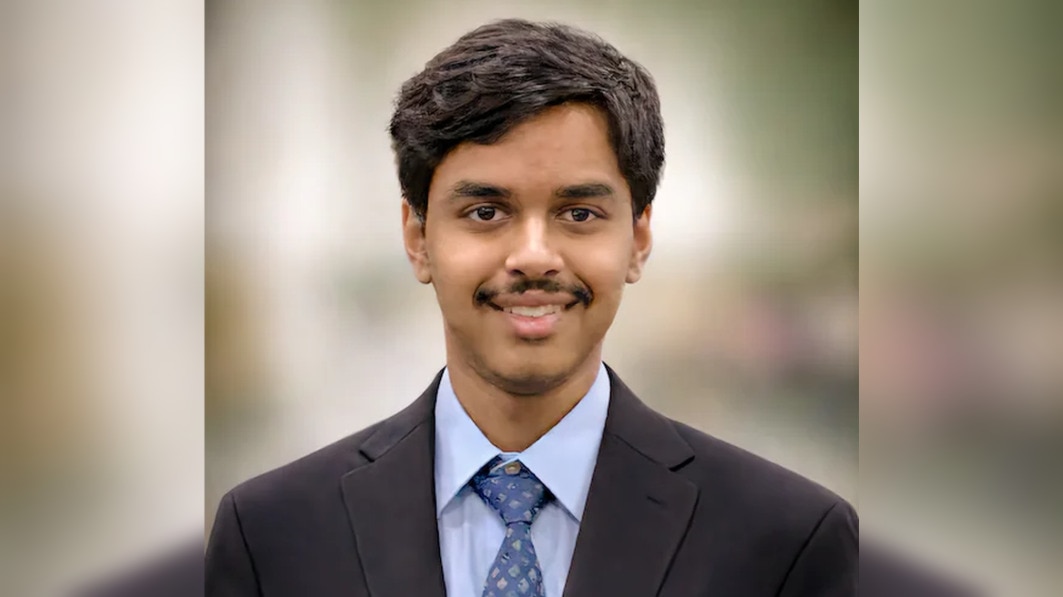
For 18-year-old Aditya Sengupta, experiencing sudden turbulence on a flight was more than a frightening moment; it was the beginning of a research project. He developed ForeCAT, an AI system that aims to predict clear-air turbulence. His work has now earned him the Davidson Fellow Laureate title and a USD 100,000 scholarship.
For most passengers, sudden turbulence is an unsettling part of flying. For Sengupta, however, the incident sparked a deeper question: why is something that can be so dangerous still so difficult to predict?
Clear-air turbulence, or CAT, can occur without visible warning signs such as clouds, making it particularly challenging to anticipate. Sengupta’s ForeCAT system combines artificial intelligence and atmospheric physics to improve the prediction of these potentially dangerous air disturbances.AI MEETS PHYSICS TO DETECT INVISIBLE TURBULENCE
ForeCAT combines machine learning with atmospheric physics, embedding physical laws into its neural network to identify areas where invisible air currents may form and estimate turbulence severity.
According to Davidson Institute research documentation, the system showed improved accuracy over standard forecasting methods. Data submitted to the Regeneron ISEF reported 95% classification accuracy, outperforming tools such as the Graphical Turbulence Guidance algorithm.
ForeCAT also reportedly retro-predicted the severe turbulence experienced by a Singapore Airlines flight in May 2024 with 87% confidence.A FRIGHTENING FLIGHT INSPIRED HIS RESEARCH
Sengupta's interest in turbulence began with his own experience as a passenger. "I became interested in this problem after experiencing sudden and frightening turbulence myself on flights," he said in his Davidson Institute profile.
"I started wondering why something that can be so dangerous is still so difficult to predict," he added. That question eventually became an independent research project spanning atmospheric science, computer science and machine learning.HOW A TEEN TAUGHT HIMSELF ADVANCED SCIENCE
Sengupta developed ForeCAT independently while in secondary school, teaching himself atmospheric science, turbulence and machine learning. The project involved working with imperfect data and abandoning several early approaches before finding a workable model.
"Research rarely follows a straight path and failed experiments can be just as valuable as successful ones," he said.
Beyond AI, Sengupta has participated in VEX Robotics, with his team finishing first in the US and second globally at the World Championship. He has also been recognised as a Regeneron Science Talent Search Scholar and a National Junior Science and Humanities Symposium finalist.FROM A SCHOOL PROJECT TO AVIATION APPLICATIONS
Sengupta designed ForeCAT with the possibility of real-world aviation use in mind. The system could eventually be integrated with existing air-traffic-control systems and flight-planning software.
Earlier warnings about potentially hazardous air could give pilots and air-traffic controllers more time to consider changes to flight paths or altitudes before an aircraft reaches turbulent airspace.
The need for better forecasting is also becoming increasingly important as scientists study how a warming climate may affect atmospheric circulation and clear-air turbulence.USD 100,000 SCHOLARSHIP AND A FUTURE IN SCIENCE
Being named a Davidson Fellow Laureate has brought recognition to Sengupta’s research, which began with a simple question after a frightening flight.
"Being named a Davidson Fellow is an incredible honour because it gives me the opportunity to join a community of young people who are curious, ambitious, and passionate about using their ideas to improve lives," he said.
According to the Davidson Institute, Sengupta plans to study computing and the natural sciences and continue developing engineering applications that combine physics and computer science.
At 18, Sengupta’s journey shows how a frightening experience can become the starting point for serious scientific inquiry, and how curiosity, when combined with AI, physics and persistence, can lead to solutions to real-world challenges faced by millions of air travellers.- EndsPublished By: Apoorva AnandPublished On: Sep 17, 2026 07:30 ISTREAD | 17-year-old from Tamil Nadu wins Rs 3.55 crore scholarship to Brown UniversityREAD | Indian-origin student wins Churchill scholarship to Cambridge after 36 years