
Sam Isaacs: a visionary and inspirational leader - IOL
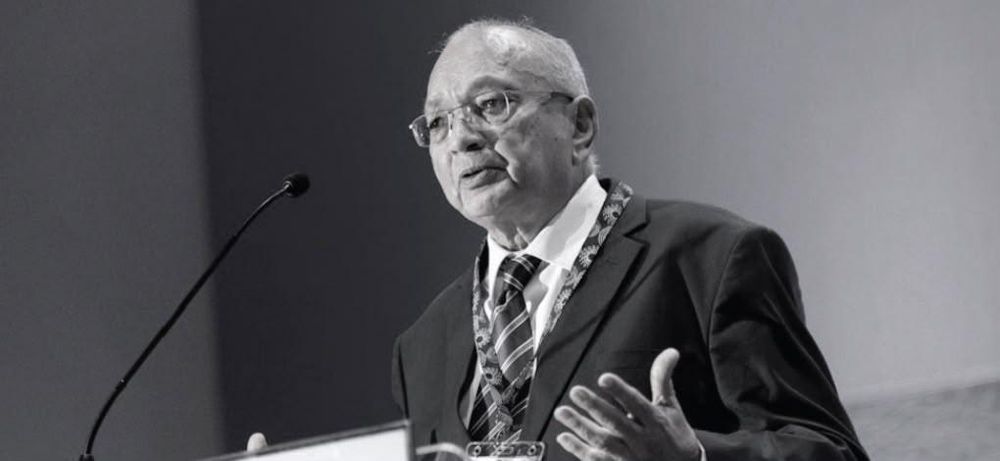
Sam Isaacs, the founding architect of South Africa's National Qualifications Framework (NQF), is remembered for his unwavering belief in education, training and development.
"We will make the NQF road by walking reflectively, accountably and boldly."
It is with great sadness that we mourn the passing of Mr Samuel Benjamin Arend Isaacs, a visionary and inspirational leader and founding architect of South Africa's National Qualifications Framework (NQF).
His life's work reflects an unwavering belief in education, training, development, and work as instruments of social justice, personal empowerment, and national development. His profoundly ethical approach reflects his earlier (and later) work as a Minister of the Anglican Church.
As South Africa transitioned to democracy in the early 1990s, he led the collaborative policy process to realise the country's integrated, equitable learning system, which grew into the South African Qualifications Authority (SAQA) as an enduring national institution. As convenor of the Committee for Development Work on the NQF in 1995, the first Chairperson of the SAQA Board in 1996, and from 1997 its first Chief Executive Officer (CEO) for 15 years, Mr Isaacs brought intellectual depth, a deep sense of humanity, insight, and practical direction to the NQF's development.
He understood that building a national framework required more than sound policy: it demanded democratic participation, sustained dialogue, trust among institutions and a steadfast commitment to lifelong learning. His consistent call to action was "we will make the NQF road by walking reflectively, accountably and boldly" drawing on the seminal work of Paulo Freire and Myles Horton. This call captured both the complexity of this work and his patient, courageous, active and reflective approach to leadership. He remained at the helm after the first NQF review and the promulgation of the NQF Act, enhancing NQF partner collaboration as the system "moved into dance".
Being a lifelong lover and promoter of the arts, he ensured that these developments were captured in the sculpture of dancing figures, placed strategically in SAQA's Mwalimu boardroom, by Orlando de Almeida, donated to SAQA by the sculptor and his wife, Hildegard. He loaned work from his extensive personal art collection to the organisation, ensuring that SAQA House always housed a generous display of the paintings and prints of local artists.
His contribution was rooted in a compelling vision of a transformed education and training system, one that would overcome the fragmentation and inequalities of the past and open meaningful pathways for all people to develop, progress and have their learning recognised. He championed a framework that connects different learning contexts, promotes redress, inclusivity, mobility and progression, quality, and transparency.
He spearheaded a national initiative to expand "communication, co-ordination, and collaboration" in the NQF context, travelling in person with a SAQA team to different NQF partner and stakeholder entities to establish a lasting national career advice system. He encouraged people to think not only of "quality qualifications", but also of "the social uses of qualifications", recognising that knowledge, skills, and competences are acquired in different contexts and used as "capital" in varied ways.
In this work, he helped to place fairness, transparency and public accountability at the heart of South Africa's qualifications system. Mr Isaacs recognised that lasting reform could not be achieved by any institution or sector alone. His early thinking of the "NQF as an ecosystem" provide an early roadmap for the inclusion of professional bodies and their designations, and more recently, a move towards the inclusion of national micro-credentials.
He valued consultation and brought together organisations and individuals with differing histories, interests and perspectives into the shared endeavour of the NQF. Through principled engagement, careful listening and a willingness to learn, he helped to foster the partnerships needed to sustain the NQF. His leadership combined strategic purpose with understanding, enabling contributors while keeping sight of the larger goal of a more coherent, inclusive and responsive system.
He was an inspirational CEO, much loved by SAQA's Board, directors, and staff. His three one-hour management meetings a week ensured that SAQA's leadership benefited from the knowledge of, and participation in, the lively developments and collaborations within and across his extensive national and international networks.
The current Board Chairperson of SAQA, Dr James Keevy, often comments that the foundations of his career started working under Dr Isaacs: "As a young white man working in a new democratic institution at the time, which SAQA was the prime example of, there was no compelling reason for Sam to take me under his wing. Yet he did so, over and over again. He was a tough boss. A kind mentor. Mostly he was the best example of a reflective, accountable and bold leader that any of us could have wished for. I will miss him dearly".
In true democratic style, leaders were in turn expected to model this approach with their teams. SAQA as an organisation modelled the egalitarian approach it promoted. He also laid the foundations of, and participated in, SAQA as a learning organisation with opportunities for all staff to learn formally, non-formally, and informally - a tradition which continues today.
