Right-Wing Parents Distraught Over Their Far-Left LFI Children: “If I Could Do It Over, I Would Raise Them Differently” - Le Figaro
Pour sauvegarder un article vous devez être connecté, vous pourrez ainsi les consulter sur tous vos appareils.
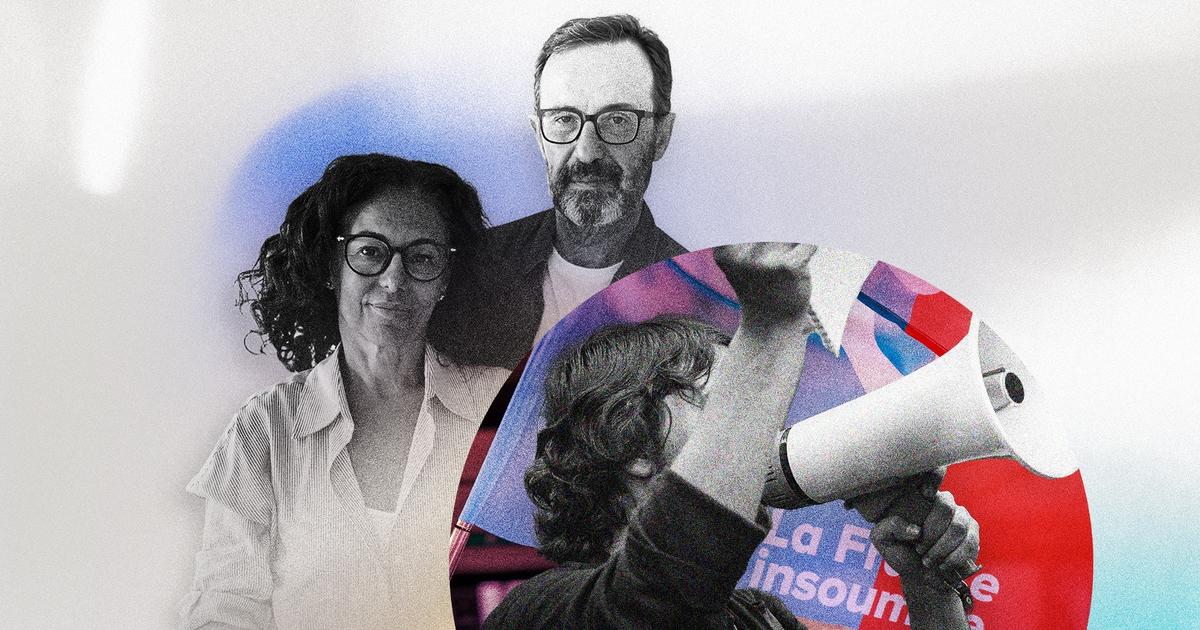
Across France, right-wing parents are expressing their dismay at the political choices of their children, who vote for the far left. For some, it is heartbreaking; for others, a “passing phase”; above all, it is a generational issue, especially as one in two young people is expected to vote for La France Insoumise (LFI) candidate Jean-Luc Mélenchon in the 2027 presidential election.
The Laurent* household avoids talking politics for fear of causing a family dispute. But that does not stop anyone from knowing where the others stand. The three children know their parents are on the right: “They do not know who we vote for, but they know what we read, what we listen to, which is enough to ‘categorize’ us,” Bruno*, the father, said, adding with a chuckle: “Let’s just say that when we lend them our car, we leave the radio on Europe 1 and get it back with France Inter. Without anyone saying anything.”
The retired couple’s political views fall somewhere between the conservative Les Républicains (LR) and the far-right Rassemblement National (RN); meanwhile, their children, aged 37 to 42, are mostly on the left. The youngest is even far-left La France Insoumise (LFI). “She’s on the radical left, very activist on social, ‘racial,’ intersectional and feminist issues,” Bruno said. Leaving the Journal du Dimanche (JDD) weekly newspaper, owned by right-wing billionaire Vincent Bollore — which the parents have been buying for some time — lying on the table or in the bathroom is therefore no longer an option when the children are home for vacation. While the Laurents have never openly discussed politics — and prefer to laugh rather than cry over it — the subject has now become “taboo” for this household in the western city of Niort.
The Laurents’ situation reflects ideological and generational divides among French voters. According to a September 2026 Ipsos poll measuring voting intentions for the upcoming 2027 presidential election, voting LFI seems fairly obvious to a large portion of youth. While 15.5% of Ipsos poll respondents said they intended to vote for Mélenchon in the first round of the election, that percentage is 42% among 18- to 24-year-olds who vote (a large portion of young people abstain from voting), 32% among 25- to 34-year-olds, and another 16% among 35- to 49-year-olds, before plummeting to 4% among those over 70.
That is why LFI elected officials seemed so confident during the high school protests in recent weeks: MP Mathilde Panot was seen dancing with students in front of a high school in Val-de-Marne on October 1, and MP Louis Boyard was seen walking confidently and forming a heart with his hands in a procession. Mélenchon even received a (filmed) hug from Elwan, a student at the Jacques-Decour public high school near Montmartre, who has become a figurehead of the high school protest movement.
From that perspective, the youngest Laurent sibling is very much a product of her generation. What sets her apart, however, is that she grew up in a conservative family with clear right-wing leanings. Indeed, “the basic distinction between left and right is still very widely passed down,” said Anne Muxel, emeritus research director in sociology and political science at the French National Center for Scientific Research (CNRS). “Indeed, it is highly emotional and rooted in family political socialization, which defines a certain number of attitudes, behaviors, reactions and emotions in parents that permeate their children’s lives from a very early age.”
In short, nearly 50% to 70% of individuals inherit their parents’ political stance on the traditional political spectrum: left, center and right. Conversely, sharp shifts (from the right to the left, and vice versa) are rare and account for only 10% to 15% of people. And “when they do occur, these shifts tend to be more from the right to the left,” Muxel said.
That can sometimes create awkwardness during family reunions. In the Moreau* family, a recent dinner got out of hand during a discussion about October 7, 2023 — the day of the Hamas terrorist attack against Israel. “During that dinner, my oldest son got into it with his mother, with me, but also with his brother,” said Jérôme*. The family is used to debating and provoking one another to share ideas and spark controversy. But the “red line” must not be crossed, the 50-year-old father said: “That evening, Victor* was talking about the Jewish state as if it were a dictatorial, Nazi state. He equated Zionism with a form of racism. I could not let him spout nonsense like that; it was practically antisemitic.” After the heated exchange, Jérôme and his wife went to bed, racking their brains about “why and how” their son thinks that way.
Victor’s strong opinion is reminiscent of the array of signs carried and slogans chanted during the violent protests on October 17, which were partly organized by the far-left, or during the blockades that took place in the preceding weeks near high schools and universities, criticizing, in some cases, overly packed schedules; in others, the lack of transparency in the Parcoursup national higher education admissions system; or even a shortage of teachers.
In these blockades and marches, educational issues were quickly overshadowed by other causes: “Fund our high schools instead of genocide,” read a sign adorned with the colors of the Palestinian flag, echoing the position of LFI on the Israeli-Palestinian conflict, and in particular that of LFI MEP Rima Hassan, who accuses the State of Israel of perpetrating “genocide” in Palestine.
For sociologist Olivier Galland, a specialist in youth studies, this comes as no surprise: “The situation in Gaza plays a very important role in creating a sort of generational identity that unites many young people. It may bring to mind the Vietnam War — even if it is not comparable — because that conflict had united young people in many Western countries to condemn the U.S. intervention.”
Gaza, along with issues such as feminism, the planet’s exploitation by the wealthy, and police violence, top the list of topics that unite young LFI voters. Cardboard signs at recent protests have featured radical slogans such as “CRS: soulless racist thugs”; “100 people own half the wealth. Simple”; “Youth speak out, police crack down”; “ACAB”; “Young people aim for their baccalauréat; cops aim for their heads.” Those are demands that Gabrielle*, a 28-year-old from Lyon, stands by. She said that it is indeed through “force” and “frank stances” that solutions will “finally” emerge. According to a study by the Jean Jaurès Foundation, 54% of young French people aged 18 to 24 believe that “sometimes you have to resort to violence to advance your ideas” (as evidenced by the October 17 attacks, which deliberately targeted seats of power).
The young woman, whose parents have voted LR “for as long as they’ve been breathing,” has joined a few protests “in support of young people.” When asked about violence against law enforcement or teachers, she replied without batting an eye: “Brutality toward teachers is unacceptable, I agree, but when it comes to law enforcement, why not see it as a response to repression?” The lawyer objected to those who “blindly” support police officers who are “violent,” if not “racist.” Yet her parents see a “gaping lack of nuance” in that line of reasoning, she said.
These sharp, if not categorical, positions stifle dialogue, much to the chagrin of the parents Le Figaro interviewed. This radicalism stems from two well-known factors, Muxel said: the first is situational and tied to the evolution of society as a whole, which is becoming polarized toward extremes, driven by anger and dissatisfaction. “The climate is conducive to these stances, and young people are simply amplifying certain trends,” she said.
The second, more structural explanation lies in the very nature of youth, which embodies “an energy and a desire to transform the world and society,” qualities some lose later on, once they settle into adult life and have gotten their hands dirty. Another common thread among these Mélenchon supporters: They are predominantly urban dwellers and/or college graduates. “Education level remains a very decisive factor in voting behavior and politics,” Muxel said. These young people from privileged backgrounds embrace the most left-wing ideas and advocate for a necessary “convergence of struggles” among all the “victims” of various “forms of social domination.”
Among the channels spreading all these ideas, social media plays a prominent role. Gabrielle, who gets her news mainly from Instagram, said: “I follow a lot of accounts that provide information different from that of traditional media. They also offer podcasts, videos, discussions, and other, more original formats featuring other people.” She said, for example, that she learned on Instagram about a protester’s hand being blown off on October 17 in Saint-Étienne, even though this was reported only “very little” or “not at all” by newspapers and television. She said the media only reported the injuries suffered by law enforcement — nearly 1,000 people, including seven with serious injuries. Concerning the political “diversity” of what she consumes online, the young woman said: “It’s definitely more left-leaning, but what about older people who watch CNews and read Valeurs Actuelles?”
Sociologist Olivier Galland, who analyzes the now well-known risk of coexisting parallel worlds, said: “Social media can create sort of generational bubbles where young people share their ideas among themselves and reinforce each other’s convictions.” That can contribute to widening the gap between generations, on political ideas as well as societal values, by weakening “the traditional transmission of ideas from one generation to the next,” he said.
Jean, who is “very right-wing” and whose sons now express “LFI-style convictions,” expressed his concern: “The left is much stronger than the right on social media. Even the least-known LFI lawmaker has more likes than any other politician.” Hence, in his view, a growing disconnect.
Every family makes its own choice to either engage in unpleasant verbal sparring or accept oppressive taboos. Sylvain* and his two daughters — “not Mélenchonists” but “very ‘woke’ on the issues championed by the LFI movement” — have gone through both phases. “At first, there were tensions: on the issue of puberty blockers, for example, a discussion during which my daughters immediately accused me of being transphobic. After a few other incidents, we tacitly decided that it was over. They no longer live in Lyon but in the Paris region, so we rarely see each other, and no one wants to spoil these joyful reunions.” But that does not stop Sylvain from wondering why they have such major differences of opinion.
Muxel has analyzed this type of reaction: When children express beliefs that contradict those of their parents, it can feel like an admission of failure. Because, deep down, it calls into question their ability to pass on their beliefs; that is, potentially, “the deepest part of who they are and what they think,” Muxel said.
Even if their relationship is very happy on an emotional level, “it is painful,” Sylvain said, adding that “if [he] could do it all over again, [he] would raise them differently.”
“I would guide them more, without formatting them, of course, but by introducing them, for example, to more people who think like me,” he said. “I messed up a bit.”
That bitterness can also affect politicians with openly stated convictions. That is the case with Robert Ménard, mayor of Béziers, who describes himself as “far right” and wrote “Lettre à Clara” (“Letter to Clara”), a book about his daughter’s political convictions, which oppose his own. She is a radical feminist, anti-capitalist and votes LFI. “How did such a gulf come to exist?” Ménard said on the talk show “Quelle Époque!” with Léa Salamé. “Her view of me bothered me because I thought to myself: I’m not the person she thinks I am. And this book, at its core, is just that. On a number of issues, she is right, and she’s changed me.” His daughter’s radical views have thus shaken up some of his convictions.
That is not the case for Monique and Bruno, who still think the same way — if not “further to the right.” They prefer to accept the feeling, which troubles them but is the result of an upbringing they would not change. “It is a shame, because we cannot connect with our children on that level,” Monique said, referring to the intellectual level.
For Bruno, “We never talked about politics at home. For us, passing on political ideas was not part of our parenting: You have to let your children think what they want, based on the people they meet, their partners and experiences.” When the Laurents take stock, their children “are all very different.” Bruno and Monique express a bittersweetness.
Recognizing that sentiment, sociologist Muxel said it stems from a parenting style — unique to modern families — that is marked by sometimes contradictory expectations: Parents grant their children “free will,” yet may simultaneously suffer when their children express “opposing choices.”
With just a few months to go before the presidential election, parents and children alike are dreading end-of-year family dinners, where everyone risks “walking on eggshells.” During these reunions, “parallel worlds” share the same table and have the opportunity to talk — or to fight.
*First names followed by an asterisk have been changed to protect the anonymity of the interviewees.