Ramaphosa promises to address the country on GBV and Ekurhuleni killings - IOL
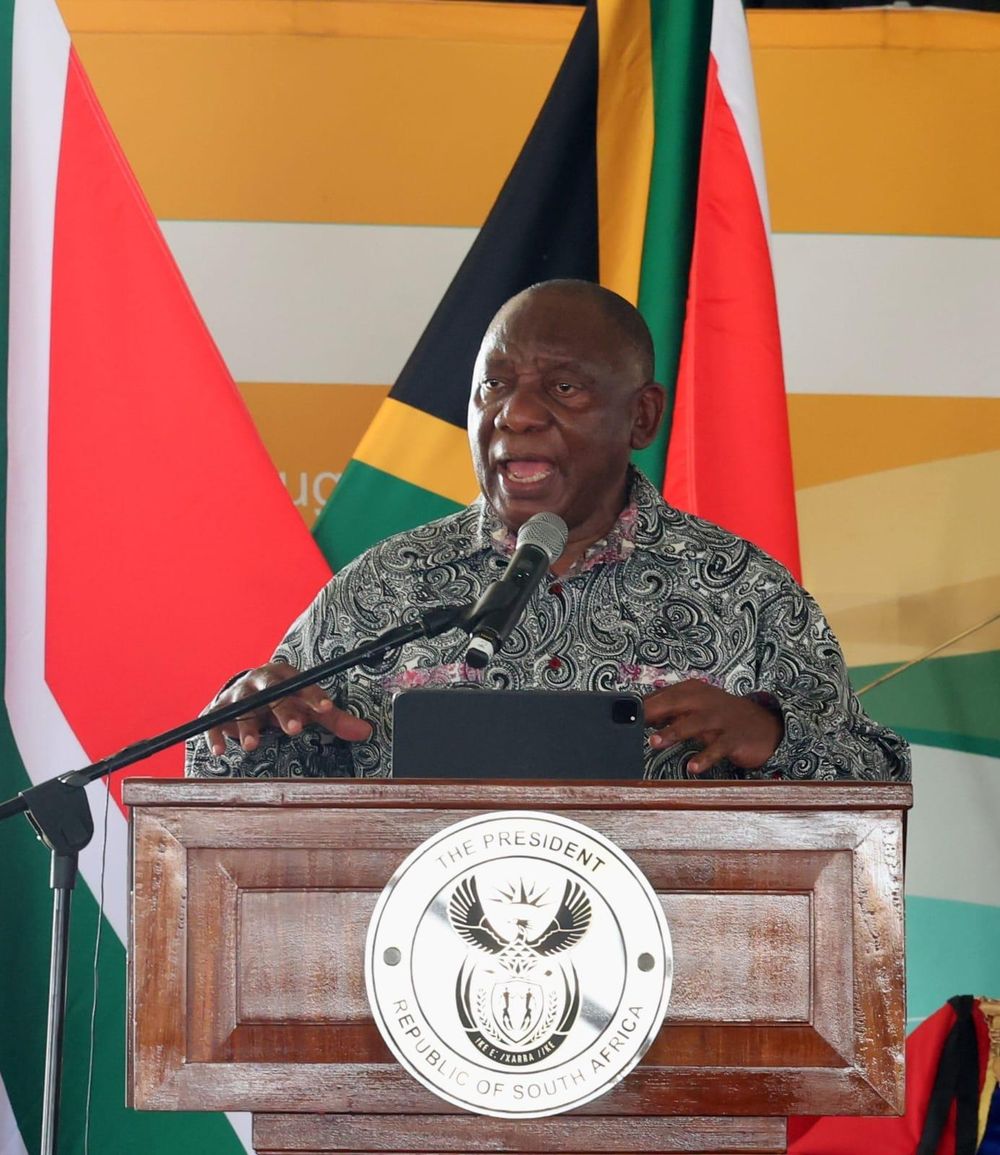
President Cyril Ramaphosa addresses the nation during the 2026 National Heritage Day celebrations at Bongolethu Sports Stadium in Oudtshoorn.
President Cyril Ramaphosa is set to address the nation in the coming days on government’s response to gender-based violence and the investigation into the killings of women in and around Ekurhuleni.
Ramaphosa announced during his National Heritage Day address at Bongolethu Sports Stadium in Oudtshoorn on Thursday, where he said violence against women could not form part of the country’s heritage.
“In a few days, I will address the nation on the steps government is taking to confront gender-based violence, and to update South Africans on the investigation into the killings of women in and around Ekurhuleni,” Ramaphosa said.
“The abuse, rape and killing of women is not our heritage.”
He said there was no culture that justified diminishing the dignity of women and described the suffering experienced by women in South Africa as a national shame.
“There is no culture worthy of the name that diminishes the dignity of women,” he said.
“The women of South Africa have the right to walk the streets of their country at any hour without fear.”
Ramaphosa said Heritage Day was about more than celebrating South Africa’s languages, cultures, traditions and history.
He said it was also about confronting the inequalities that continued to shape the lives of South Africans.
“For although we have inherited freedom, that freedom is still unequally lived,” he said.
Ramaphosa pointed to differences between people living in safe communities and those living with the fear of crime, as well as unequal access to electricity, water, education, technology and opportunity.
“If we want to strengthen the ties that bind us, we must close these distances between the lives of our people,” he said.
Ramaphosa said South Africa’s Constitution was part of the country’s heritage and “the tie that binds us together”.
He said the country’s diversity should not be viewed as a reason for separation, but as something that formed part of the South African identity.
“Our diversity does not make us less of a nation; our diversity is what makes us the nation that we are,” he said.
He also called on South Africans to remember the country’s history, including dispossession, slavery, colonialism, apartheid and forced removals.
At the same time, he said South Africans should remember the resistance, courage and solidarity that helped bring about democracy.
Ramaphosa said South Africans had chosen to build one country together after generations of conflict and division.
“That too is our heritage,” he said.
He said democracy, reconciliation, non-racialism and equality before the law were also part of the country’s heritage.
Ramaphosa said South Africa’s next challenge was to give greater meaning to the freedom achieved in 1994.
“We have attained our freedom, the next step in our collective journey is giving meaning to that freedom,” he said.
He said unemployment, gender-based violence, corruption, and alcohol and drug abuse were among the challenges facing the country.
“In the past, our common enemy was apartheid.
“Our enemy today is unemployment, gender-based violence, corruption, and alcohol and drug abuse.”
Ramaphosa said South Africans had a shared responsibility to protect the country’s social fabric and guard against attempts to undermine national unity.
He said the National Dialogue process presented an opportunity to write the next chapter of South Africa’s story and develop a new vision for the country.
“The actions and decisions we take now will determine whether we build this country, up or further break it,” he said.
Ramaphosa called on South Africans to put their differences aside and work together, urging them to “choose unity”, “choose ubuntu” and pursue human dignity.