Ramaphosa orders 60-day probe into unresolved murders, rapes involving women and children - IOL
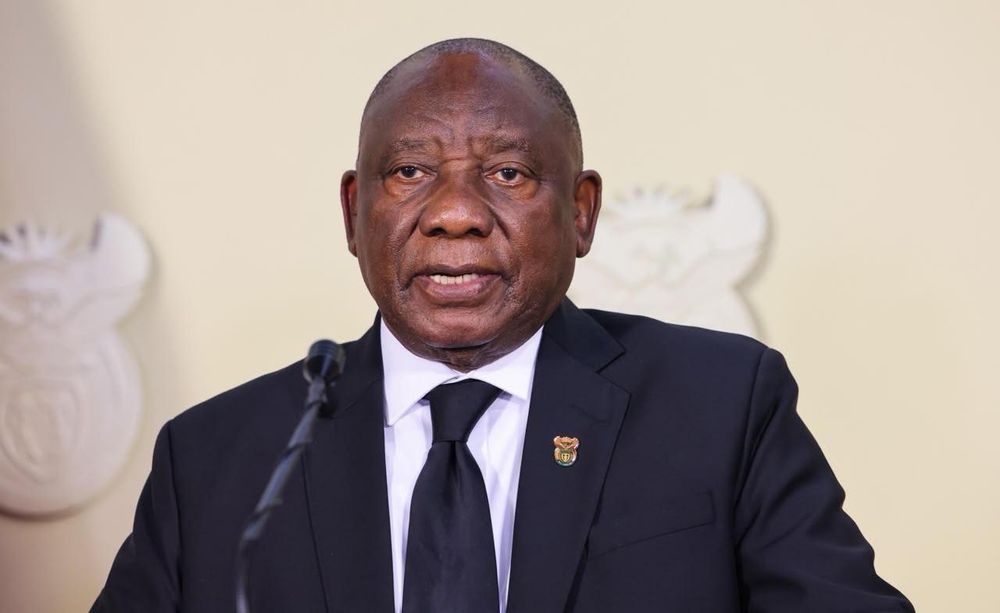
From stalled investigations and forensic backlogs to unsafe public spaces and illegal taverns, Ramaphosa has set strict deadlines for government to strengthen its response to violence against women and children.
President Cyril Ramaphosa on Tuesday unpacked a four-point plan that he has sent in place to tackle the country's scourge of gender-based violence and femicide (GBVF).
Addressing the country, Ramaphosa sympathised with the families of the 12 women who have been killed.
"I have directed the Minister of Police and the Minister of Justice and Constitutional Development, working with the South African Police Service and, with due regard to prosecutorial independence, the National Prosecuting Authority, to undertake a national case-recovery operation focused on unresolved murders, attempted murders, rapes and serious sexual offences involving women and children," he said.
Ramaphosa said within 60 days, this audit must identify the number of unresolved crimes against women and children.
The audit must establish how many cases remain unresolved, the ages of those cases, which are awaiting forensic evidence, where suspects have been identified but not arrested, and where investigative or prosecutorial action has been unreasonably delayed.
Within 90 days, individual recovery plans must be drawn up for priority cases and investigations that have stalled. Each plan must specify the outstanding work, the official responsible and a deadline for action.
Ramaphosa said the exercise was intended to ensure cases did not remain trapped in the system without clear accountability.
“Within 60 days, this audit must identify the number and age of unresolved cases, cases awaiting forensic evidence, cases in which suspects have been identified but not arrested, and cases in which investigative or prosecutorial action has been unreasonably delayed,” he said.
The directive comes amid renewed scrutiny of the country's ability to investigate violent crimes and bring those responsible before the courts.
The President has also instructed the Police Minister, the national police commissioner and relevant forensic authorities to produce a funded plan within 60 days to reduce forensic backlogs.
The plan must detail the size and age of the backlog, shortages of personnel and equipment, the resources required and when the backlog is expected to be reduced.
Priority forensic samples and cases involving the rape or murder of women and children must be ring-fenced for urgent processing, with progress reported publicly every quarter.
The measures are intended to address delays that can hold up investigations and leave families waiting for answers.
Ramaphosa said: “Priority forensic samples and cases involving the rape or murder of women and children must be ring-fenced for urgent processing.”
The plan will also establish clear turnaround standards for priority GBVF cases, allowing the public to monitor whether authorities meet their commitments.
In another major intervention, every municipality has been instructed to begin a women's safety audit without delay, working with provincial governments and the police to identify high-risk areas.
Within 60 days, the audits must identify broken streetlights, overgrown public spaces, abandoned buildings, unsafe transport routes, poorly secured parks and other places where women may be exposed to danger.
The reference to unsafe public spaces comes as authorities investigate the deaths of women whose bodies have been discovered in different locations across Ekurhuleni.
The President's speech referred to one woman being dumped in a cemetery, underscoring the need to examine the safety of public spaces as part of the wider response.
Within 90 days of completing the audits, the most urgent hazards must either have been addressed or included in a funded implementation plan with clear completion dates.
The findings and progress must be made public so communities can see what has been identified, what has been fixed and what remains outstanding.
Ramaphosa said: “Women should not have to live in fear because government has failed to repair a light, clear a public space, process evidence or enforce a law.”
The audits place responsibility on local authorities to identify and address environmental risks, rather than leaving communities uncertain about whether reported hazards will be dealt with.
The President has also called for provincial and municipal authorities to intensify enforcement of existing liquor laws and bylaws, particularly against unlicensed outlets and establishments trading outside their permitted hours.
He has directed the Minister of Trade, Industry and Competition, working with the ministers responsible for health, social development, police and cooperative governance, to submit a coordinated legislative and enforcement package to Cabinet within 60 days.
The package will focus on reducing alcohol-related violence as part of the broader prevention strategy.
However, Ramaphosa cautioned against treating alcohol as an excuse for abuse or violence against women.
“Alcohol does not cause gender-based violence and it can never excuse it. Responsibility always lies with the perpetrator,” he said.
He added that harmful alcohol use remained a significant aggravating factor in interpersonal violence and needed to be addressed as part of wider prevention efforts.
The proposed measures are intended to combine stronger enforcement with a coordinated approach across government departments.