Ramaphosa condemns white genocide claims, warns against language glorifying killing - IOL
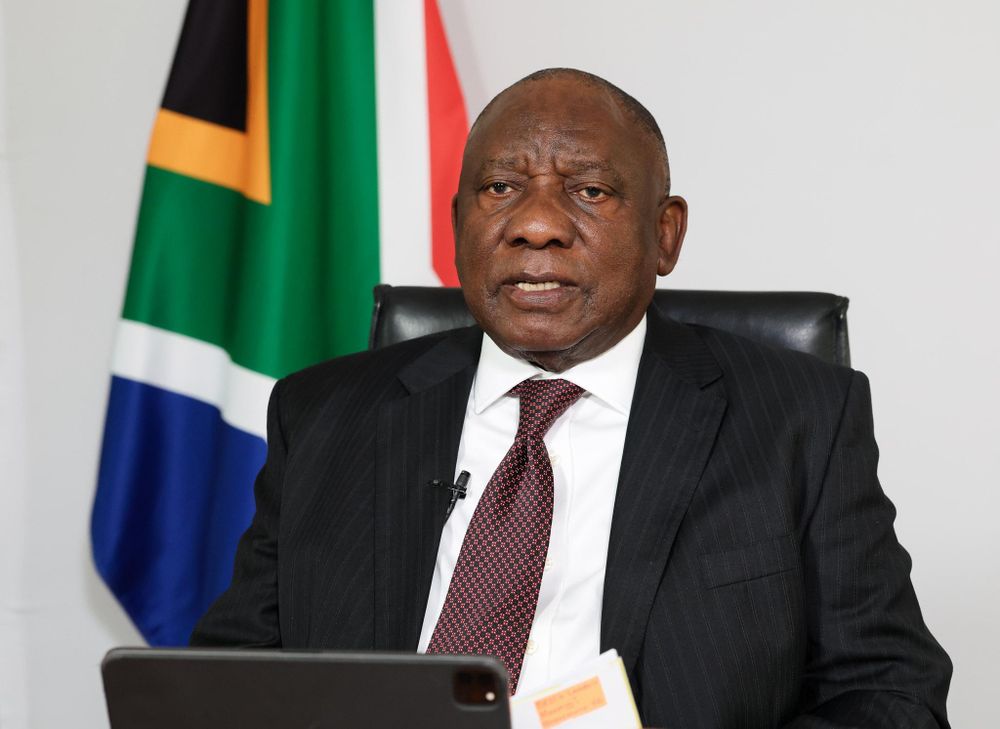
President Cyril Ramaphosa has condemned claims of white genocide being promoted overseas, saying efforts to discourage investment in South Africa are neither responsible nor patriotic.
President Cyril Ramaphosa has condemned efforts to promote claims of a white genocide in South Africa overseas, saying the country’s economic recovery depends on attracting investment.
In his weekly letter to the nation, Ramaphosa said South Africans should work to build a stronger economy and address the country’s high unemployment rate.
“At a time when unemployment is high, and we need to grow our economy and attract investment, travelling to foreign capitals to spread the falsehood of a ‘white genocide’ and discourage investment in one’s own country is neither responsible nor patriotic,” Ramaphosa said.
The remarks came as Ramaphosa reflected on Heritage Day and South Africa’s democratic values, saying the country’s diverse cultures and traditions were part of a shared heritage.
He said South Africans had made a historic choice in 1994 to acknowledge the injustices and suffering of the past while committing to living together and building a new nation.
South Africa’s constitutional order, he said, was founded on non-racialism, non-sexism, equality, democracy and human dignity.
“Heritage is not only what we celebrate. It is also what we defend,” Ramaphosa said.
The president warned against words and actions that could polarise communities, inflame public opinion and reopen the wounds of the past.
“We must remain vigilant against those who seek to undermine our national unity and turn South Africans against one another.”
Ramaphosa said freedom of expression was guaranteed by the Constitution but came with responsibility, and warned against language that glorifies killing or encourages hostility, particularly given South Africa’s high levels of violent crime.
His comments come amid ongoing tensions between South Africa and the United States over issues including race, land reform and claims involving minority groups.
US Secretary of State Marco Rubio recently announced visa restrictions against foreign nationals linked by Washington to policies involving uncompensated land seizures, race-based discrimination and the incitement of violence against minority groups in South Africa.
South Africa has rejected the US characterisation of its policies.
Ramaphosa also addressed violence against women, xenophobia and migration.
“We cannot allow violence against women to define who we are,” he said.
“The abuse, rape and killing of women is a stain on our national conscience. We cannot claim to be a society founded on freedom, equality and human dignity while half of our population lives in fear of violence.”
He said South Africa refused to be defined by xenophobia and intolerance, while migration had to take place within the law.
“Government has a responsibility to manage our borders effectively, and everyone who lives in South Africa is required to respect our laws.”
Ramaphosa also defended measures aimed at correcting the injustices of apartheid.
“There is no equivalence between legitimate, constitutionally grounded measures of redress and the systematic racial oppression of apartheid.”
South Africans needed to continue upholding the values that underpinned the country’s democracy.
“We may be a diverse nation, but we are united by the constitutional values that make us South African,” Ramaphosa said.
“These values transcend race, gender, language, culture and geography,” and protecting those values was a shared responsibility.
“Every day, through our words and our deeds, we must renew the choice we made in 1994 and affirmed when we adopted our Constitution: the choice to build this country together.
“That is our shared heritage. It is also our shared responsibility.”