Ramaphosa and Lamola blamed as Trump moves to cut SA from AGOA - IOL
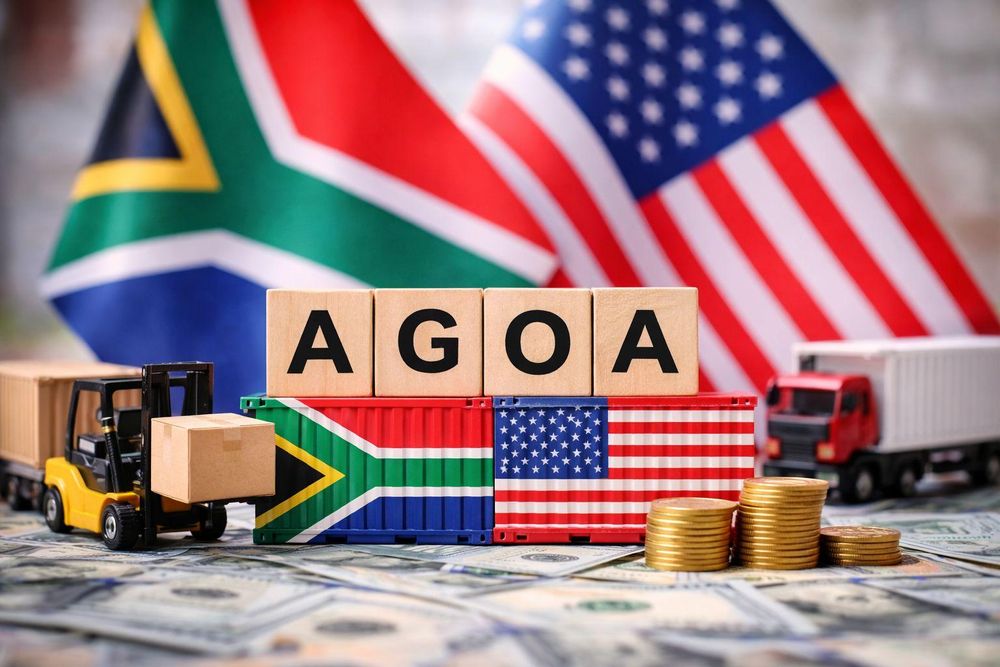
Trump administration moves to end South Africa’s AGOA benefits.
South African organisations Solidarity and Lex Libertas have blamed President Cyril Ramaphosa and International Relations Minister Ronald Lamola for the United States' decision to move towards excluding South Africa from the African Growth and Opportunity Act (AGOA), warning that workers and export industries could bear the consequences of deteriorating diplomatic relations.
The criticism follows US President Donald Trump's notification to Congress of his intention to terminate South Africa's participation in the trade programme from January 1, 2027.
The announcement, made on Monday, represents a major setback for Pretoria's efforts to retain preferential access to the American market, amid growing tensions between the two countries.
US Trade Representative Jamieson Greer said the decision followed an annual review of sub-Saharan African countries' eligibility for AGOA.
Greer said Trump had found that South Africa and Rwanda were engaging in practices inconsistent with the programme's eligibility requirements, including barriers to American trade and investment and practices considered threats to US national security and foreign policy interests.
Solidarity expressed disappointment at the White House's decision, saying it was a direct consequence of the government's failure to repair its deteriorating relationship with Washington.
The trade union said Ramaphosa and Lamola had repeatedly ignored warnings about the consequences of their foreign policy decisions and public statements, which it argued further strained relations with one of South Africa's most important trading partners.
Jaco Kleynhans, Solidarity's head of public liaison, said the organisation had played a key role in securing support in the US Congress last year to extend AGOA by two years, until the end of 2028.
Through engagements with senators, members of the House of Representatives and American officials, Solidarity said it helped secure the continuation of the legislation.
The organisation is also working with members of Congress on plans to extend AGOA by another 10 years beyond 2028.
However, Kleynhans said the annual review of beneficiary countries remained the responsibility of the White House, arguing that Ramaphosa and Lamola's antagonism towards Trump and his administration had made it impossible for South Africa to remain in the programme.
He specifically pointed to Lamola's remarks during his September visit to the US, which Solidarity said had further jeopardised the country's participation.
“Ordinary workers and industries will now pay the price for political negligence,” Kleynhans said.
Solidarity called on the government to resolve the dispute with Washington immediately and constructively, warning that the economic consequences could be significant, particularly for the automotive, agricultural and other export-oriented industries.
The organisation said thousands of jobs could be at risk and confirmed that it was engaging with the US government to limit the negative impact on its members and affected industries.
Meanwhile, Lex Libertas also held the South African government responsible for the AGOA crisis, saying Pretoria knew exclusion from the programme was a possibility but failed to take reasonable steps to prevent it.
The organisation said the government should have addressed American concerns relating to incitement to violence against minorities, property rights and free-market policies.
Instead, it accused the government of prioritising political ideology over the economic interests of South Africans.
“This is shameful. The government anticipated the consequences of its decisions but chose not to address their causes,” said Dr Ernst Alex Roets, executive director of Lex Libertas.
Roets argued that the AGOA crisis reflected deeper structural problems within South Africa's political system, which he said had become detached from realities at community level and shielded political leaders from accountability.
He called for fundamental constitutional reform based on decentralisation and self-governance.
The proposed exclusion comes amid an increasingly strained relationship between Pretoria and Washington since Trump returned to the White House in January 2025.
The diplomatic fallout has included the suspension of US foreign aid to South Africa, the expulsion of former South African ambassador Ebrahim Rasool and repeated American criticism of Pretoria's domestic and foreign policies.
Trump has also made allegations of a so-called “white genocide” in South Africa, claims rejected by the government.
The two countries have clashed over land reform, affirmative action and South Africa's foreign policy positions, particularly its case against Israel at the International Court of Justice over alleged genocide in Gaza.
South Africa has defended its sovereign right to determine its domestic policies and pursue an independent foreign policy.
The dispute has also spilled over into the G20, with Washington refusing to accredit South Africa for official US-hosted meetings.
AGOA provides eligible African countries with preferential, duty-free access to the American market for thousands of products, including vehicles, textiles and agricultural goods.
South Africa is the programme's biggest beneficiary, making its automotive, agricultural and manufacturing sectors particularly vulnerable to exclusion.
Trade between South Africa and the US reached $28.8 billion in 2025, while more than 600 American companies operate in South Africa, collectively employing over 130,000 people.
The proposed withdrawal threatens to undermine South Africa's preferential access to the American market and could further strain already fragile diplomatic relations.
Although the notification signals Washington's intention to remove South Africa from AGOA, the Trump administration has indicated that it wants African partners to address its concerns and meet the programme's eligibility requirements.
Rwanda has also been notified of Trump's intention to terminate its participation in AGOA from January 1, 2027, with Washington citing concerns about its eligibility and involvement in the conflict in the eastern Democratic Republic of Congo.