Prayer walks are political protests - Punch Newspapers
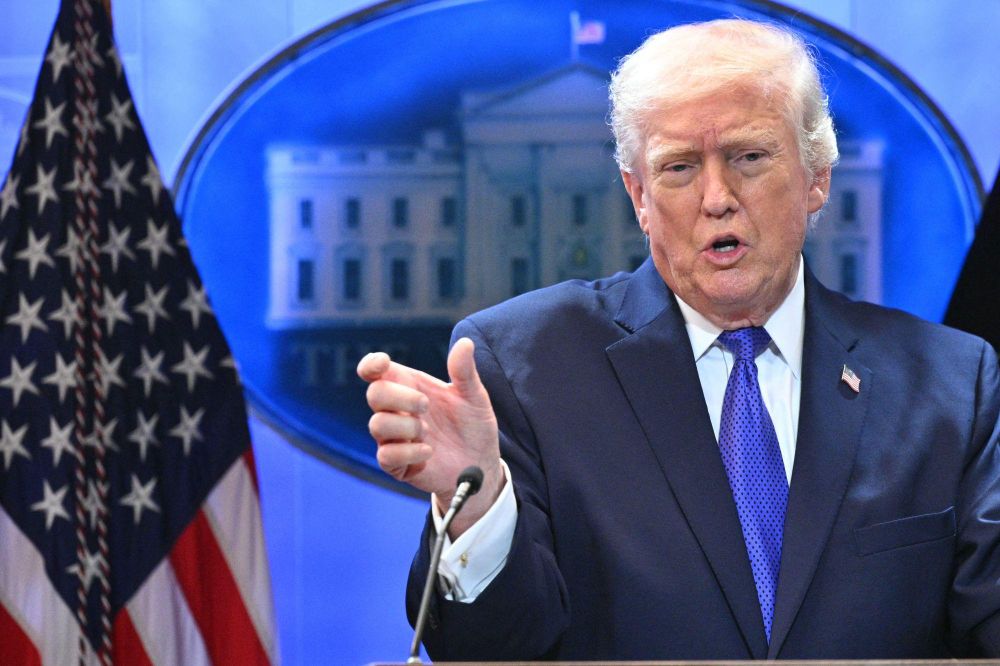
On Sunday, during the RCCG November Thanksgiving service, Pastor Enoch Adeboye clarified that his appearance during a 2020 public march was a prayer walk, not a political protest. Addressing critics and journalists who perpetuate the claims that he protested the condition of the nation under the Goodluck Jonathan administration and remained silent during this political dispensation, he let us know he carried a placard in compliance with the directives of the Christian Association of Nigeria and the Pentecostal Fellowship of Nigeria, which asked churches to embark on a prayer walk. He said the photograph of him carrying a placard during that march had been repeatedly misrepresented as protesting the policies of Goodluck Jonathan administration, whereas it was under Muhammadu Buhari. We thank him for setting the record straight, but he has been a cleric for long enough to know that prayer walks are, in fact, a form of political protest. What else was a prayer walk organised against insecurity in Nigeria supposed to achieve other than political effects? The placard Adeboye held up during that march, which read, “All souls are precious to God,” is itself a political statement. To persuade Pastor Adeboye about the political efficacy of prayer walks, I could give some examples from the Bible, but a historical discussion would suffice. First is the 1957 Civil Rights prayer walk in the USA: the Prayer Pilgrimage to Washington. Widely considered one of the most consequential prayer demonstrations in US history, the estimated 25,000 attendees prayed, sang hymns, and expressed their political stance. Dr Martin Luther King, Jr. delivered his “Give Us the Ballot” speech. That prayer walk, along with a series of other political activities, eventually led to constitutional amendments and the Voting Rights Act of 1965, which secured the right to vote for adult citizens of all races and genders in the USA. Imagine where history would be today if, when faced with pressure from critics, Dr King Jr. had said, “That was a prayer walk and not a political protest”? Another example is the weekly prayer meeting that began at St. Nikolai Church, a small church in East Germany, where some pastors organised weekly “peace prayers” that later became a political force that helped dismantle the Soviet bloc. At first, attendance was discouraging, but the intercessors encouraged one another to remain faithful. As political change began, people felt more optimistic that the desired change was possible, and they joined the prayers. From the church, the prayer meetings spilt into the streets. People empowered by faith faced down military forces. From a dozen people who prayed faithfully for seven years, they became an army of 120,000 whose protests led to the fall of the Berlin Wall. One more example is the prayer marches organised by Liberian social worker Leymah Gbowee to stop their country’s bloody civil war. Women of all faiths dressed in white (to symbolise peace) and sat silently in prayer outside the Presidential Palace to pressure warlords and President Charles Taylor to resume peace talks. Her efforts, for which she won the Nobel Peace Prize, are documented in her book, “Mighty Be Our Powers”, and the documentary “Pray the Devil Back to Hell”. Now, because we are Nigerians, one must issue a caveat about the efficacy of prayer. In the cited instances, prayer alone did not achieve political effects. God did not come down from heaven to institute political change; humans did. What prayer did was to provide an ethical framework around which people built a unanimous political agenda, insisted on concerted acts of bodily discipline, motivated each other to see their collective efforts in a broader moral light, and be accountable to one another. 2027: Kaduna CAN backs Shehu Sani, seeks monarchs’ reinstatement Two feared killed, 20 abducted in fresh Kaduna community attack Jonathan, Diri pay tributes to late husband of Bayelsa chief judge By marching in unison, they made a moral demand on society and grounded their claims in the tenets of their faith. Prayer marches are nonviolent political dissent that seek to use religious means to achieve political ends (such as ending poverty and insecurity, fighting oppressive policies, and maintaining hope and strength in morally debilitating circumstances) without necessarily organising under the banner of political ideologies. To therefore say a prayer walk in Nigeria has no politics attached to it is to blunt the edge of a sharp political weapon.Make PUNCH part of your everyday experience.Add us to your Preferred Sources Yes, I completely understand why Pastor Adeboye feels the need to shy away from politics and claim an apolitical stance. We live in times when political activists of yesteryear, particularly those loud and stimulated under the PDP leadership (Olusegun Obasanjo, Umaru Yar’Adua, and Goodluck Jonathan), are now either muted or have turned into apologists for the APC. People like Pastor Adeboye are part of the casualties of that public reckoning, the demand for accountability by critics who wonder why political activism has lost steam since 2015. The question critics are asking when they heckle the activists and elders who stood up during the years of the swarming locust of the PDP but have failed to maintain similar discipline during the crawling locust of the Buhari era and the consuming and chewing locusts of Bola Tinubu’s administration is whether they were ever even believers in the causes they advocated, or they were just trying to eat. Pastor Adeboye is implicated in this fight because he is widely acknowledged as the patriarch of a religion that is very visible in the public sphere. Even if he was not one of those who protested the PDP’s failures through public demonstrations and persistent criticisms, and now pretends Nigeria is undergoing repairs even while the APC crashes the country, he is not morally exonerated. Unfortunately, he has not helped issues too with his own political commentary, particularly regarding the kidnapping of school children in Oriire, Oyo State, which he also tried to justify on Sunday. He clarified his comparison of Bola Tinubu with U.S. President Donald Trump on that matter but was unconvincing. He said he had said, Don’t blame my president. He has done all that is required of him as the commander-in- chief to do and should be allowed to go to bed like Trump, but his comments were selectively edited. But the real question is: why did he feel the need to defend Tinubu in the first place? The man has about a dozen or more media aides who earn their living by regularly howling in the media; why stake your clerical clout to extricate him from his responsibility to the nation? If you cannot join the public to keep the president’s feet to the fire, you might as well stay away from the issue. God forbid, if any of the victims were Pastor Adeboye’s children or grandchildren, would he have said “his president” had done enough? Because of such indiscretions, he keeps getting dragged into the murky waters of Nigerian politics. It is not enough to claim he is apolitical while running the errands of the political establishment. To conclude, I must state that my favourite part of this exchange (and previous episodes like the tithe debate) between Pastor Adeboye and his critics is that “big pastors” like him now realise religious authority cannot be unidirectional and that they are also accountable to the public. Gone are the days when religious leaders can say whatever they like without minimal or no pushback, which is a good thing. Still, the goal of standing up to our pastors should not be to make them turn away from politics entirely, but to remind them of the good they can help achieve if powerful religious weapons of political organisations, like prayers and prayer walks, are pressed into the service of social justice. Nobody in their right mind has a problem with a man of God raising a placard that affirms that lives are precious to God. What confuses anyone is when such a strong affirmation does not go beyond rhetorical posturing. Abimbola Adelakun
All rights reserved. This material, and other digital content on this website, may not be reproduced, published, broadcast, rewritten or redistributed in whole or in part without prior express written permission from PUNCH.
ATTENTION NIGERIANS: You can now comfortably earn US Dollars when you acquire premium domains for as low as $3000 and profit $15,000-$35,000. Ideal for professionals like Entrepreneurs, Doctors, Civil/Public servants, IT Experts, Accountants ETC. CLICK HERE TO START.
Stay informed and ahead of the curve! Follow The Punch Newspaper on WhatsApp for real-time updates, breaking news, and exclusive content. Don't miss a headline – join now!
Stay in the know—fast. Get instant alerts, breaking headlines, and exclusive stories with the Punch News App. Download now and never miss a beat.