
Peru Arrests Germans and Pole Smuggling Over 3,000 Tarantulas Hidden in Socks, Bound for Europe - Thairath English
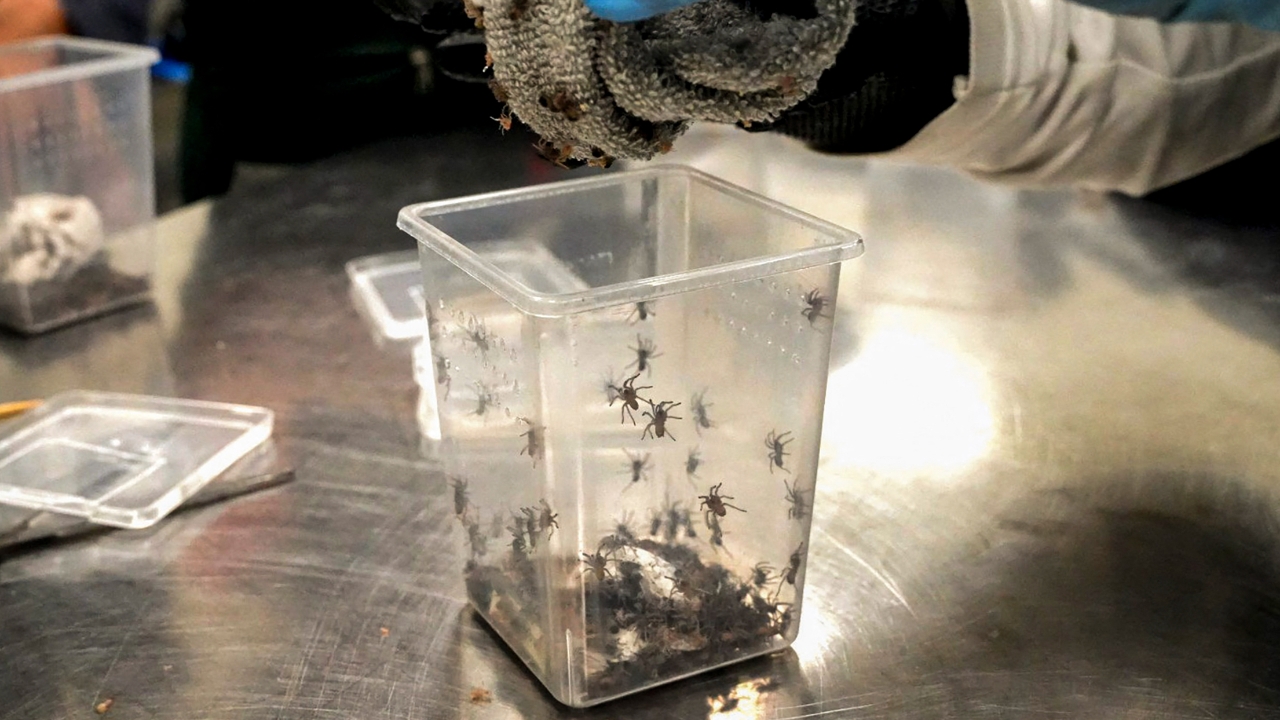
Peruvian authorities arrested two Germans and one Polish individual after discovering more than 3,000 tarantulas hidden in socks inside three suitcases. They were preparing to smuggle them out of the country, heading to Germany. The estimated market value in Europe could reach 1.5 million euros, or about 56 million baht.
Peruvian officials seized over 3,000 tarantulas at Jorge Chavez International Airport in Callao, near Lima, on 3 Nov. The spiders were hidden in socks inside three suitcases belonging to two German and one Polish passengers preparing to fly to Germany.
The National Forest and Wildlife Service of Peru, SERFOR, revealed that authorities began investigating after receiving an anonymous tip. During routine baggage screening, officials noticed unusual movement inside the luggage, prompting a thorough search.
Kora Suarez, a wildlife control technician at SERFOR, said each suitcase contained about 15-22 pairs of socks concealing tarantulas of various species and sizes, including eggs, newly hatched spiderlings, and adults. These spiders were collected from multiple regions across Peru.
Suarez explained that tarantulas attract collectors because of their striking colors and sizes. One tarantula can sell for about 500 euros, or roughly 18,770 baht, in the European market, making this smuggling attempt potentially worth up to 1.5 million euros if all spiders were sold successfully.
The three suspects are held by the environmental crime suppression police and are set to face criminal prosecution. The case is under the jurisdiction of the environmental prosecutor's office.
Keith Jeffries, Vice President of K2 Security Screening Group in Orlando and former Federal Security Director at Los Angeles International Airport, commented that profit motives drive wildlife smuggling, as long as there is market demand, offenders will continue seeking ways to smuggle animals.
He further explained that airport baggage inspections vary by location. In the U.S., the Transportation Security Administration (TSA) focuses primarily on detecting weapons, explosives, and aviation security threats, not specifically targeting wildlife trafficking.
This is not the first case of live animals hidden in socks to evade inspection. In August, a 23-year-old man was arrested at Haneda Airport in Tokyo after officials found about 200 lizards hidden in 22 pairs of socks inside his suitcase. Among them were nine Mexican alligator lizards, a near-extinct species restricted under international trade laws, some valued at several hundred U.S. dollars in Japan.
Interpol estimates that illegal wildlife trade generates about 20 billion U.S. dollars annually for global criminal networks and is a major cause of worldwide biodiversity loss.

