People’s Party rift raises fears of split - Bangkok Post
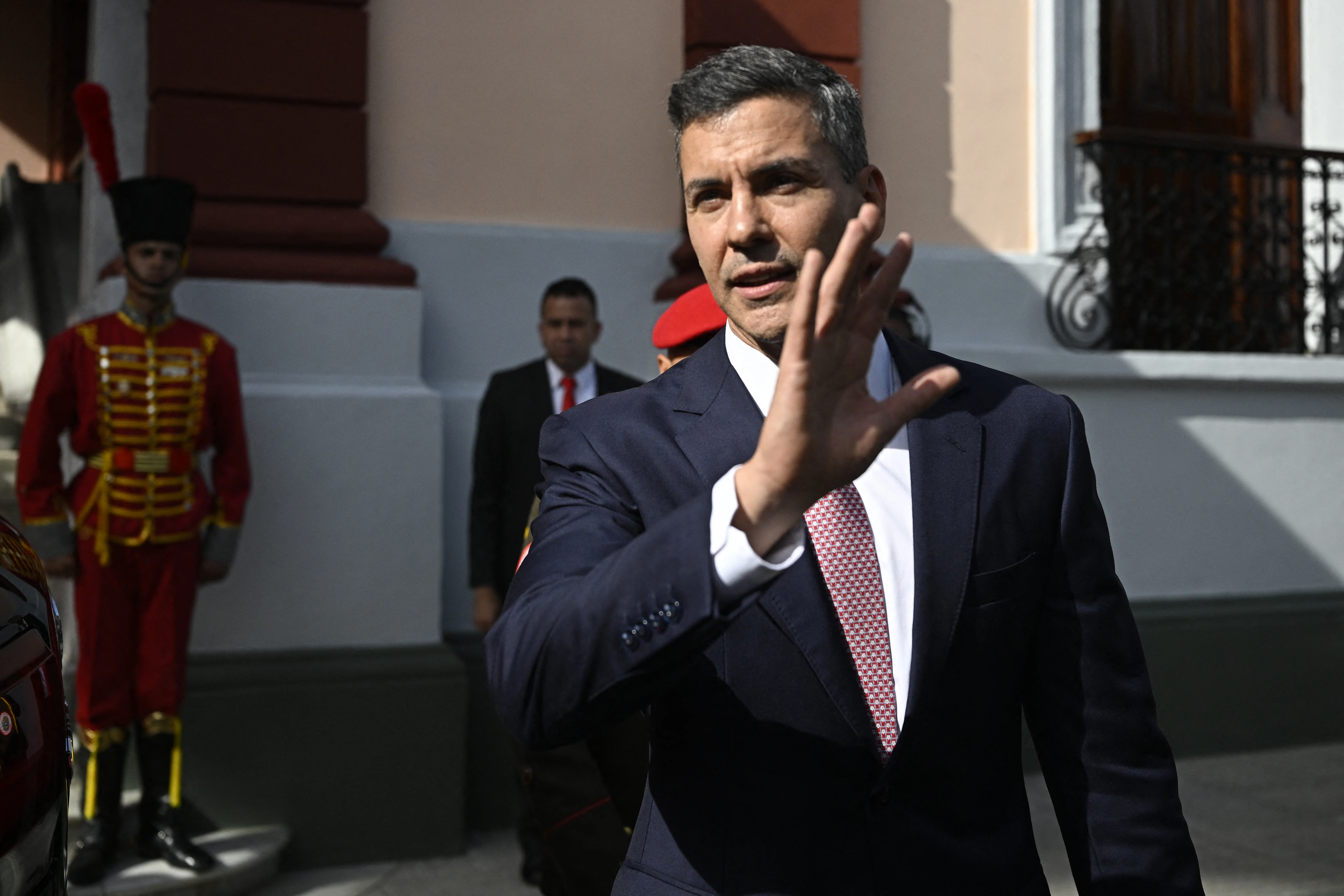
Piyabutr Saengkanokkul, a co-founder of the Future Forward Party, touched a nerve recently when he complained about the growing embrace of “entertainocracy” by some members of the People’s Party. The People’s Party (PP) has sought to downplay speculation about internal divisions after reports that firebrand MP Rukchanok Srinork rebuked Piyabutr Saengkanokkul, secretary-general of the Progressive Movement and co-founder of the now-dissolved Future Forward Party, for criticising the party’s political direction.
Yet the reported exchange has raised a fundamental question: whether the political movement that once united them can continue as a single party as its founding figures and current leadership pursue potentially different visions, a political source said.
The controversy began after Mr Piyabutr criticised what he appeared to regard as the PP’s growing embrace of “entertainocracy” — politics driven by entertainment, sensationalism and social media popularity — and a tendency to focus on daily political exposés without presenting a broader vision for society.
His remarks touched on a sensitive issue for a party whose appeal has been built partly on its ability to mobilise younger voters, communicate through digital platforms and challenge established political power. They also exposed a possible tension between the movement’s original ideological ambitions and the demands of electoral politics.
According to reports, Ms Rukchanok questioned in the party MPs’ Lime group whether senior figures would publicly respond to Mr Piyabutr’s remarks. She also reportedly criticised individuals who spent more time socialising than working while undermining colleagues pursuing political issues.
Although the exchange has not been independently established, the reported remarks suggest the dispute may extend beyond political messaging. At stake could be competing ideas about leadership, political discipline and the movement’s direction, the source said.
Ms Rukchanok subsequently sought to dismiss suggestions of ill feelings between the PP and Mr Piyabutr. Nevertheless, the episode has quelled speculation about whether relations between the party’s current leadership and its ideological predecessors could become increasingly strained.
The roots of the potential divide lie in the evolution of the progressive political movement that emerged with Future Forward.
Founded in 2018, the Future Forward sought to challenge Thailand’s established political order through institutional reform, decentralisation, civilian control over the military and a broader transformation of the country’s political structures.
Its success in attracting younger voters demonstrated the electoral potential of a movement combining structural reform with a new style of political communication.
After the Constitutional Court dissolved Future Forward in 2020, its parliamentary members moved to the Move Forward Party. The latter won the most seats in the 2023 general election but failed to form a government. It was dissolved in 2024 on the grounds that it violated the constitution by proposing an amendment to a law against insulting the monarchy known as Article 112.
Its remaining MPs joined the newly established People’s Party.
The movement has demonstrated considerable organisational resilience, surviving repeated institutional setbacks while maintaining a substantial electoral base.
However, continuity of personnel and political support does not necessarily guarantee continuity of ideology or strategy, according to the source.
As the PP seeks to build on its electoral strength, it must balance its reformist identity with the requirements of winning elections, attracting a broader electorate and navigating Thailand’s complex political institutions.
Mr Piyabutr’s reported criticism appears to underscore concern that electoral communication and day-to-day political confrontation could overshadow the structural changes that originally defined the movement.
For current party figures, however, social media engagement, political exposés and highly visible parliamentary performances may be essential tools for keeping voters engaged and holding the government accountable.
These approaches are not inherently incompatible. The question is whether they serve a coherent political programme or gradually become substitutes for one, the source said.
Mr Piyabutr occupies a distinctive position within the progressive movement. Although no longer a parliamentary politician, he remains associated with the PP’s founding principles and original political ambitions.
His influence is not limited to formal party structures. He can contribute to political debate, shape ideological discussions and offer an alternative assessment of the movement’s direction.
That influence could be particularly significant when Mr Piyabutr and other former Future Forward figures emerge from their political bans in the coming years, assuming they remain legally eligible to participate in politics.
The source said their return would present the movement with an important strategic choice.
One possibility is that they would seek to influence the PP from within, working with its current leadership to restore what they consider the movement’s original ideological priorities.
However, such an arrangement would depend on whether the existing leadership was willing to accommodate their influence and whether both sides could agree on the party’s future direction.
The alternative would be to establish a new political party based more explicitly on Future Forward’s founding ideology, the source said.
Such a move would allow the founding generation to shape its organisational structure, leadership and policy agenda without negotiating every decision with the PP’s current leadership.
Rather than treating the PP as an adversary, the new party could regard it as an ally within the broader reformist camp, with the two organisations appealing to overlapping but not necessarily identical constituencies.
Such a scenario remains speculative. Political bans, future electoral rules, leadership decisions and changes in the political landscape could affect whether it becomes viable.
Nevertheless, the reported disagreement suggests the movement’s next major political transition could involve organisational separation rather than another attempt to preserve unity within a single party.
A new party led by Mr Piyabutr and other founding figures could help preserve a distinct ideological platform, particularly if they believe the PP is moving towards a more personality-driven or electorally pragmatic form of politics, the source said.
It could also give voters a clearer choice between approaches to reform, allowing one party to focus on structural transformation while another focuses on parliamentary performance, electoral expansion and immediate political accountability.
But the risks would be substantial, the source said.
A split could divide the progressive movement’s voter base, create competition for candidates and resources, and weaken its ability to challenge established political forces.
Even if the two parties maintained friendly relations, they could find themselves competing directly in constituencies and for the same pool of supporters.
Moreover, the assumption that a new party would automatically inherit Future Forward’s original ideological appeal should not be taken for granted. Voters may value continuity, but they also respond to leadership, policy credibility and the ability to deliver tangible results.
PP, meanwhile, could argue that adapting its strategy to electoral realities is necessary to turn the movement’s popularity into lasting political influence.
Ultimately, neither ideological purity nor electoral pragmatism alone guarantees success, the source said.
Unity will depend on more than public assurances, the source said.
For now, the PP has little incentive to let speculation about internal divisions undermine its standing. Publicly acknowledging a serious rift could create uncertainty among supporters and reinforce perceptions that the party is struggling to define its direction.
Ms Rukchanok’s effort to dismiss tensions with Mr Piyabutr may show a desire to prevent a disagreement over political strategy from escalating into a larger dispute over organisational loyalty.
Digital Economy Minister Chaichanok Chidchob is expected to face sustained scrutiny ahead of the censure debate to ensure that his father, Bhumjaithai patriarch Newin, feels the impact.
The opposition has dropped plans for a general debate without a vote under Section 152, choosing instead to concentrate on the no-confidence motion scheduled for December.
Under the charter, MPs may submit motions under Sections 151 and 152 once each during a parliamentary year. This allows the government time to carry out its work without becoming overly burdened, while giving MPs time to attend to other duties.
Section 151 pertains to a no-confidence motion and Section 152 to a general parliamentary debate without a vote.
Under Section 151, if a majority of MPs vote against a minister, that minister must leave office. If the motion is against the entire cabinet, the government must vacate office if it does not survive the vote.
The general debate, however, has no direct effect on the status of the government or individual ministers, allowing MPs to raise issues and recommend measures for government consideration.
Opposition whips considered both options before agreeing to proceed directly with a censure motion, citing concerns that holding debates too close together could do more harm than good, particularly if any of the issues overlap.
According to political observers, calling a general debate simply to wrong-foot the government has little value.
The opposition risks using up its opportunity to scrutinise the administration without making a meaningful political impact, while potentially weakening its censure case.
The decision to focus on the no-confidence motion, scheduled for Dec 7-11 with the vote on the final day, gives the opposition weeks to prepare its case and keep public attention on the issues it intends to raise.
Under the “monopolise power, cash in and tackle problems day by day” theme, the opposition plans to link economic hardship, the cost of living and flooding to alleged corruption and government mismanagement. It intends to argue that problems affecting daily lives reflect failures in government administration.
Digital Economy and Society Minister Chaichanok Chidchob is likely to remain a major focus, as criticism of him could also put pressure on his father, Newin Chidchob, widely regarded as Bhumjaithai’s de facto leader.
Before the debate, the main opposition People’s Party (PP) and the Democrat Party are expected to keep the controversy involving Bhumjaithai MP for Chaiyaphum Suchada Zhang Thaensap and her husband, Zhang Taiyang, in the public spotlight.
The issues centre on Mr Zhang’s alleged links to an online gambling website and Ms Suchada’s asset declaration to the National Anti-Corruption Commission (NACC).
Leading the case is Rangsiman Rome, a PP list-MP and chairman of the House Committee on legal affairs, justice and human rights, who invited Ms Suchada and her husband to provide explanations and documents.
The couple did not appear before the committee but submitted written explanations. According to Ms Suchada, her husband previously held a 1.47% stake in a company operating the gambling website and sold his entire stake in early January 2026, before she became an MP.
Mr Rangsiman is coordinating with the Department of Special Investigation (DSI) and the NACC, submitting additional evidence for consideration.
The DSI is being urged to pursue a criminal case against those behind the gambling website while the NACC is gathering information related to Ms Suchada’s asset declaration, particularly during her time as secretary to Mr Chaichanok.
An opposition source said the information gathered would not stop at the committee level but would become a main issue in the no-confidence debate.
The opposition intends to question ministers responsible for the relevant agencies, including Prime Minister Anutin Charnvirakul in his capacity as interior minister, and other ministers involved.
Issues could include ethical standards, scrutiny of qualifications, and whether the government has allowed money potentially linked to grey businesses to connect with people in the ruling party.
Stithorn Thananithichot, a lecturer at Chulalongkorn University’s faculty of political science, told the Bangkok Post that the period before the debate would give the opposition time to sharpen its arguments against key targets.
Mr Chaichanok is expected to face sustained scrutiny ahead of the censure debate to ensure Mr Newin feels the impact.
“Unlike Mr Chaichanok, Mr Anutin is less likely to be affected. Whatever they say about Mr Anutin, he is not shaken. The opposition doesn’t seem to know what else to dig up against him, so it can only keep sharpening its knives,” Mr Stithorn said.