
Passenger Horrified As Dog Found Dead After Flight—Now She Wants Answers - Newsweek
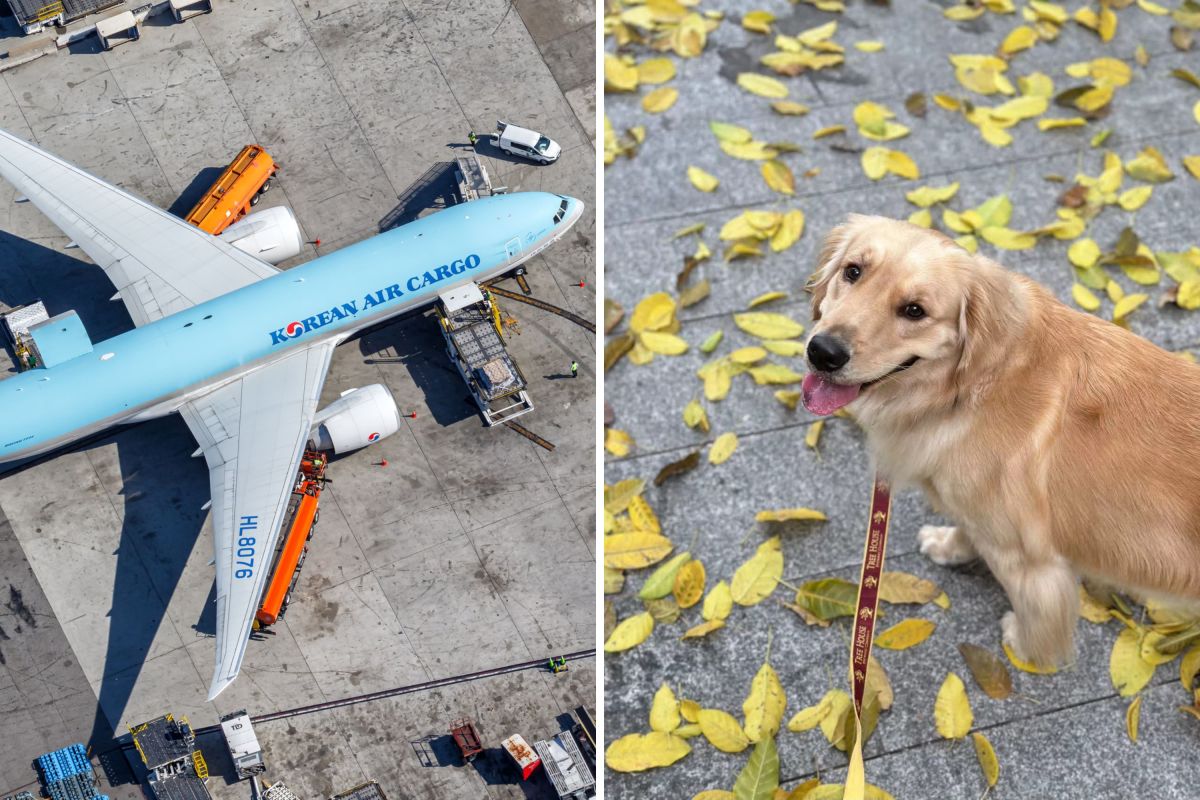
A woman is seeking answers after her dog, Bubble, was found dead in her crate following a Korean Air flight from Guangzhou in China to Incheon in South Korea.
Bubble died after traveling in the cargo hold on Korean Air flight KE 868 on September 3. The dog's owner, Jennifer, together with animal travel advocacy group FlyTogether.org, has since launched a petition on Change.org calling for greater transparency about what happened during the journey and to push for answers.
Sharing an image of Bubble's body in her carrier in a September 4 post on Threads, Jennifer (@jenn_jwww) wrote: "Korean Air, I handed you my little girl alive. You returned her body to me. I was in the same airport looking for her, while nearly two hours of her final journey remain unexplained. Please help me find out what happened to Bubble."
A spokesperson for Korean Air told Newsweek the airline had verified that conditions aboard the aircraft were operating normally.
"We extend our deepest sympathies to the customer for the loss of their beloved pet," the spokesperson said. "Upon arrival of flight KE 868 from Guangzhou to Incheon, the dog was found deceased in its crate."
Jennifer explained that Bubble was an "experienced traveler who had flown in the cabin with me before,” but had to travel in cargo on the Guangzhou-to-Seoul leg because she was a large dog. The plan was for Bubble to rejoin her in the cabin on the following flight to Los Angeles.
"I paid nearly $4,000 for business class, plus around $300 for her transport," Jennifer wrote on Threads. "This was never about saving money or not caring enough."
Newsweek has contacted Jennifer via Threads and Instagram.
The recent incident comes amid ongoing concern about pet travel. According to the U.S. Department of Transportation's Air Travel Consumer Report published in August, there were nearly 100 complaint cases related to animals and pets, excluding service animals, during the first six months of 2026, including 64 involving U.S. airlines and 29 involving foreign carriers.
The International Air Transport Association (IATA) explains that while many pet owners prefer in-cabin travel, larger animals often must be transported in cargo holds.
The IATA notes that "despite all the fears about airline pet cargo travel, millions of animals are carried safely every year." The organization adds that "cats and dogs actually travel better this way because it is quieter and they will rest in a darkened environment."
A spokesperson for Korean Air told Newsweek: “We verified that all environmental control systems essential for animal transport functioned normally throughout the flight, and all other pets traveling on the same flight arrived safely without incident.”
According to a screenshot of a statement previously posted by Korean Air as a story on the airline’s Instagram account, which was shared with Newsweek by Sonia Aguado, the founder and head of FlyTogether.org, the airline said at the time: “Our team communicated with the customer on the day of arrival to share the available information.”
The airline’s spokesperson told Newsweek: “We are currently communicating directly with the passenger to address her additional inquiries. Out of respect for the customer, it would not be appropriate for us to share further specific details, evidence, or internal records publicly through the media. We remain committed to transparent communication directly with the passenger.”
Jennifer maintains that she is not accusing Korean Air without evidence, but says she cannot accept conclusions based solely on environmental controls and the safe arrival of other animals.
In a lengthy statement posted to Instagram on September 7, she wrote: "My position remains the same: I will not blame Korean Air without evidence, and I will not speculate."
However, Jennifer argued that functioning environmental systems represent only one part of the transportation process. She said factors such as whether Bubble's crate was properly secured, whether handling and loading procedures were followed correctly, and whether the crate experienced tipping, impact, or abnormal movement should also be examined.
"The fact that other pets arrived safely does not prove that nothing happened to Bubble," she wrote, adding that each animal and crate should be considered an individual case.
Jennifer also said she discovered a panel or tray inside Bubble's crate had been “displaced and flipped upward onto her” when she received her, “which is exactly why I need to understand what happened to her crate throughout the transportation process.”
Jennifer noted: "I have not received a single piece of evidence, official report, footage, or transportation record" explaining what happened or detailing how Bubble was handled throughout the journey.
She said that requests for CCTV footage, supporting documents, and access to personnel involved in the case were denied. Jennifer said she was repeatedly told that information could not be released because of Korean privacy laws.
Referring to Korean Air's statement that it had shared "available information," Jennifer wrote in the Instagram post: "What exactly was the 'available information' that you claim was shared with me? Because from my side, I received none."
She also disputed the airline's assertion that it remains committed to transparent communication, saying no one had proactively contacted her with evidence or substantive answers before the company's public statement was released.
"So I have a very simple question: Where is the 'transparent communication'?" she wrote on Instagram.
The Change.org petition seeking "Justice for BUBBLE," created in collaboration with FlyTogether.org, has attracted more than 2,200 signatures.
Aguado told Newsweek: "I know for certain that Jenn's objective is only to know the truth. She doesn't want anyone to speculate."
Aguado described Bubble's death as part of a wider issue involving the transport of companion animals by air. According to an incident log maintained by FlyTogether.org from 2021 to date, the organization has recorded 20 animal deaths, 15 injuries, 21 escapes, and eight animals that were never recovered since the organization launched in 2021.
"Our position is that this urgently needs to change," Aguado said, arguing that animals should be treated as sentient beings rather than cargo within the aviation system.
According to Aguado, the organization currently has six active Change.org petitions, which together have over 250,000 signatures, and a few social actions in place for 2027 to raise awareness of the issue. The group is also launching a European Citizen Initiative next year in a bid to introduce airport protocols to guarantee the security and well-being of domestic animals being transported at European airports.
Aguado said: “We do not want Bubble’s story to be seen simply as one tragic case but to help expose a much larger problem and contribute to meaningful changes that can prevent other families and animals from experiencing the same thing.”
Do you have a travel-related story to share? Let us know via life@newsweek.com, and your story could be featured on Newsweek.
Newsweek’s reporters and editors used Martyn, our AI assistant, to produce this story. Learn more about Martyn here.
Contact Newsweek editors on this story: Rebecca Flood and Gray R. Thomas

