Overlapping budgets continue to muddle fiscal space, project delivery - The Guardian Nigeria News
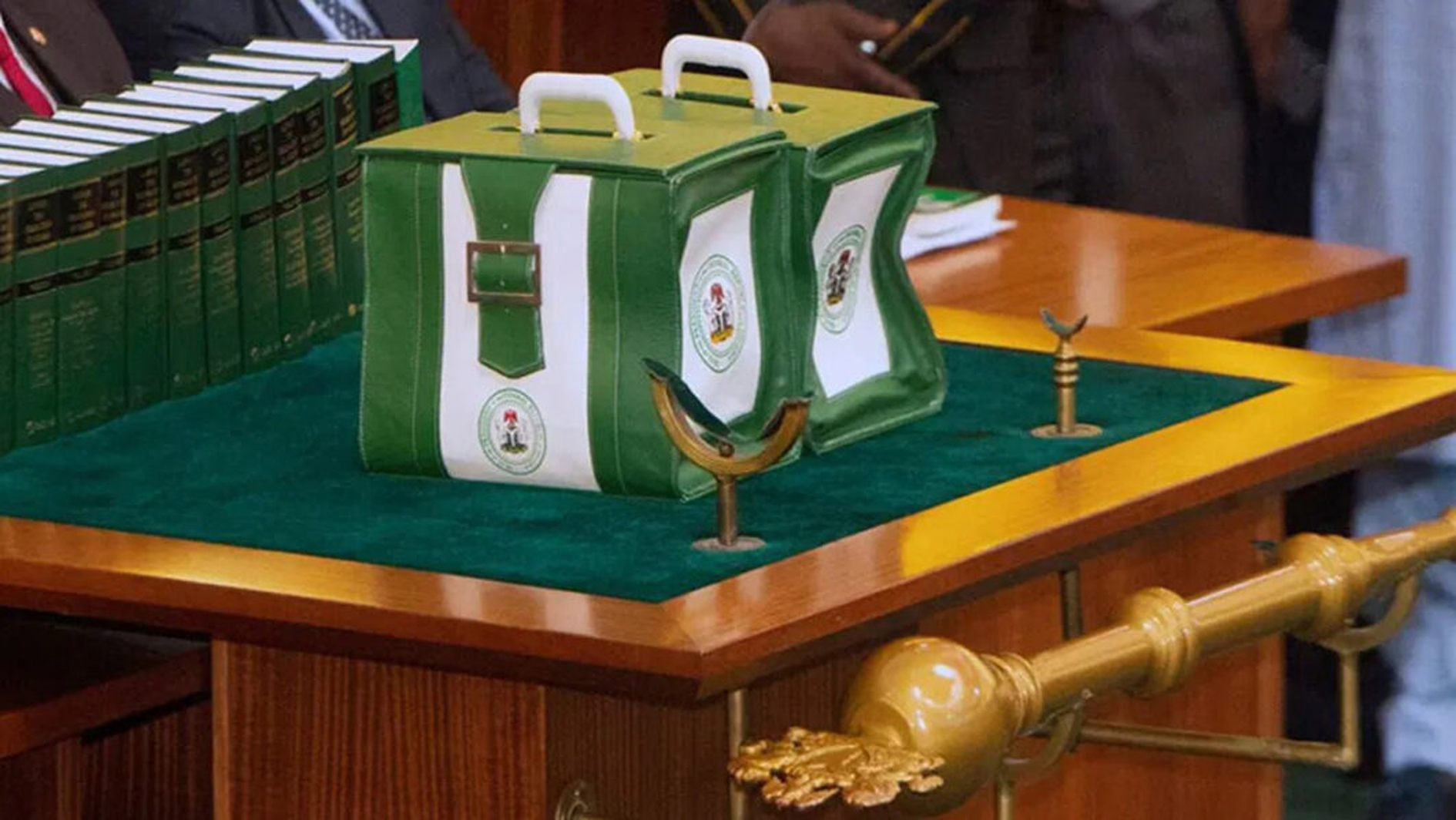
With the 2025 capital budget now running alongside the 2026 appropriation, Nigeria’s evolving capital budget rollover culture is deepening concerns over fiscal discipline, project monitoring and financial accountability.
The latest extension means the 2025 capital budget, originally scheduled to end on December 31, 2025, will remain active until December 31, 2026, a year after its initial deadline and despite the passage of the 2026 Appropriation Act.
The extension risks compromising fiscal accountability, a challenge that is consistently associated with yearly budgets and weakening project delivery, monitoring and reporting.
Last week, the Senate and House of Representatives passed a bill extending the implementation of the 2025 capital budget for the fourth time.
The Presidency had argued that the extension would enable ministries, departments and agencies (MDAs) to complete ongoing projects and utilise funds already appropriated.
The Senate President, Godswill Akpabio, similarly argued that allowing the budget to lapse could leave more projects abandoned, particularly those for which contractors were yet to receive full payment.
But the latest extension has also revived concerns about the gap between President Bola Tinubu’s commitment to fiscal reforms and actual budget execution.
While presenting the 2026 budget in December 2025, Tinubu promised that Nigeria would move to a single budget and revenue cycle by March 31, 2026, declaring that there would be “no overlaps, no excuses and no rollovers.”
Ahead of the presentation of the 2026 budget, he wrote to the National Assembly to re-enact the 2024 and 2025 budgets as part of his commitment to ending budget overlap and adopting a single budget.
Persistent multiple budget administration continues to raise questions about Nigeria’s ability to implement annual budgets within approved timelines and deliver infrastructure projects.
In his 2026 budget speech, Tinubu disclosed that the Federal Government generated N18.6 trillion in revenue by the third quarter of 2025, representing 61 per cent of its target, while expenditure stood at N24.66 trillion or 60 per cent of the target.
However, the 2025 Third Quarter Budget Implementation Report by the Budget Office of the Federation showed that capital expenditure stood at only N3.1 trillion, about 17.7 per cent of the projected N17.58 trillion, in the first nine months of the year. That left a shortfall of N14.48 trillion, a deficit that is consistent with recent historical trends.
The Budget Office attributed the weak performance to limited resources, the bottom-up cash-release process, among others.
The government had also prioritised the completion of projects inherited from the 2024 budget, with only N2.23 trillion released for such projects by June 2025.
A report by the Policy and Legal Advocacy Centre (PLAC) said N5.71 trillion in unfinished projects from the 2025 budget was carried into the 2026 appropriation, highlighting the severity of budget rollover.
Experts have warned that the overlapping budgets make it harder to track appropriations, releases and actual expenditure, while creating uncertainty for contractors, businesses and investors dependent on government-funded infrastructure.
For Head of Research and Strategy at GTI, Abiodun Ogunniyi, keeping budgets open across multiple fiscal years weakens accountability because it becomes more difficult to establish a clear link between appropriations, releases, expenditure and completed projects.
“When a budget remains open across multiple fiscal periods, it becomes harder to establish a clean link between appropriation, releases, expenditure, and physical project completion,” he said.
Ogunniyi noted that only N3.1 trillion, or 17.8 per cent, of the 2025 capital budget had been implemented by the third quarter, partly because the government was prioritising unfinished projects from 2024.
“New projects compete for scarce fiscal space with inherited commitments,” he said.
Ogunniyi warned that prolonged project implementation could expose government and contractors to higher construction costs as inflation and exchange-rate movements increased the cost of materials and financing.
While acknowledging that extensions could prevent waste when projects were close to completion, he warned against using rollover as an administrative tool for addressing the structural problems responsible for weak budget execution.
The Managing Director of Cowry Asset Management, Johnson Chukwu, said overlapping budgets had made it difficult to determine the level of implementation of individual appropriations and increased the risk of duplicated expenditure.
He said the absence of clear distinctions between funds allocated under the 2025 and 2026 budgets could also complicate the work of anti-corruption agencies seeking to track expenditure and establish value for money.
A development policy expert and Managing Director of Macrostrat Nigeria Limited, Dr Justin Amase, said running two active capital budgets signals serious weaknesses in public finance management.
In his view, the practice “translates to a potential institutional crisis”, with repeated rollovers linked to procurement bottlenecks, delayed cash releases and the inability of MDAs to execute projects within approved timeframes.
Amase said the September 29 legislative approval of the fourth extension, through clause-by-clause consideration in a single day, illustrated how the budget cycle had become increasingly flexible.
He argued that overlapping budgets created operational difficulties for the civil service, distorted project tracking and placed additional pressure on bureaucratic capacity, while increasing the risk of delayed or abandoned projects.
He said government often extended capital budgets to prevent unutilised allocations from reverting to the treasury and to avoid the administrative burden of re-budgeting ongoing projects.
A professor of economics at Olabisi Onabanjo University, Sheriffdeen Tella, said overlapping budgets reflected weaknesses in fiscal policy execution and could undermine contractors and wider business confidence.
“Contractor confidence is likely to wane, just like that of the business community. The need to take budget implementation seriously cannot be overemphasised if government wants to fulfil the President’s promises,” he said.
The accountability challenge is compounded by delays in publishing budget implementation reports.
Although the Fiscal Responsibility Act (FRA) requires quarterly budget implementation reports to be published within 30 days of the end of each quarter, checks by The Guardian found that the first- and second-quarter 2025 reports were not published on the Budget Office website until December 22, 2025.
The delay has drawn criticism from civic groups, including PLAC and BudgIT, which argued that moving into a new budget year without timely information on previous spending weakened legislative scrutiny and public accountability.
As at press time, the 2025 budget implementation report had not been published, further limiting real-time monitoring of government expenditure.
The crisis has also affected contractors, many of whom depend on borrowed funds to execute government projects. The Guardian previously reported that banks and public sector contractors were at loggerheads over repeated letters’ inability to fulfil their contractual agreement.
In many cases, banks have had to restructure credits multiple times, which comes at a high cost to contractors.
Last year, indigenous contractors under the All Indigenous Contractors Association of Nigeria (AICAN) protested in Abuja over alleged backlogs of unpaid government debts, demanding payment for projects completed as far back as 2024.
The contractors said outstanding obligations ranged from N500 billion to N4 trillion.
Amase said repeated budget extensions had increased payment uncertainty, leaving contractors to absorb rising interest costs while waiting for government payments.
Ogunniyi similarly said delayed payments increase working-capital pressures and financing costs for contractors, while exposing banks to higher credit risks from businesses dependent on government contracts.
The uncertainty extends beyond contractors to businesses that depend on public infrastructure when making long-term investment decisions.
Chukwu said companies use government budgets to anticipate infrastructure development and determine where to invest.
A manufacturer, he said, for instance, planning a factory around a proposed rail corridor could face significant losses if the infrastructure is delayed, disrupting the movement of raw materials and finished goods.
Ogunniyi said repeated extensions had weakened the budget’s role as a guide to government spending, infrastructure demand and financing requirements, increasing the uncertainty premium on the Nigerian economy and public assets.
Hence, Amase warned that the practice could also erode local and foreign investor confidence and weaken the relevance of macroeconomic targets contained in the Medium-Term Expenditure Framework (MTEF).
The overlap could further complicate preparations for the 2027 budget, Chukwu said, even as government would have to determine new allocations while previous capital projects remained incomplete.
Indeed, less than three months into a new budget cycle, the preparation for the 2027 budget is yet to commence. According to FRA, the Medium-Term Expenditure Framework/Fiscal Strategy Paper (METF/FSP) should be transmitted to the National Assembly four months before the beginning of a new fiscal year.
The government has consistently undermined the provision of the Act. Last year, the government transmitted the reviewed MTEF towards mid-December, while the yearly budget followed a few days before the end of the year.