Other Regions Face Drought, BNPB Head Says West Sumatra Has No Dry Season
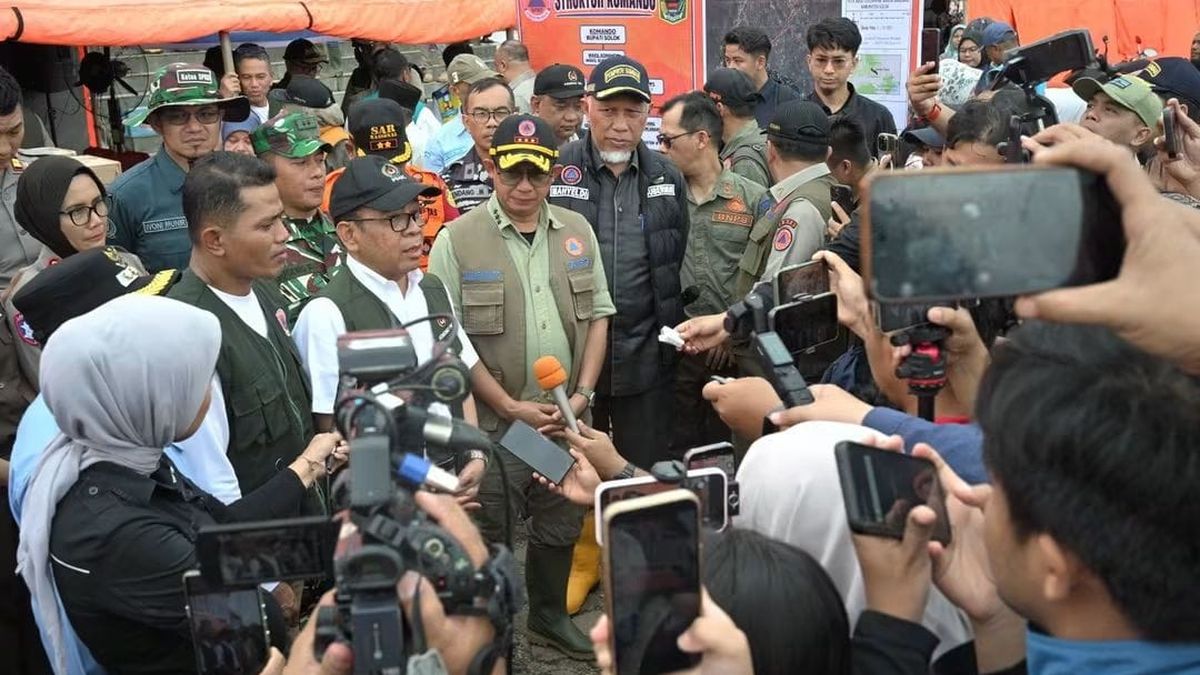
PADANG, KOMPAS.com – The Head of the National Disaster Management Agency (BNPB), Suharyanto, stated that the threat of natural disasters has become an inseparable part of daily life for the people of West Sumatra (Sumbar).
He made this statement during a visit to the disaster site in Solok Regency, West Sumatra, on Thursday (24/9/2026).
It is known that Solok Regency was recently struck by a flash flood disaster affecting hundreds of residents and damaging dozens of homes.
The disaster also disrupted public services as more than a dozen government offices were flooded, forcing civil servants to work from home.
Reflecting on the Solok disaster, Suharyanto assessed that out of the 19 regencies and cities in West Sumatra, none fall into the low disaster risk category.
"There is no low disaster risk area in West Sumatra. If it’s not moderate, then it’s high," Suharyanto emphasized while presenting disaster risk map data for West Sumatra.
According to BNPB data, Solok Regency is classified as a high-risk area, while other regions fall into the moderate risk category.
This geographical condition is considered the reason why the focus and human resources for disaster management from West Sumatra are so predominant.
Suharyanto highlighted the post-flood handling in West Sumatra from November 25, 2025.
Although Solok Regency was relatively less affected compared to neighboring areas, the recovery of infrastructure and settlements required significant time and costs.
The physical rehabilitation and reconstruction process after the disaster is targeted to last three years.
"We are now entering the first year of rehabilitation and reconstruction out of the planned three years. The budget amounts to Rp 103 trillion to be used over three years. This shows how extraordinary the impact of this disaster is," he explained.
However, conditions are not yet fully stable. Areas that were previously lightly affected, like Solok, are now beginning to face a significant increase in flood threats.
Quoting forecasts from the Meteorology, Climatology, and Geophysics Agency (BMKG), Suharyanto urged the public to remain vigilant.
The peak of the rainy season with moderate to heavy intensity is predicted to enter West Sumatra by the end of September.
Suharyanto compared the climate conditions in West Sumatra with other regions such as West Kalimantan, where BNPB had to allocate billions of rupiah for Weather Modification Operations (OMC) to induce rain in order to moisten peatland areas.
"I was just in West Kalimantan desperately trying to find rain, deploying three planes just to moisten peatlands. The rain that occurred was only drizzles, costing billions. Here in West Sumatra, even without OMC, rainfall is already moderate to heavy," he explained.
He also confirmed the statement from the Governor of West Sumatra that the region practically does not experience a prolonged dry season like other areas.
"From January to December, every year, what dominates is the threat of flooding. Although certainty belongs to Allah SWT, the data shows that the disaster the people of West Sumatra definitely face is flooding," Suharyanto said.