Opinion | Mark Carney is right that Canada must change. But there’s a key thing he needs to do first - Toronto Star
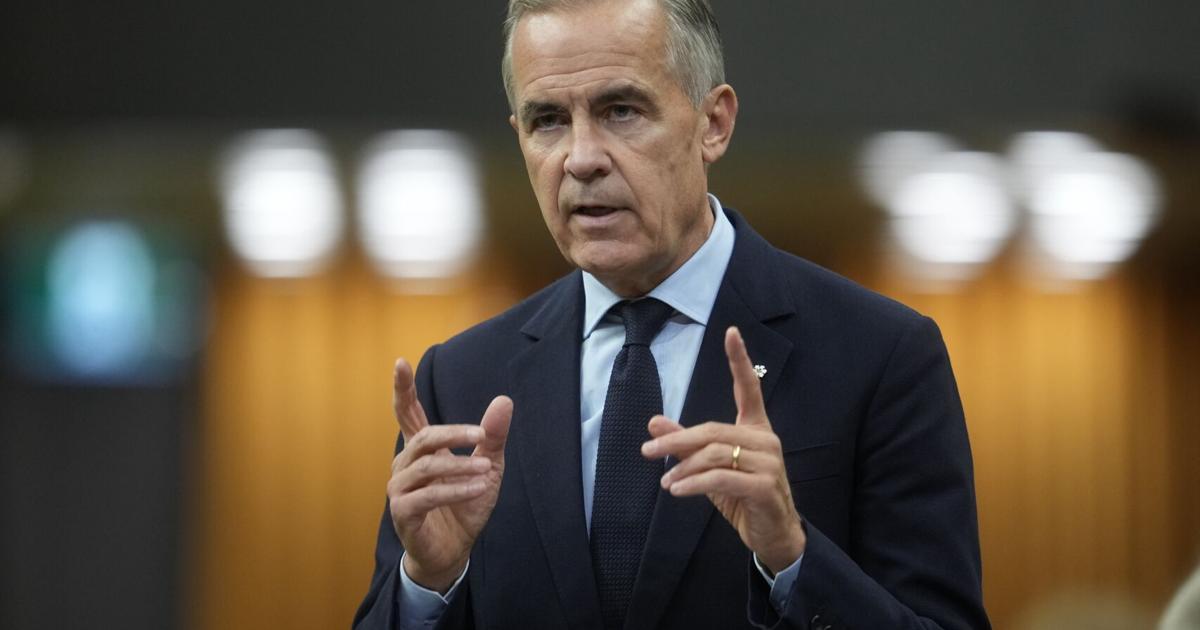
Despite having a majority, the government cannot neglect Parliament and the checks on power it provides, writes Lloyd Axworthy.
Lloyd Axworthy is a former longtime MP who served as Canadian foreign minister from 1996 to 2000.
Prime Minister Mark Carney says he has a “very clear mandate” from the April 2025 election. Reinforced by floor crossings and byelection victories, Carney’s majority gives his government the right to pass the Building Canada Strong Act, a sweeping 246-page bill dealing with major projects, environmental assessments and federal labour law.
It’s true that we need new ports, rail corridors, energy infrastructure and housing, and a regulatory system capable of reaching decisions in something less than geological time.
A mandate is not a blank cheque. Parliament still has a responsibility to examine the legislation, particularly an omnibus bill of this size and reach.
To its credit, the government dropped a proposal that would have allowed exemptions from protections under the Species at Risk Act.
But that is evidence of the value of consultation, not an argument for less of it. And as a former federal labour minister I say the labour provisions of Bill C-39 in particular deserve very careful scrutiny.
Governments have always had to balance the right of workers to bargain collectively with the public consequences of prolonged disputes in nationally important industries.
Section 107 of the Canada Labour Code has in recent years been used to intervene in a variety of disputes. Labour organizations have objected strongly and called for the section to be repealed.
Bill C-39 goes in another direction. It retains ministerial authority to intervene while establishing a new process involving mediation and a determination that a work stoppage threatens the national interest. The government says the new provisions raise the bar for intervention. The Canadian Labour Congress argues they continue to give the minister too much discretion.
Since the Supreme Court’s 2015 decision in Saskatchewan Federation of Labour v. Saskatchewan, the right to strike has been protected under the Charter. If Parliament is going to define when a federal minister can bring a lawful strike to an end, it should do so with great care. Better that MPs and Senators deal with those questions now than leave them for the courts later.
There is another concern that extends beyond this bill.
Former Clerk of the Privy Council Kevin Lynch and former senior public servant Jim Mitchell have warned about the steady concentration of power in the Prime Minister’s Office. It has developed over successive governments. But a government with a majority has a particular obligation to guard against it.
My own recent experience has reminded me that consultation is not necessarily the enemy of action. I am currently chairing a study of rail infrastructure for the Manitoba government. We were instructed to consult widely and establish an advisory group bringing together business, labour, rail experts, Indigenous governments and community organizations.
Those discussions have helped us identify possibilities that might otherwise have been missed, including the potential use of an existing hydro corridor for a rail bypass and the opportunity to strengthen Winnipeg’s place in North American trade routes.
People who know a subject, work in an industry or live with the consequences of a decision often know things governments do not. Urgency should not become an excuse for short shrifting the institutions designed to test government decisions.
The Liberal party over time has been a coalition of different voices: business liberals, social reformers, labour progressives and strong regional representatives. Its internal arguments were sometimes contentious. But they also made for better government.
In the 1990s, the House environment committee under Toronto Liberal MP Charles Caccia pushed hard to strengthen environmental legislation, including when ministers would have preferred an easier ride. That was Parliament doing its job.
Members of the present Parliament should do the same with Bill C-39. They should examine the labour provisions carefully, protect meaningful environmental assessment, insist on genuine consultation with Indigenous Peoples and ask whether every measure in a 246-page omnibus bill really belongs there.
The government may emerge with most of what it wants. But it should have to make its case. A majority gives a government the votes to govern. It does not make scrutiny and widespread public involvement an inconvenience to be dispensed with.
Mr. Carney has asked Parliament to help him build Canada strong. Parliament must be given the room to do its work.
Error! Sorry, there was an error processing your request.
There was a problem with the recaptcha. Please try again.
You may unsubscribe at any time. By signing up, you agree to our terms of use and privacy policy. This site is protected by reCAPTCHA and the Google privacy policy and terms of service apply.
Lloyd Axworthy is a former longtime MP who served as Canadian foreign minister from 1996 to 2000.
Opinion articles are based on the author’s interpretations and judgments of facts, data and events. More details