No longer a caliphate: Donald Trump announces withdrawal of last US troops from Iraq
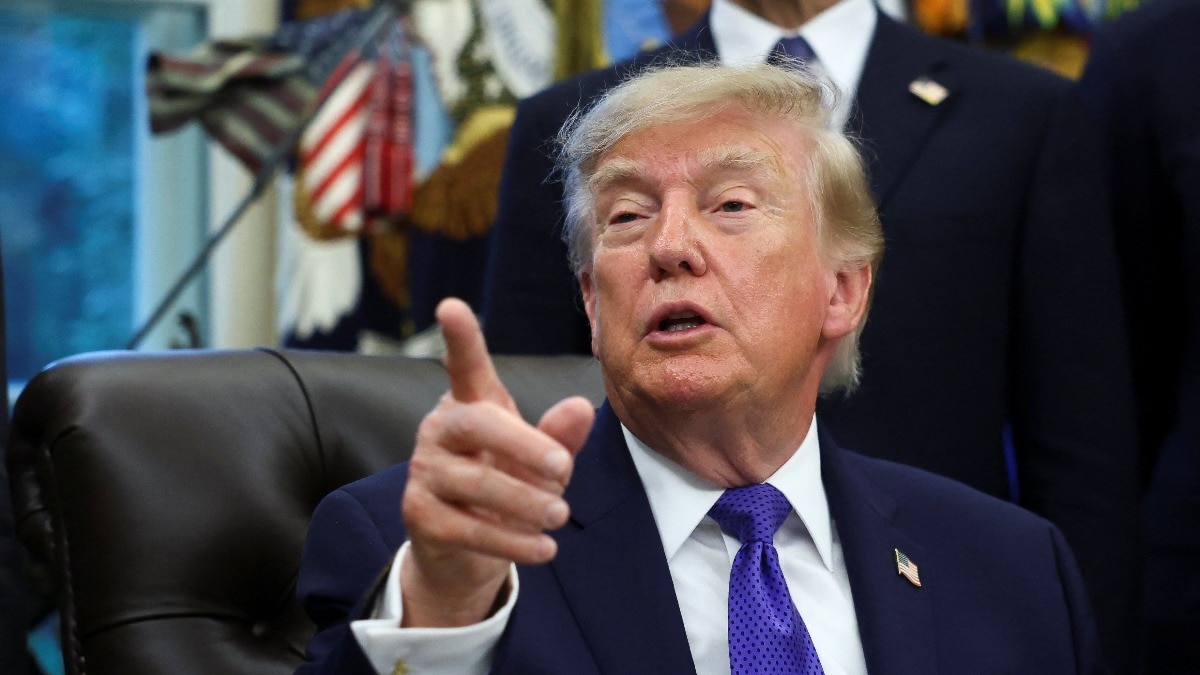
US President Donald Trump has announced that the last American forces are leaving Iraq, declaring the end of Operation Inherent Resolve in 2026.
In a post on Truth Social, Trump called the withdrawal a “Great Day for America” and said the US was leaving Iraq after what he described as years of costly military involvement.
Trump said the US mission in Iraq began under President George W. Bush in 2003 and continued under the administrations of Barack Obama and Joe Biden. He credited his administration with defeating ISIS and said there was no longer a caliphate to fight.advertisement❮❯ Read Full StoryTRUMP ANNOUNCES END OF US MISSION IN IRAQTrump also praised Iraq’s new Prime Minister Ali al-Zaidi, saying he had supported and endorsed him and that he won the election by a landslide despite not being expected to win.
Comparing the withdrawal with the US exit from Afghanistan, Trump said the departure from Erbil Air Base was an orderly withdrawal of coalition forces and equipment.
“I had a choice to stay or to leave, and felt, without question, that it was time for America to go home!” Trump said.
He added: “We came to fight a caliphate. There is no longer a caliphate. We are going home!” (Credits: Truth Social/@relaDonaldTrump) IRAN AND ITS ALLIES CELEBRATE US DEPARTUREThe withdrawal is being viewed by Iran and its allied armed groups as a victory. Iraqi security analyst Jasim al-Bahadli said Iran would benefit strategically because the departure removes a US military presence that had acted as a counterweight to Tehran's influence.
He said pro-Iranian militia groups could seek to turn the withdrawal into greater influence over Iraq's security and political decision-making.
Abu Mojtaba al-Yasiri, a commander in the Iran-backed Islamic Resistance in Iraq, described the withdrawal as "a historic victory" and a "crushing defeat for the American project".
Iranian parliamentary official Amir Hayat Moqaddam also welcomed the US withdrawal, saying lasting security would prevail once American forces leave Iraq and the wider region.
Washington has accused Iran-backed militia groups in Iraq of carrying out attacks on neighbouring countries at Tehran's direction. The Baghdad government has said it is working to curb the groups' influence.CONCERNS OVER SECURUITY VACUUM
While the eventual departure of US forces is broadly popular among Iraqis, some officials and security experts have warned that Iraq may not be ready to assume the entire security burden.
"We believe Iraq is still not fully ready to take over the security file at this time," Sunni tribal leader Abdulrahman al-Zobaie told Reuters.
He said Iraqis wanted full sovereignty but warned that the withdrawal could create a security vacuum.
The US and Iran have maintained close but competing political and military relationships with Iraq, which has at times become a proxy battleground between Washington and Tehran. The US killed Iranian commander Qasem Soleimani in a strike near Baghdad airport in 2020, after which Iran-backed groups repeatedly attacked US bases.FEARS ISLAMIC STATE COULD REGROUP
The US withdrawal has also raised concerns about Islamic State, which lost its territorial control in Iraq after the major campaign against the group between 2014 and 2017.
Some Iraqi and Kurdish security officials said the group's sleeper cells could exploit gaps created by the departure of US forces.
Kurdish commander Sirwan Barzani said a lack of US intelligence, logistical support and drones could give Islamic State an opportunity to regroup. He said Kurdish forces had noticed increased movement by sleeper cells after the planned withdrawal was announced.
Iraqi security forces also said a suspected Islamic State cell was preparing suicide attacks to coincide with the US pullout.
Colonel Khalid al-Bayati, a senior security official in Kirkuk, said Islamic State was seeking to demonstrate that it remained capable of carrying out major attacks.
The withdrawal therefore marks the end of the US military mission in Iraq, while leaving questions over the balance of power between Baghdad, Iran-backed groups and remaining Islamic State networks.- Ends