Nigeria must stop tolerating waste and corporate misconduct (1) - The Guardian Nigeria News
Africa has long become a dumping ground not only for hazardous waste, obsolete electronics and polluting technologies, but also for international corporations and business practices that would struggle to survive under stricter regulatory systems.
Companies facing serious questions over pollution, emissions, labour practices, community rights or corporate governance elsewhere are frequently welcomed into African countries with little visible scrutiny. Once they arrive with promises of billions of dollars in investment, jobs and economic growth, difficult questions about their records are treated as obstacles to development.
Nigerian government officials celebrate proposed investments, sign memoranda of understanding and issue licences. Yet communities are rarely given complete information about the environmental and social consequences. Environmental impact assessments may be inaccessible, inadequately
scrutinised or conducted after critical political decisions have effectively been made.
We must ask: What does Nigeria investigate before welcoming a major foreign corporation? Who examines the company’s litigation, environmental and human-rights records? Who independently verifies its claims? What safeguards protect workers and host communities? Who bears the cost if the project contaminates water, destroys livelihoods or causes serious illness? Most importantly, who benefits and who carries the risk?
Investment without accountability is exploitation. Like never before, Nigeria needs investment. It needs industries, infrastructure, employment, technology and access to international markets. But development cannot mean accepting practices that other countries have rejected because they endanger human life.
Investment is not a favour granted to Nigeria. Companies invest because they expect to make profits from Nigeria’s natural resources, markets, labour and population. Nigeria, therefore, has both the right and the responsibility to establish the conditions under which those profits may be earned.
A corporation should not be allowed to escape environmental responsibilities in one jurisdiction and reinvent itself as a development partner in another. If it faces credible allegations, penalties or lawsuits concerning emissions, pollution, labour violations, land acquisition or human-rights abuses elsewhere, those matters must form part of Nigeria’s approval process.
Allegations do not automatically establish guilt, and a lawsuit alone should not disqualify a company. But a corporation’s complete environmental, social and legal history must be disclosed and independently examined. Nigeria should not discover a company’s record only after licences have been issued and communities have surrendered their land. Capital must not be permitted to purchase regulatory silence.
Nigeria is not without an environmental governance framework. The Environmental Impact Assessment Act requires the environmental consequences of major projects to be considered before approval. The 2021 Environmental Impact Assessment Procedures and Charges Regulations provide for project screening, risk categorisation, scoping, public participation, review, certification, monitoring and environmental auditing.
The Federal Ministry of Environment’s Environmental Assessment Department is responsible for ensuring that development projects comply with environmental laws and regulations. The National Environmental Standards and Regulations Enforcement Agency has also published numerous regulations covering pollution, waste, chemicals and environmental standards. The central question is, therefore, not whether procedures exist. It is whether they are applied independently, transparently and consistently, especially when influential politicians, foreign governments and powerful investors are involved.
An environmental impact assessment must not become a document produced to justify a decision that government has already taken. It must be an independent decision-making instrument capable of modifying, suspending or stopping a dangerous project. It must also be available and accessible to the general public.
If consultants are selected and paid entirely by project promoters, regulators lack adequate technical capacity, affected communities and civil society cannot examine reports, and political officials have already publicly endorsed the investment, the integrity of the assessment becomes questionable. An ESIA certificate is not proof of safety if the process that produced it is closed up and cannot withstand public scrutiny.
Nigeria does not need to imagine the consequences of weak environmental regulation. The Niger Delta provides decades of evidence. Oil-producing communities have endured spills, contaminated water, damaged farmland, declining fisheries, gas flaring and serious health and livelihood consequences. While petroleum companies, contractors, political intermediaries and government institutions have benefited from extraction, many host communities have inherited pollution and poverty.
The same pattern appears in industrial settlements across the country. Communities around factories frequently complain about untreated effluent, smoke, offensive odours, contaminated waterways and unexplained illnesses. In industrial areas of Ogun State, including communities around Ota and other manufacturing corridors, residents have repeatedly raised concerns about the effects of industrial pollution on their health and environment.
Too often, regulatory action becomes visible only after public protests, media investigations or deaths. Even then, sanctions are mostly temporary, victims may receive no meaningful remedy, and factories most often resume operations without transparent evidence that the danger has been removed. This is not development. It is the transfer of corporate costs to poor communities. A company earns the profit, while residents pay through illness, lost farmland, unsafe water and shortened lives.
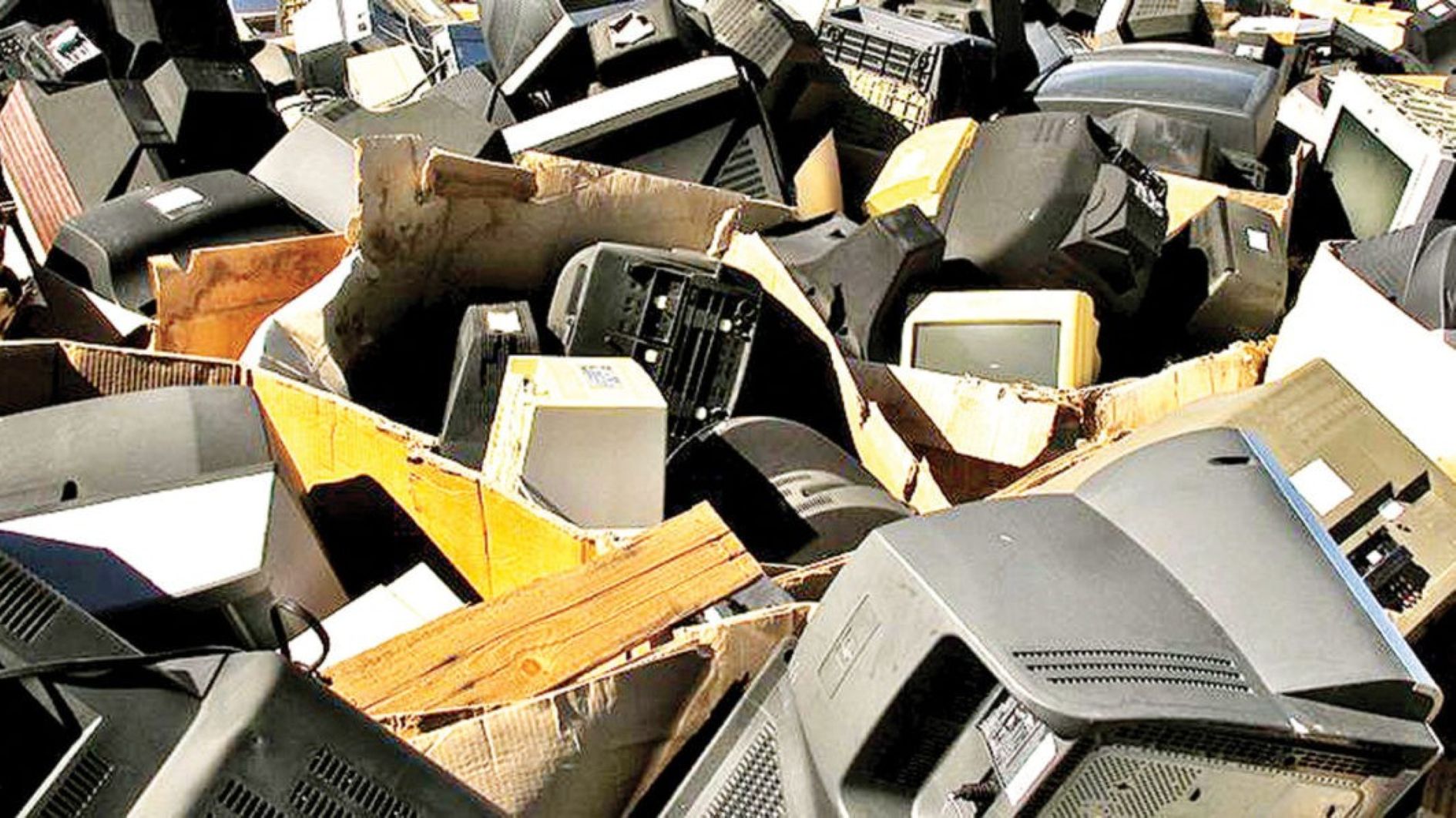
The dumping-ground problem is especially visible in the trade in used electronics.
UN Environment reported that more than 60,000 tonnes of used electrical and electronic equipment were shipped into Nigeria annually through Lagos ports, with additional quantities entering by land. More than one-quarter of some shipments was reportedly non-functional and effectively became waste upon arrival. Nigeria itself generated approximately 290,000 tonnes of electronic waste in 2017, while about half a million tonnes of discarded appliances were being processed annually.
Much of this waste is dismantled informally by workers, including young people without proper protective equipment. Plastics and cables are burned to recover metals, releasing dangerous substances into the air, soil and water. Workers and nearby communities may be exposed to lead, mercury, cadmium, dioxins and other toxic materials.
What some exporting countries describe as “second-hand goods” may, therefore, amount to the export of environmental and health risks to Nigeria.
The Bamako Convention was created precisely because African countries recognised this danger. It prohibits the importation into Africa of hazardous, including radioactive, waste and requires environmentally sound waste management.
Yet treaties and regulations are meaningless when waste is falsely declared, inspections are compromised, ports are porous and enforcement can be negotiated, with corruption most likely fueling the misdeeds from corporation to government officials.
Nigeria also generates more than 2.5 million tonnes of plastic waste annually, with over 70 per cent reportedly ending up in landfills, waterways or the wider environment. This demonstrates that the country is already struggling with its domestically generated waste and cannot afford to become a destination for additional foreign waste, yet lots of plastic promoting companies are not implementing Extended Producer Responsibility (EPR) in Nigeria due to poor enforcement from weak political support and interest. To be continued
Ofoegbu is a sustainable development expert and environmental activist and campaigner.