Nigeria At 66: Path to turning political survival to Nation-building, prosperity - The Guardian Nigeria News
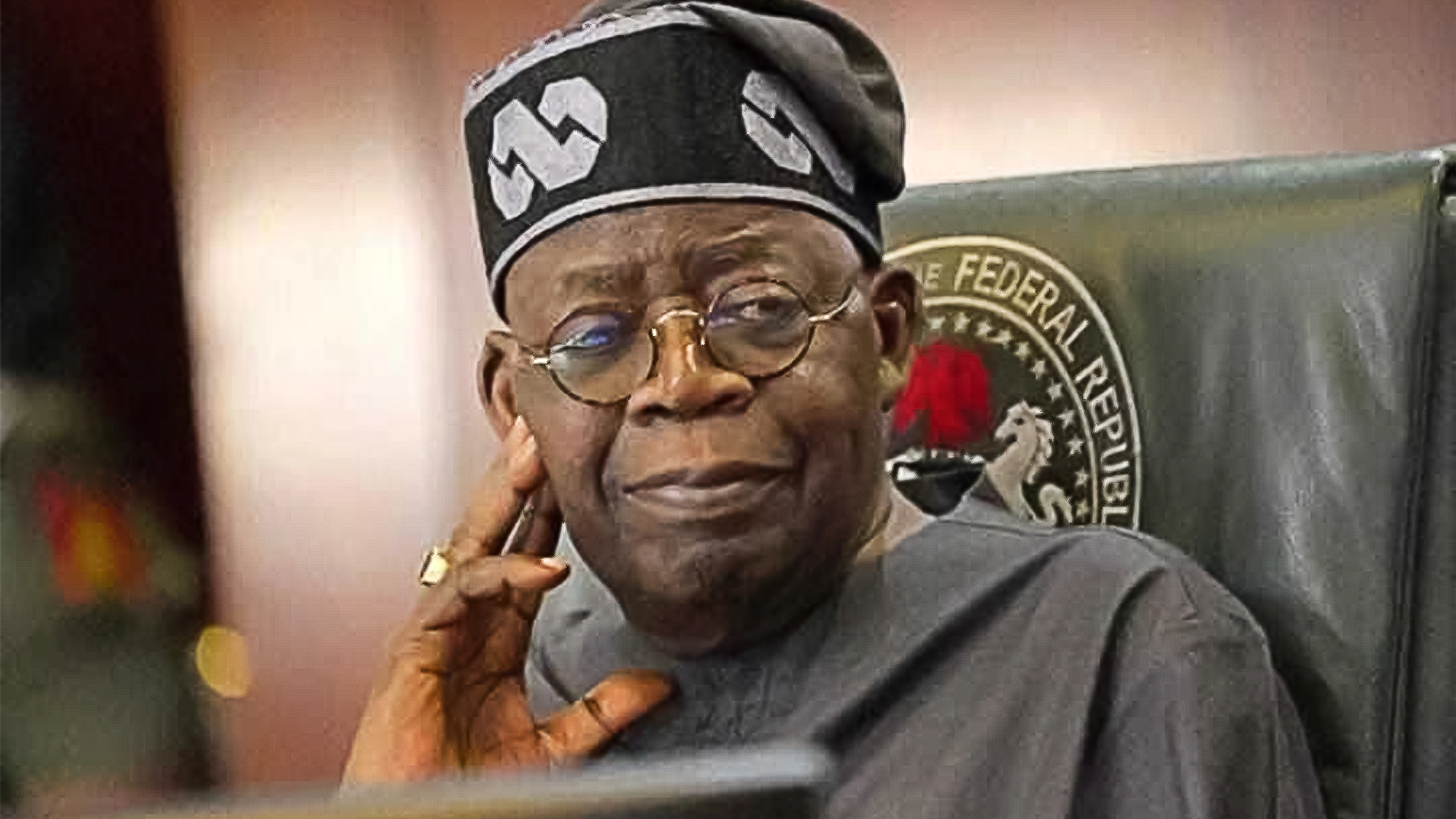
From political survival to nation-building, the question for Nigeria at 66 is whether it can turn endurance into stronger institutions, prosperity and a deeper sense of citizenship. SEYE OLUMIDE writes.
Sixty-six years after independence, Nigeria has answered one question that confronted the country at birth: it has survived. It survived military coups, a civil war, prolonged military rule, economic crises, disputed elections, insecurity, separatist agitations and repeated periods of political uncertainty.
But survival and nation-building are different measures of national progress.
Nigeria remains one political entity, while the larger task of building institutions that consistently deliver security, opportunity, justice and accountable government remains unfinished. President Bola Tinubu, in his October 1 Independence Day address, acknowledged the country’s difficult journey, recalling war, military rule, economic crises, insecurity and political upheaval. He also said the country had endured and that his administration had moved from reform towards what he described as an “age of prosperity.” The speech placed the anniversary debate around whether the country’s resilience can now be translated into improvements that citizens experience in their daily lives.
That question brings the voices of Nigerians, scholars, political actors and religious leaders into the same national conversation.
For development expert and Founding Executive Director of the African Centre for Leadership, Strategy and Development (Centre LSD), Dr. Otive Igbuzor, the starting point is development planning.
“The basic problem we have is that development is not on the agenda. So because development is not on the agenda, the plans, the policies, the budget is not geared towards development,” he said.
Igbuzor’s argument shifts attention from individual administrations to the relationship between planning, budgeting and measurable outcomes. He called for development plans around housing, water, education, healthcare and transportation, and cited Abuja’s housing challenge as an example of what he described as inadequate planning and implementation.
“The land belongs to the government. The government has money. As allocated, one per cent of the budget goes to FCT every year. So you allocate something, build 1,000 houses every year. In 10 years you have solved the housing problem,” he said.
He also urged citizens to pay closer attention to government budgets and participate more actively in politics, describing his prescription as “righting leadership, active citizenship and social consciousness.”
The first major expectation of independence was that political freedom would be accompanied by material improvement.
At independence, Nigerians inherited a country with substantial agricultural resources, minerals, a growing commercial sector and a large population. Six decades later, poverty, unemployment, inflation, housing deficits, weak purchasing power and uneven access to basic services remain central public concerns.
The National Bureau of Statistics’ 2022 Multidimensional Poverty Index found that 133 million Nigerians or 63 per cent of the population measured were multidimensionally poor. The survey was conducted in 2021 and early 2022, so it does not provide a direct measurement of conditions in 2026. It does, however, document the scale of the structural challenge before many of the current economic reforms.
The question now is whether economic growth and reform can produce measurable improvements in household incomes, food security, jobs, housing, electricity, education and healthcare.
Tinubu’s Independence Day address presented the government’s answer in terms of production and cost reduction. He said the administration was expanding mechanised irrigation and dry-season farming, improving access to inputs, investing in storage and transportation, and building or completing infrastructure linking farms and factories to markets. He also said salaries and pensions had been paid on time and in full since 2023, while describing the reforms as a bridge towards wider prosperity.
Whether those measures produce the promised outcomes remains a question of implementation, scale and time.
Security presents another unresolved expectation. Independence implied the capacity of the state to protect citizens and property. Yet Nigeria has continued to contend with insurgency, banditry, kidnapping, communal violence and separatist agitation.
The debate over state police illustrates the institutional dimension of the problem. The Presidency said in June that consultations on a constitutional framework for state police had made significant progress, while acknowledging that constitutional and legal questions required consideration. The issue has also raised questions about funding, accountability, political control and coordination between federal and state security institutions.
The underlying issue is not simply whether state police should exist, but how security responsibilities can be organised so that citizens receive effective protection while safeguards against abuse remain in place.
A similar question surrounds federalism. Nigeria’s early federal structure gave the regions considerable administrative and fiscal responsibilities. Military rule subsequently centralised significant powers.
Today, states depend heavily on federally collected revenue even though they carry responsibilities for infrastructure and social services.
The debate is essentially about where authority, resources and responsibility should reside within the federation.
A Professor of Law, Olu Ojedokun, also linked Nigeria’s development challenge to the structure of government. He advocated comprehensive restructuring to reduce the attraction of the Federal Government and strengthen governance at state and local levels. He also called for a more responsive security architecture, adequate funding for security institutions and a tax system capable of generating resources for public services.
For Ojedokun, decentralisation is connected to responsiveness: when responsibilities and resources are located closer to citizens, governments can be more directly measured against local needs.
A History and Diplomacy scholar at the University of Ilesa, Dr. Adebukola Ayoola, similarly located the problem in the management of Nigeria’s resources.
“The main inhibition to achieving that is mismanagement of our natural and human resources,” she said, identifying fiscal irresponsibility, misplaced priorities and poor economic decisions as among the obstacles to development.
Her position introduces another expectation of independence: national resources would be managed in ways that expand opportunity across society.
The question of citizenship adds another layer. Nigeria’s ethnic, religious and regional diversity has always been part of its national character. The institutional challenge arises when citizens perceive political appointments, economic opportunities, public services or security as being distributed according to identity or political connection.
The recurring debates over zoning and power rotation reflect this concern. So do demands for greater regional representation and complaints about political exclusion in different parts of the country.
Former Deputy National Chairman of the Peoples Democratic Party (PDP), Chief Bode George, offered a sharper assessment of the distance between independence and development.
“For 66 years, we’ve gone through a lot of experiences, the good, the bad, and the ugly. Politically, we have not been able to move in the direction of civilised countries,” he said.
George pointed to hunger, healthcare, education and political organisation as areas requiring attention.
“For me, the hunger that is germinating the anger, the lacklustre health centres, health support for common people, even the rich, they run away to Europe. The education sector, what is going on? Then the political,” he said.
He also questioned the frequency of population censuses and the basis for determining local government areas, arguing that population should be central to such decisions.
“So much went through my mind. And I said, what should we do? Because all is not well,” George said.
His intervention provides a political counterpoint to the development argument: the question is not only what resources Nigeria possesses, but whether institutions translate those resources into public goods. Yet the 66-year journey also contains measurable gains.
The most fundamental is territorial survival. Nigeria remained a federation despite the civil war and successive periods of instability.
Power has changed hands through elections rather than military coups. The transfer of power from the PDP to the All Progressives Congress (APC) in 2015 and from Muhammadu Buhari to Tinubu in 2023 occurred within the constitutional order.
That continuity does not remove disputes over elections, parties or institutions. It does, however, provide a political framework within which those disputes are contested.
The 2027 elections will provide another test of that framework. The Independent National Electoral Commission (INEC) lists January 16, 2027, for the presidential and National Assembly elections and February 6, 2027, for governorship and State Assembly elections, while eight states operate on separate governorship cycles. The Commission’s published timetable and current election information provide the formal framework for the approaching electoral contest.
Political parties will be required to explain how their programmes address security, economic opportunity, education, infrastructure, public accountability and the structure of the federation.
The quality of political competition will also depend on whether parties organise around programmes and institutions rather than only personalities and electoral alliances.
This is relevant to the opposition as well as the governing party. Fragmented parties can create multiple centres of political mobilisation, but the constitutional system ultimately depends on voters being presented with identifiable programmes and candidates and on institutions applying electoral rules consistently.
Another achievement is the growth of civic participation. Nigerians have repeatedly organised around elections, public policy, social issues and demands for accountability. Civil society organisations, professional groups, journalists, community organisations and young citizens have expanded the space in which government decisions are questioned.
Nigeria’s entrepreneurial capacity is another part of the national record. Financial technology, telecommunications, entertainment, creative industries, agriculture and informal enterprise have produced businesses and livelihoods despite infrastructure and financing constraints.
The youth question brings these issues together. Nigeria’s young population is frequently described in policy discussions as an asset, but its size also creates pressure on education, employment, housing, healthcare and political participation.
Young Nigerians are not only future voters; they are already workers, entrepreneurs, professionals, students, community organisers and voters. Their relationship with the state will increasingly be shaped by whether education produces opportunities, whether employment provides income, whether public infrastructure supports enterprise and whether political institutions provide meaningful avenues for participation.
A cleric and Planter of Christ Apostolic Church Adamimogo Grace of Mercy Prayer Mountain Worldwide, Prophet Sam Olu-Alo, approached the anniversary from a religious perspective.
He said Nigerian leaders needed prayers rather than condemnation and urged citizens not to give up on the country. In a statement issued by his Personal Assistant, Deji Ogunbusuyi, Olu-Alo congratulated Tinubu, Ekiti State Governor Biodun Oyebanji, South-West governors, traditional rulers and Nigerians.
He also urged the President to listen to citizens’ demands and improve living conditions, while calling on Oyebanji to work with predecessors and extend cooperation to opposition figures willing to contribute to Ekiti’s development.
Viewed together, the comments from Igbuzor, Ayoola, Ojedokun, George and Olu-Alo reveal different entry points into the same national problem. Igbuzor focuses on development planning and active citizenship.
Ayoola points to resource management and priorities. Ojedokun emphasises institutional structure, security and decentralisation. George highlights the condition of citizens and weaknesses in public services. Olu-Alo places leadership and civic engagement within a moral and religious framework.
None of these interventions changes the historical fact that Nigeria has survived major crises. They instead raise the question of what survival should produce.
At 66, some expectations of independence have clearly not been fully realised: dependable security, broad-based prosperity, reliable infrastructure, quality public services, affordable housing, predictable justice and a federal arrangement that gives states and local communities sufficient capacity to respond to their responsibilities.
Other gains are already established but require consolidation: 27 years of uninterrupted civilian rule, constitutional transfers of power, an active civic space, entrepreneurial growth and national territorial continuity.
The distinction matters because nation-building is cumulative. Institutions are built over time, and achievements can weaken when they are not consolidated.
Nigeria therefore enters its 67th year of independence with two records existing simultaneously. One is the record of survival: war did not divide the country permanently, military rule ended, democracy returned and constitutional government has endured. The other is the record of unfinished development: security remains uneven, poverty remains substantial, public services vary widely, infrastructure gaps persist and debates over federalism remain unresolved.
If Nigeria’s political continuity can be matched by institutional reliability; if economic reforms can be translated into household gains; if security reforms can provide accountable protection; if federalism can align responsibility with resources; and if young citizens can participate more fully in the country’s political and economic life, the meaning of survival will change.
At 66, Nigeria’s central question is therefore no longer whether the country can endure. Its history demonstrates that it can.
That question cannot be answered by an anniversary speech, a political alliance or a single election. It will be measured over time by the performance of institutions, the quality of public services, the security of citizens, the opportunities available to young people and the extent to which every citizen can experience the federation as a functioning political community.
Nigeria has survived. The unfinished work is to build on that survival.