
Nepal's Balen Shah meets top Indian diplomat months after snub. What's changed?
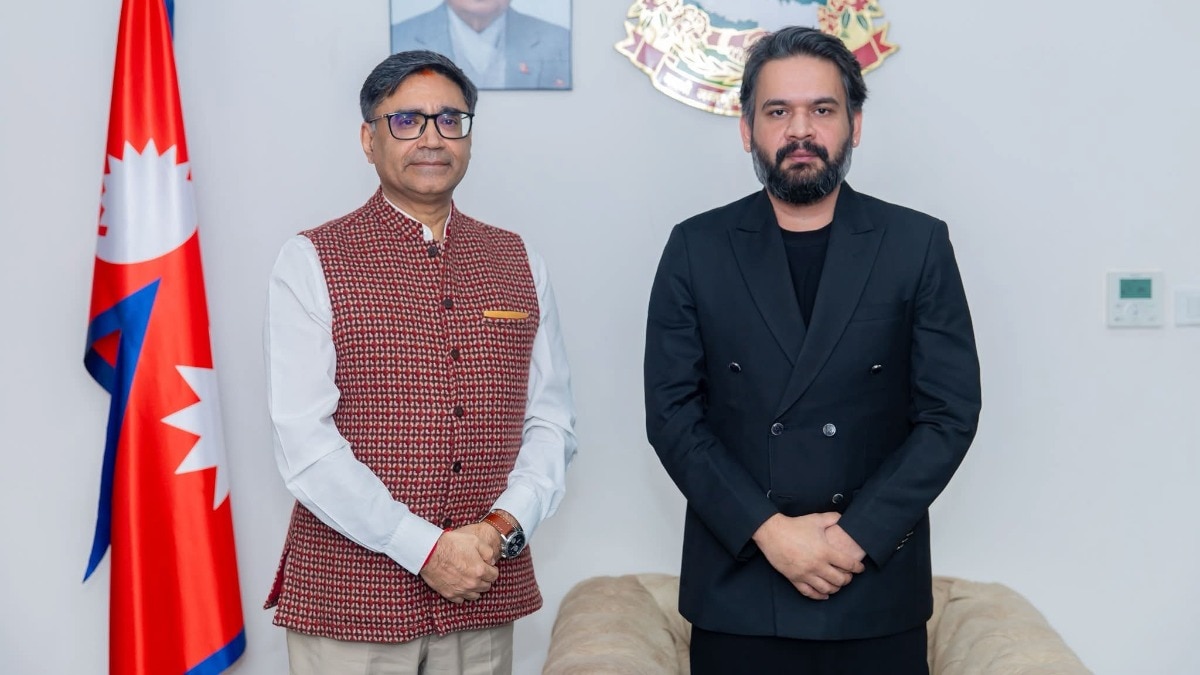
Around six months ago, Nepal Prime Minister Balen Shah refused to meet the Indian foreign secretary, which resulted in Vikram Misri's visit being postponed. Nepalese media reports then cited Shah's reluctance to meet with foreign officials who are not of an equivalent level. On Thursday, he sat down with the very same Indian diplomat. Perhaps, this time Shah's ego had to make way for pragmatism as Nepal just cannot brush away its largest trading partner.
On Thursday, Shah met Misri in Kathmandu as the foreign secretary wrapped up his two-day visit to the Himalayan nation. It comes ahead of the Nepal PM's visit to India later this month (November 22 likely), in what will be his first bilateral trip since assuming office in March. The decision is another major turnaround by Shah, who previously decided not to make foreign visits in his first year in office. Balen Shah's visit to India later this month will be the first visit by a Nepal PM in three years (AP)Â BALEN SHAH MEETS FOREIGN SECY
During his meeting with Misri, Shah was seen without his usual trademark sunglasses. Perhaps taking them off helped him see the importance of ties with India more clearly. The talks focused on water resources, energy, and trade, a joint statement said.
The U-turn is striking. Around six months ago, Misri had to unexpectedly call off his two-day visit to Kathmandu in May. While no reason was provided by India, a report in The Kathmandu Post cited Shah's self-imposed rule of avoiding one-on-one meetings with foreign diplomats.
The report, which quoted government officials, framed the approach as a "new protocol" where the PM won't meet officials below the foreign minister level.
It was not just Misri. Shah also refused meetings with US assistant secretary of state Paul Kapur and US envoy to India Sergio Gor earlier this year.
In the Indian context, Misri's visit was considered important to engage with the new leadership in Kathmandu after the violent Gen Z protests last year. Apart from trade and energy ties, Nepal's unique geographical position is key to India's security.
The snub to India came as the long-running border dispute over the Kalapani-Lipulekh junction resurfaced.
The tensions compounded after India and China agreed to reopen the Kailash Mansarovar Yatra via Uttarakhand's Lipulekh Pass. Kathmandu claims Lipulekh as part of its territory under the 1816 Sugauli Treaty. India rejected Nepal's position, describing its territorial claims as "untenable".
However, since then, Nepal has signalled that it was willing to address the issue diplomatically. In the background, engagements continued.
In June, the chairperson of Balen Shah's Rastriya Swatantra Party (RSP), Rabi Lamichhane, received a high-profile and warm welcome in New Delhi. The next month, Shah broke his self-imposed protocol to meet Indian ambassador Naveen Srivastava.WHAT'S BEHIND NEPAL PM'S TURNAROUND?
And then, flash floods struck Nepal. It left over 1,400 dead and 6,000 missing.
The flood, triggered by a glacial collapse in upstream Tibet, swept through parts of the Nepal-Tibet border on August 26, swallowing towns, roads and bridges.
India acted swiftly to rush over hundreds of tonnes of emergency relief material and equipment like Bailey bridges to restore connectivity to far-flung areas. New Delhi also dispatched tunnelling experts and rescue teams to help workers stranded inside tunnels at hydropower projects.
According to the MEA, India rushed over 140 tonnes of relief material between August 26 and September 19, reinforcing its 'first responder' image whenever its neighbours face a crisis.
India also came in praise from Balen Shah in his first address at the UNGA in New York in September. In fact, the Nepalese PM also proposed a Himalayan Climate Resilience Mechanism between Nepal, India and China to tackle climate-change-related disasters.
The tone towards India had begun to change. Experts said there is also an important economic reason for Nepal to strengthen its ties with India.
Constantino Xavier, an expert on South Asian affairs, cited an economic angle behind the sudden shift in Nepal's approach.
"Nepal and other neighbours realise rising reliance on and benefits of closer economic relations with India to attain developmental objectives - especially given global slowdown and disruptions," Xavier, a visiting professor at Ashoka University, tweeted.
To buttress his point, he shared a news report from The Kathmandu Post that said Nepal has sought an economic package worth more than $2 billion (Rs 18,786 crore), comprising lines of credit and grants, from India.
The economic package came up for discussion during the meeting between Misri and Shah, the report said. A Nepal finance ministry official said an announcement is likely to be made during Shah's visit to India. There has been no statement from New Delhi.
Nepal said the funds would primarily be used to construct transmission lines and for reconstruction efforts following the flash floods.THE GORKHA FACTOR
Crucially, Shah's move to pick India, and not China, for his first bilateral foreign visit indicates his eagerness to reshape ties with New Delhi.
Another key irritant in India-Nepal ties has been the pause in the recruitment of Gorkha soldiers in the Indian Army following the Agnipath scheme. Under the scheme, introduced in 2022, only up to 25% of recruits would be retained for permanent service after four years.
This irked Nepal, which subsequently suspended the recruitment of Nepali youths in the Indian Army. It argued that the scheme was not in accordance with the 1947 tripartite agreement signed between India, Nepal and Britain.
However, earlier this week, India revamped the scheme to allow Agniveers undergoing training in the three services to join the forces as regular soldiers.
This is likely to create a more favourable environment for discussions on resuming the recruitment of Nepali Gorkhas. Coincidentally, the government move comes ahead of Balen Shah's visit.
For India, Nepal is a crucial piece in the regional security map. This is undeniable.
Five states - Bengal, Uttarakhand, UP, Bihar and Sikkim - share borders with Nepal. These are close to areas where Indian and Chinese interests overlap. Thus, for New Delhi, a Nepal that drifts too close to China will ring alarm bells.
For now, all eyes will be on Balen Shah's upcoming visit to New Delhi later this month. It will be the first visit by a Nepali PM in three years. The last visit happened in 2023, when then Prime Minister Pushpa Kamal Dahal travelled to New Delhi.- Ends
Senior Assistant Editor at India Today, covering foreign affairs, geopolitics, defence and politics. Enjoy breaking down complex global developments, from strategic conflicts and military doctrine to diplomatic shifts, into sharp, accessible reporting. Also track South Asia's evolving security landscape.


