Nauru tells UN it is now Naoero, reclaiming ancestral name
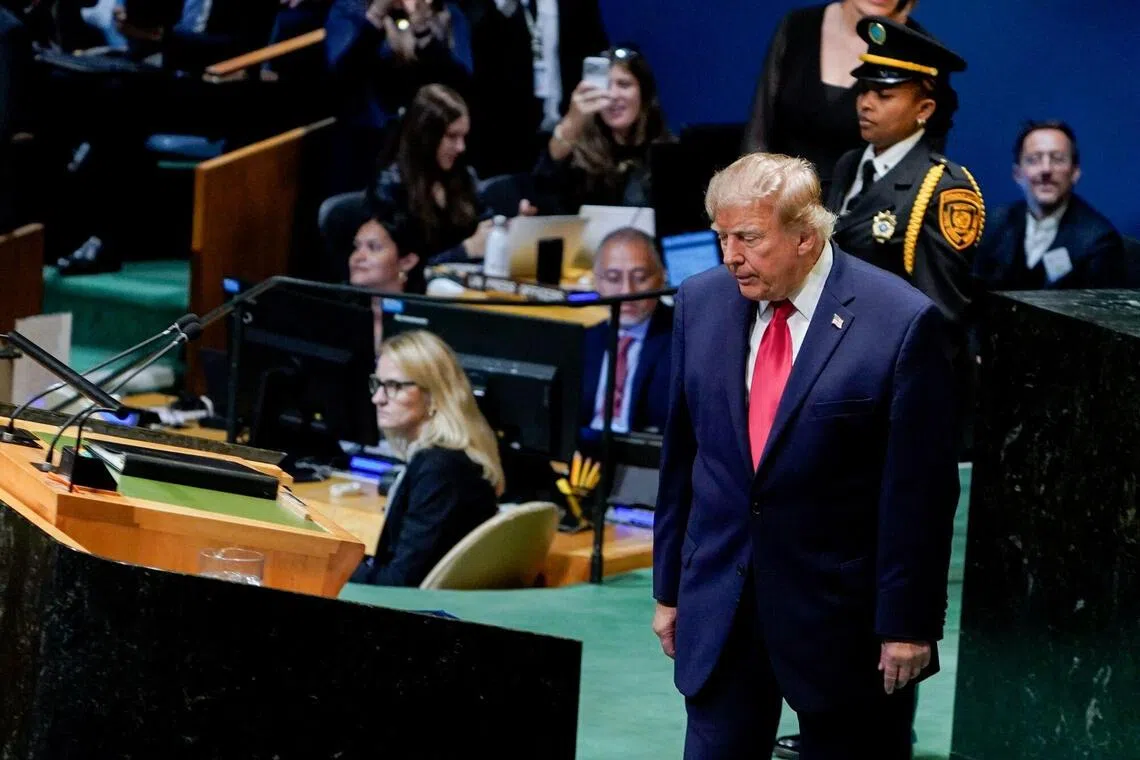
Nauru President David Adeang used his address to the United Nations General Assembly in New York to announce that his country is returning to an older name and pronunciation: Naoero. Presenting it as a reclaiming of heritage, he told world leaders that the move was meant to restore a name his people had always used among themselves.
His announcement placed the tiny South Pacific island nation alongside several countries that have changed or adjusted their names over the past century. Adeang said the shift was not a break with the past but a reaffirmation of identity, ending his speech with a direct appeal: "Say our name."
"I have travelled far," Adeang said on Tuesday before declaring the change. "There are moments in the life of a nation when its people are called to remember who they have always been. This is such a moment for us." Though Nauru and Naoero are similar and are, in essence, the same word, he said the difference in spelling and pronunciation matters. "For many years, the world has known our country as Nauru. Nauru is how our name sounded to those who found it hard to say, and the world kept it," Adeang said. "But it is not the name our people used among themselves."
The island nation, spread across eight square miles and home to about 12,000 people, became independent in 1968 after colonial rule under the United Kingdom, New Zealand, Australia and Germany. It announced the renaming in August after signalling its intent in February. Its international code is changing from NRU to NRO, and its people will be known as dei-Naoero instead of Nauruan. Commonly pronounced abroad as Now-roo, the country’s new name is spoken as Now-ero.
Adeang’s remarks also echoed a wider pattern of countries changing their names for reasons including modernisation and the rejection of colonial-era labels. Eswatini changed its name from Swaziland in 2018. Dahomey became Benin after a 1975 coup, Rhodesia became Zimbabwe in 1980 after shedding colonial rule, and Siam became Thailand in 1939. Turkiye, officially named that since 1920, asked the United Nations in 2022 to use that spelling and pronunciation in English as well. Persia became Iran, Burma became Myanmar, Upper Volta became Burkina Faso, Gold Coast became Ghana and Ceylon became Sri Lanka.
Carefully pronouncing the new name, Adeang said: "We do not make this choice to erase our past. We make it because we honor it. That name carries the memory of our ancestors, our language, and our identity. It has been there all along. Never lost, never absent. Today, we restore Naoero." After speaking about issues facing his people, including rising seas, economics and respect on the global stage, he closed with a final recap of his message in three words: "Say our name."