Nasa's Roman Telescopes opens its 300-megapixel eyes to watch the cosmos
Nasa's Nancy Grace Roman Space Telescope has opened its 300-megapixel eyes to the universe.
The space agency has successfully activated Roman's Wide Field Instrument, a giant infrared camera that will serve as the telescope's primary science instrument.
Engineers have also carried out the first major checks of its Coronagraph Instrument, which is designed to help astronomers directly image planets orbiting other stars.
The milestone comes as Roman continues its journey towards its new home in space.
The telescope launched aboard a SpaceX Falcon Heavy rocket from Nasa's Kennedy Space Center in Florida on August 30.
Roman is now on a roughly three-month journey to the second Sun-Earth Lagrange point, or L2, about 15 lakh km from Earth. It will operate from this special location to get an unobstructed view of the universe.HIGH QUALITY VIEW OF THE COSMOS
The Wide Field Instrument (WFI) is effectively Roman's giant cosmic camera.
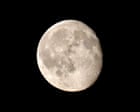
With 300 megapixels, it can capture a patch of sky larger than the apparent size of the full Moon in a single image, while retaining the sharpness of space telescopes such as Hubble.
That combination of a wide view and sharp detail is what makes Roman so efficient.Awesome drone view of launch of Nancy Grace Roman Space Telescope.NASA's coverage of the agency's Nancy Grace Roman Space Telescope leading to launch atop a SpaceX Falcon Heavy rocket from Launch Complex 39A at the agency’s Kennedy Space Center in Florida,Sunday, Aug. 30, 2026 pic.twitter.com/3iSaqt1wBs— p.s (@p_a_e_s) September 3, 2026It will scan enormous areas of the sky in infrared light, helping scientists investigate dark energy and dark matter, study how galaxies formed and evolved, and search for planets beyond our Solar System.
Nasa expects Roman to survey the sky more than 1,000 times faster than Hubble while producing similarly sharp images. The telescope's field of view will be at least 100 times larger than Hubble's.
Nasa expects Roman's first science images in early 2027.ROMAN'S OTHER EYE TO FIND PLANETS
The telescope's second science instrument, the Coronagraph, has a very different job.
It is designed to block the overwhelming glare of a star so that the much fainter light reflected by planets around it can potentially be detected.
Nasa describes it as a technology demonstration, rather than Roman's primary science instrument. An image of the galaxy NGC 4654 captured by the Hubble Telescope. (Photo: Nasa)
Engineers have already confirmed communication with its major components and tested its digital, electronic and mechanical systems.
For now, Roman faces months of calibration and testing before science operations begin. But with its main instrument now awake, the telescope has taken a major step towards its mission of giving scientists a vast new view of the cosmos.- EndsPublished By: Aryan Published On: Sep 16, 2026 16:08 IST