“Narupol” Urges Thai Government to Formulate New Strategy After Democrats Win U.S. Midterm Elections - Thairath English
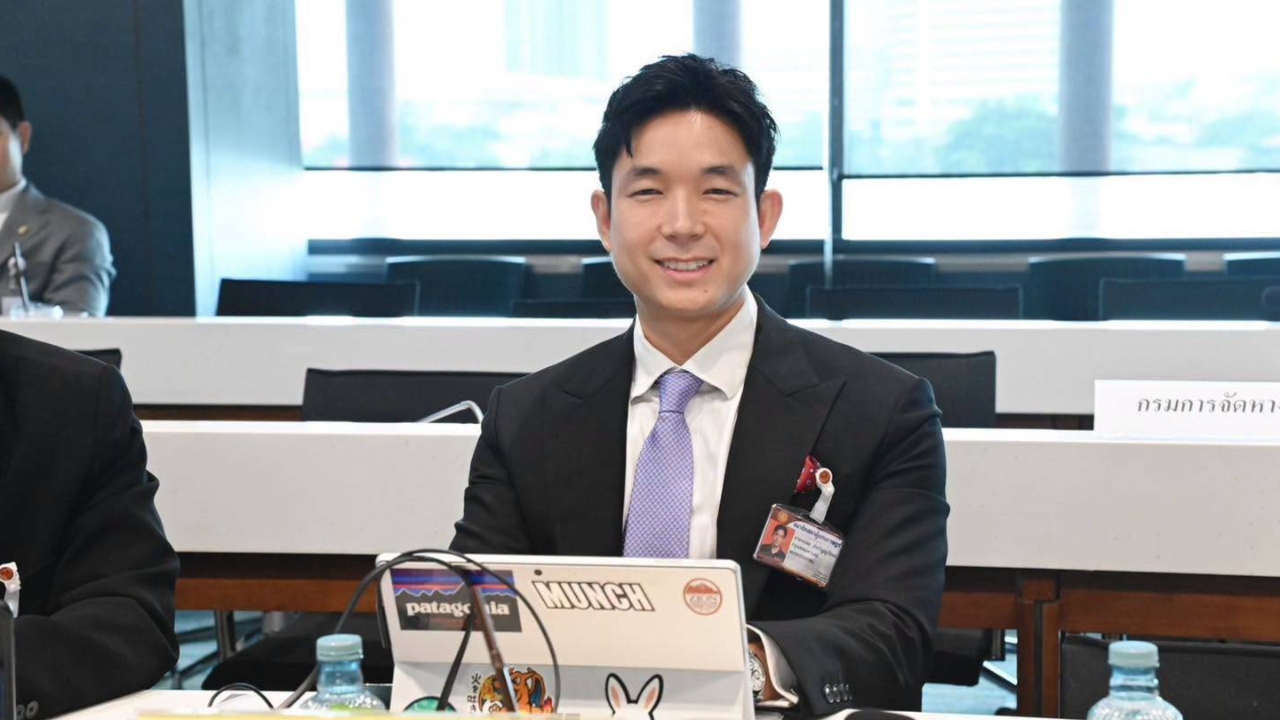
In the U.S. midterm elections, Narupol, MP from the People’s Party, highlighted a shift in congressional power that counters the executive branch. He urged the Thai government to establish a new strategy, leveraging this moment to negotiate reduced tariff barriers and attract investment in advanced technology.
6 Nov 2026 GMT+7 Mr. Narupol Lertpanyaroj MP for Bangkok from the People’s Party, commented on the results of the U.S. midterm elections. The Democratic Party managed a remarkable comeback, winning majorities in both the House of Representatives and the Senate. This political shift marks a significant transfer of power in the U.S. Analysts attribute this change primarily to public concerns over living costs—including energy, food, housing, and healthcare—as well as apprehensions about executive authority and international conflicts.
According to an AP Voter Poll, about 40% of Americans identified economic issues as the most important factor in their vote, while roughly 30% prioritized democracy and government oversight. Additionally, approximately 70% want Congress to more rigorously check and balance the president’s powers. The Democrats’ dual-chamber victory thus reflects public intent to strengthen executive oversight. However, a legislative majority does not guarantee complete reversal of presidential policies, since the president retains executive authority and veto power, which can only be overridden by a two-thirds majority in both chambers.
Mr. Narupol added, For Thailand, the government must closely monitor and proactively prepare for shifts in U.S. trade policies, given that the U.S. is one of Thailand’s top export markets. In 2025, bilateral trade in goods and services reached approximately $118.3 billion, with U.S. imports from Thailand totaling around $91.3 billion. This resulted in a U.S. trade deficit with Thailand of about $71.7 billion. Changes in U.S. trade policy will directly and inevitably impact Thai exporters and supply chains.
Mr. Narupol also pointed out that the most critical issue is the reciprocal tariff measures, under which the U.S. imposes a 12.5% tariff on Thai products, with some exemptions under certain conditions. With Democrats controlling Congress, these tariff policies, especially those under trade laws like Section 301, will face intense scrutiny regarding legal authority, transparency, and effects on American consumers—since import tariffs increase domestic prices. Thai exporters must prepare for this uncertainty, while the Thai government should use this moment to negotiate reductions in unnecessary trade barriers.
On another note, Mr. Narupol sees this political change as a window of opportunity for Thailand to review and expand economic and investment cooperation with the U.S., especially in future industries like electric vehicles (EV), electronic components, semiconductors, data centers, and clean energy. However, to attract such investments, Thailand must internally strengthen infrastructure, maintain affordable energy costs, develop workforce skills, and enforce fair competition regulations—not merely rely on geopolitical shifts among major powers.
He also emphasized that the strategic competition between the U.S. and China extends beyond trade to technology, security, and influence in the Indo-Pacific region. Therefore, Thailand must skillfully maintain diplomatic balance while clearly defining its position based on national interests—including economic security, cooperation in combating transnational crime, and promoting humanitarian efforts in the region.
In conclusion, Mr. Narupol stated, the Thai government must urgently implement a systematic economic strategy, involving proactive trade negotiations to protect exporters’ interests, diversifying risks across regional markets, supporting small and medium-sized enterprises, and enhancing the competitiveness of Thai industries. He posed a direct question to the government: does it currently have a clear and concrete plan to address these challenges? The aim is to ensure Thailand is not merely reacting to global changes but can transform these challenges into opportunities that maximize benefits for the economy and Thai citizens.