‘My anxiety almost disappeared’: How exercise saves the lives of the strongest people - The Independent
Want to bookmark your favourite articles and stories to read or reference later? Start your Independent Membership today.
The article below is an excerpt from my newsletter: Well Enough with Harry Bullmore. To get my latest thoughts on fitness and wellbeing, pop your email address into the box above to get the newsletter directly to your inbox.
Exercise makes you fitter and healthier – everyone knows that. But what about the less tangible benefits?
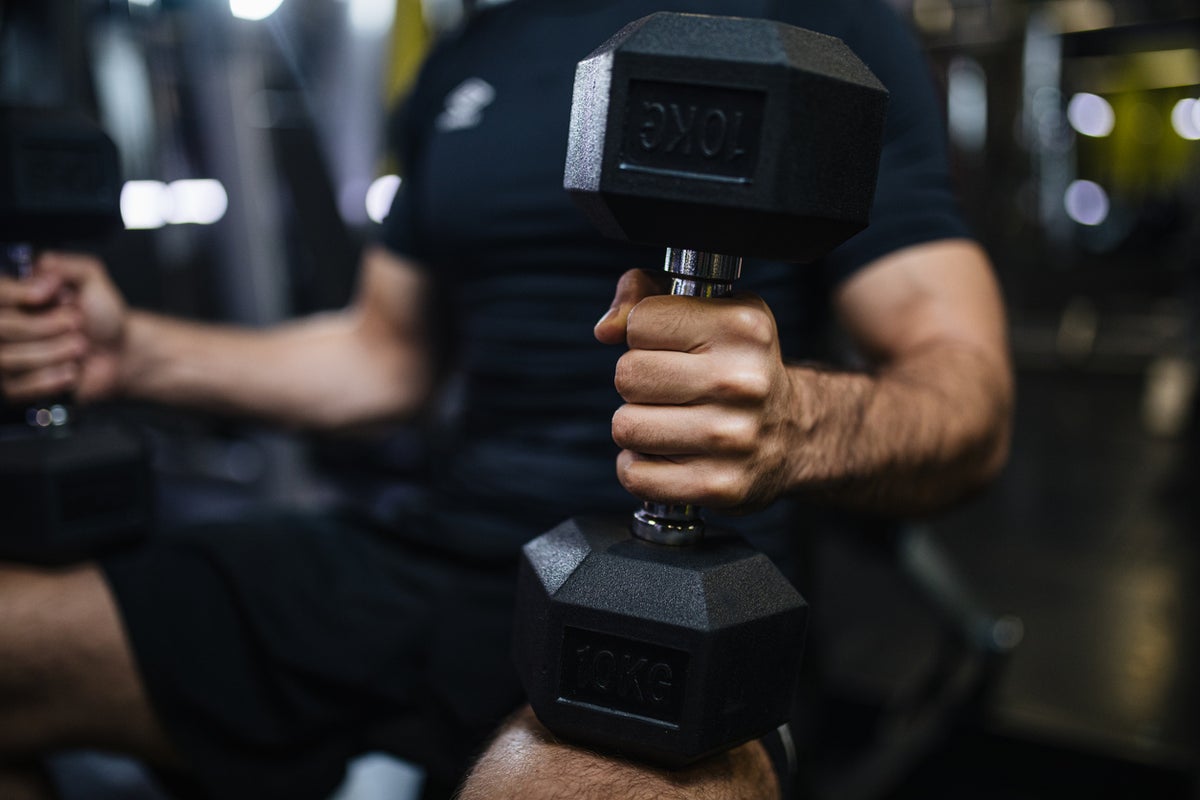
I spent last weekend in Aberdeen at the Rogue Invitational, a fitness competition hosted by strength and conditioning equipment company Rogue. Founded in a garage by Bill Henniger in 2006, the brand now forges every piece of fitness kit imaginable. And once per year, for this competition, it creates enormous contraptions to test the world’s best strength athletes.
Over three days, I watched athletes lift whisky barrels weighing more than 180kg, shift enormous logs from the ground to overhead, and even load four enormous spheres into a metal cannon. I also had the chance to chat with a lot of the competitors.
Given the incredible feats of strength on show, I decided to ask each one the same question: “How do you become strong?” And their answers surprised me.
The physical advice for becoming strong was fairly uniform: lift weights that challenge you, fuel and recover adequately, repeat.
“With exercise, doing nothing today is a guarantee of discomfort tomorrow, while feeling some discomfort today is a guarantee that you’ll be more capable tomorrow. It’s your choice which one you pick,” Canadian strongman, clinical exercise physiologist and three-time Rogue Invitational champion Mitchell Hooper summarises.
However, what surprised me about their answers was how little most athletes spoke about their physical feats.
“The gym and physical training in general have saved me a number of times,” Hooper says.
“...That [his mental health] is something I’ve struggled with for a long time, and continue to struggle with. But having an intense focus on one thing is only one step away from meditation.
“...I can’t do that [meditation], so being able to intently focus on one thing at a time, even if that’s only for a few moments, is really useful. On your worst day, you can look in the mirror and say: ‘I have objectively improved in a way that I cannot argue with.’”
My discussion with two-time Europe’s Strongest Man Luke Stoltman also centred on strength above the neck.
“For me, becoming strong was, from a young age, about finding what gets me going in life and what makes me feel confident and OK with myself,” the Scottish strongman says.
“I went through struggles growing up, I couldn’t speak [to a group], and I always used to run away from school if I had an English talk or something like that.
“But as soon as I got to the gym at 16, it was like all my anxiety almost disappeared. I didn’t have to speak to anyone, I could just concentrate on myself, and I found that feeling of being OK in my own skin.”
Meeting him now, it is hard to imagine a shy Luke Stoltman. Dwarfing a sofa, the 150kg-plus man wears a red and black flannel shirt with the sleeves ripped off to reveal tree trunk arms. He is affable, seemingly completely at ease, with an infectious laugh like a low crack of Scottish thunder.
“But even this morning, I had to go to the gym to prepare myself for 12 hours of speaking to new people,” the 41-year-old says. “There are many different ways to be strong, physically and mentally. But to me, I think being strong means being consistent in something you love.
Part of this, Stoltman says, is the willingness of him and his brother, fellow top-level strongman competitor Tom Stoltman, to be vulnerable.
“We can be open about what we’re experiencing and what we’re going through,” he says. “But that doesn’t mean you just stop. I have a duty to myself and to my family to turn up and to be strong… I have my own stuff to deal with, but I also have to look after Tom.”
Exercise is not a fix-all solution for any health condition, physical or mental. There is no secret potion in life that can make all well in the world. But evidence, both scientific and subjective, suggests it helps more than most things.
Moving your body can be an enormous force for good, leaving you a stronger person, both inside and out. And you don’t need to lift whisky barrels weighing hundreds of kilos to feel the benefits – just “find what helps you feel OK in your own skin,” and keep it up.