More PF money in your hands! Keep 10% balance, get monthly income after retirement
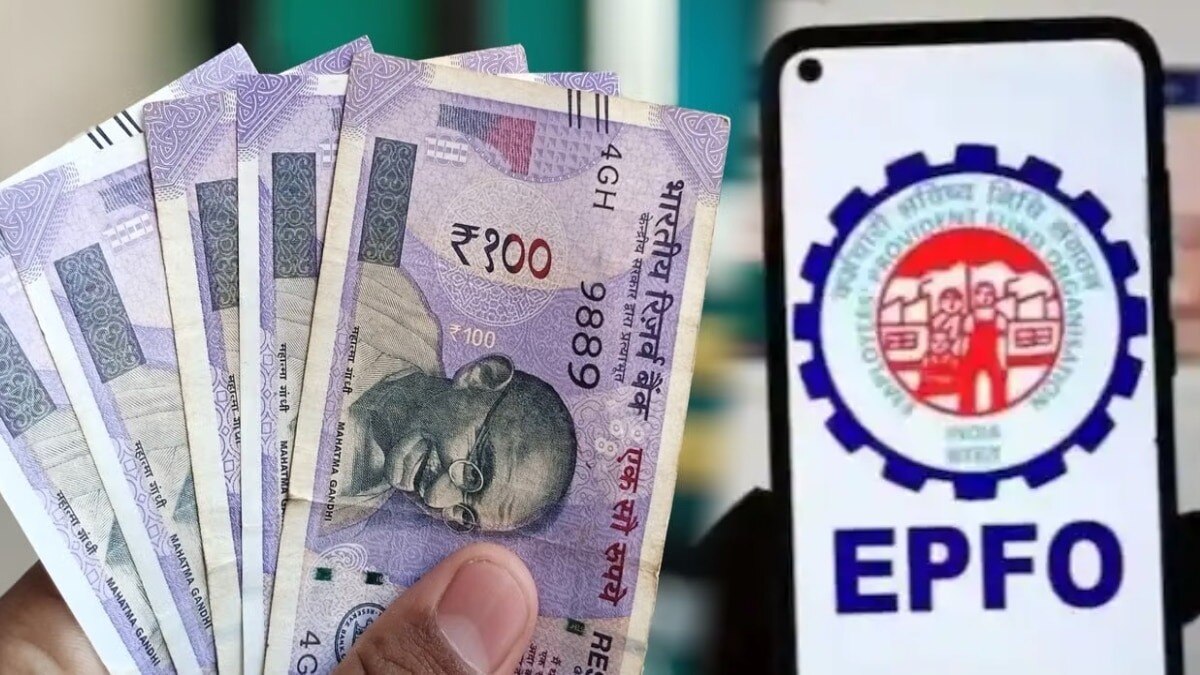
Your provident fund (PF) money may soon become easier to access, whether you need it for an emergency or want a regular income after retirement. The Employees' Provident Fund Organisation (EPFO) has approved a series of changes that give members greater flexibility in withdrawing their savings, while also making claim settlements faster.
The decisions were taken at the 240th meeting of the Central Board of Trustees (CBT), chaired by Union Labour and Employment Minister Mansukh Mandaviya in New Delhi on Thursday, November 19.
Among the key decisions are the introduction of a Systematic Withdrawal Plan (SWP) for retiring members, a reduction in the minimum PF balance requirement from 25% to 10%, and a cut in the waiting period for final withdrawals from 12 months to just two months.
Here is what these changes mean for EPF members.
One of the important changes approved by the board concerns the minimum balance members must retain in their EPF accounts.
Earlier, members were required to maintain at least 25% of their contributions as a minimum balance. This requirement has now been reduced to 10%.
The move will allow members to access a larger portion of their accumulated PF savings when they need money, while still ensuring that a part of their retirement corpus remains protected.
The board has also reduced the waiting period for final PF withdrawal from 12 months to two months. This is expected to make it easier for members to access their savings without having to wait for an extended period.EPFO APPROVES SYSTEMATIC WITHDRAWAL PLAN
Retirement savings may soon offer more than just a lump sum payout. EPFO has approved a proposal to introduce a Systematic Withdrawal Plan (SWP), allowing retiring members to withdraw their accumulated PF savings in instalments rather than taking out the entire amount at once.
Under the proposed facility, members will be able to choose periodic withdrawals, such as monthly, quarterly or half-yearly, depending on their requirements. The remaining corpus will continue to generate returns, helping retirees earn from their unwithdrawn savings. Credit: pib.gov.in
The facility will be voluntary, meaning members will not be forced to opt for periodic withdrawals. They can continue to choose how they want to access their retirement savings.
The proposal is expected to benefit around 6.32 lakh EPF members aged above 55 years who have PF savings of more than Rs 5 lakh. It could also attract future retirees looking for an additional source of regular income after retirement.
The facility will also take care of members' families. If a member dies during the payout period, the nominee or dependent will be able to withdraw the remaining balance or continue receiving periodic payments.
The board also proposed UAN-linked mechanisms that will allow members to make voluntary contributions directly, without depending on their employers' payroll systems. Third-party micro-contributions, such as customer tips, may also be allowed. This could help extend social security coverage to gig and platform workers.
The necessary amendments to the EPF Scheme will be notified after approval from the Ministry. A corresponding amendment to the Income Tax Act is also being taken up with the Ministry of Finance.CLAIMS SETTLEMENT TIME FALLS TO 2.57 DAYS
EPFO has also reported an improvement in the time taken to settle provident fund claims following the implementation of its Centralised IT Enabled System (CITES) 2.0.
According to the organisation, the share of claims processed automatically has increased from 39% to 71% after the rollout of the system.
The overall claim rejection rate has also fallen from 23% to 7.82%, following measures such as pre-validation, greater automation and simplified withdrawal limits.
Another significant improvement has been in claim settlement time. The average time taken to process claims has come down from 11.15 days to 2.57 days.
The new system, developed by the Centre for Development of Advanced Computing (C-DAC), uses a centralised, Universal Account Number (UAN)-based platform to improve the delivery of EPFO services.EPFO TO ALLOW UP TO 3% INVESTMENT IN AIFs
The board has also given in-principle approval to allow EPFO to invest up to 3% of its fresh accretion in eligible Alternative Investment Funds (AIFs).
These investments will be made within the existing overall investment limit and will initially be routed through government-backed entities.
The move is aimed at diversifying EPFO's investment portfolio while maintaining safeguards and oversight.RELIEF FOR FIRMS WITH PENDING EDLI CASES
The CBT has also approved changes to the Employees' Deposit Linked Insurance (EDLI) Scheme, 2026, to help establishments facing pending or expired exemption cases.
Eligible establishments will get a six-month window to renew expired exemptions. They may also receive relief from contributions, interest and penal damages for the verified transitional period.
The relief is intended for establishments that maintained group insurance policies offering benefits equal to or better than the statutory EDLI scheme but could not complete the required exemption or renewal formalities due to administrative difficulties.
The move is expected to help resolve long-pending cases while ensuring that employees' insurance benefits remain protected.Rs 5,996 CRORE PF SAVINGS TO COME UNDER EPFO
The board also reviewed proposals involving the surrender of exemptions by 27 establishments and the cancellation of exemptions in four establishments.
These cases involve the transfer of accumulated provident fund savings worth around Rs 5,996 crore to EPFO, covering 1,44,437 members.
Following the transfer, these accounts will come under EPFO's direct administration.
The board also approved the revised estimates for 2026-27 and budget estimates for 2027-28 under the EPF, Employees' Pension Scheme (EPS) and EDLI schemes.
Overall, the latest decisions are aimed at making PF withdrawals more flexible, improving access to retirement savings and strengthening the delivery of social security benefits to employees and pensioners.- EndsMust Watch
Jasmine Anand is a Senior Reporter (Emerging Tech) at India Today. With over 15 years of experience, she has earlier worked as a Financial Journalist in a multinational equity research firm, tracking equities, stock market, economy, IPOs and market-moving stories. Jasmine's forte is to scribe meticulously complex facts and figures into lucid and interesting reads. In her leisure time, she loves binging on movies and is passionate about painting, calligraphy, arts and crafts.