
Mom Told Newborn’s Purple Arm Mark Was Bruising. Then Came the Diagnosis - Newsweek
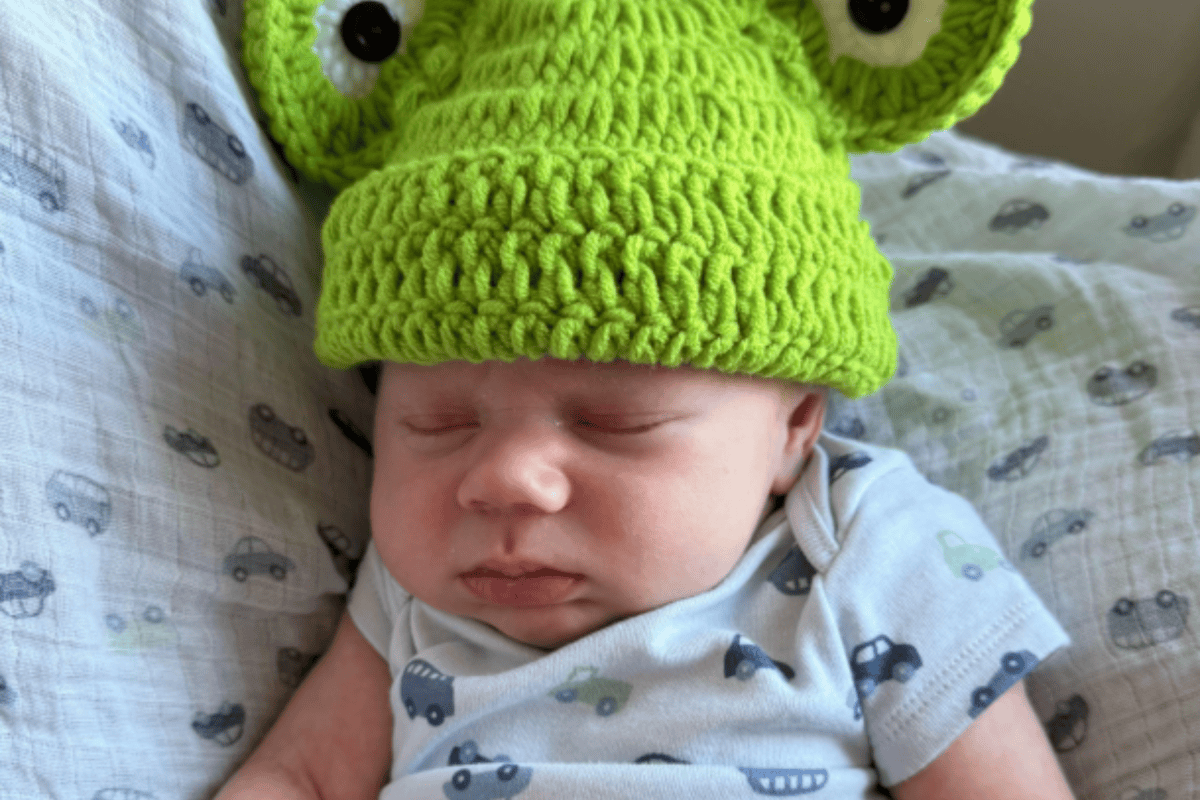
Two U.K. parents were concerned about their baby boy who was born with a purple mark covering part of his left arm and hand.
Shannon Smith, 27, and Ayrton Hall, 29, told Newsweek their son, Reuben, was born via C-section.
The parents wondered if the mark had been caused by the surgery.
“We asked a midwife if she knew what it was, and she told us that I might have bruised him,” Shannon said. “I was obviously on a lot of pain medication and got very upset at them thinking I could have bruised my child.”
When Reuben was four weeks old, the mark turned bright red, but was still flat against his skin.
For reassurance, Shannon and Ayrton sought a second opinion and consulted a pediatrician.
There, they were told that the mark on Reuben’s arm was a port wine stain birthmark, and then referred to a dermatologist for further investigation.
A port wine stain is a vascular birthmark caused by abnormal blood vessels beneath the skin, typically appearing as a flat red or purple mark which appears from birth.
As the weeks went by, Shannon and Ayrton spent a lot of time observing Reuben’s arm.
“It changed a lot in color and texture very quickly, which made us anxious,” Shannon said. “But now we know it’s just something that will change and grow with him, which makes him unique.”
Matthew R. Greives, MD, MS, FACS, Thomas D. Cronin chair of plastic surgery at UT Health and director of the vascular anomalies team at Memorial Hermann Health System, told Newsweek that if a baby is born with a port wine stain birthmark, parents should have them evaluated and monitored by a vascular anomalies team.
Port wine stain birthmarks are benign lesions but can become thickened and bumpy over time if left untreated.
“Treatment for port wine stains involves laser treatments, which lighten the birthmark and help prevent it from worsening,” Greives said. “More than one session is usually required, and maintenance treatments may also be needed as they get older.”
Genetic causes are also being discovered as a cause of this condition, Greives explained.
These changes can trigger abnormal blood vessel growth in affected tissue, sometimes leading to overgrowth of a limb.
In some cases, targeted treatments designed to block specific genes or cellular pathways may help slow the progression of the condition.
“There is a benefit to starting treatment at younger ages, so we recommend establishing care with a vascular anomalies team in infancy,” Greives said. “Once they have undergone an initial series of laser treatments and are doing well, we usually see them in clinic once per year to evaluate their progress.”
Now 10 weeks old, Shannon said Reuben’s birthmark has a “cobblestone” appearance, with some red patches fading in color as he grows.
Shannon shared the progress of the mark in a post on TikTok (@raisingreu) where she calls it his “iron fist.”
Dozens of TikTok users left comments, with some calling the mark “beautiful” and “perfect.”
One user said they had a similar birthmark to Reuben's as a baby that gradually faded over time, although a red vein-like mark is still visible on part of their lower arm.
As Reuben grows up, Shannon and Ayrton want him to feel proud of the birthmark, as it makes him unique.
“We want him to embrace it and be able to push past any potential horrible comments,” Shannon said. “This is why we’ve chosen to call it his iron fist—like Iron Man—to teach him he his strong and brave.”


