Minors' horror in Bihar's Jamui: Digital assault deepens physical abuse
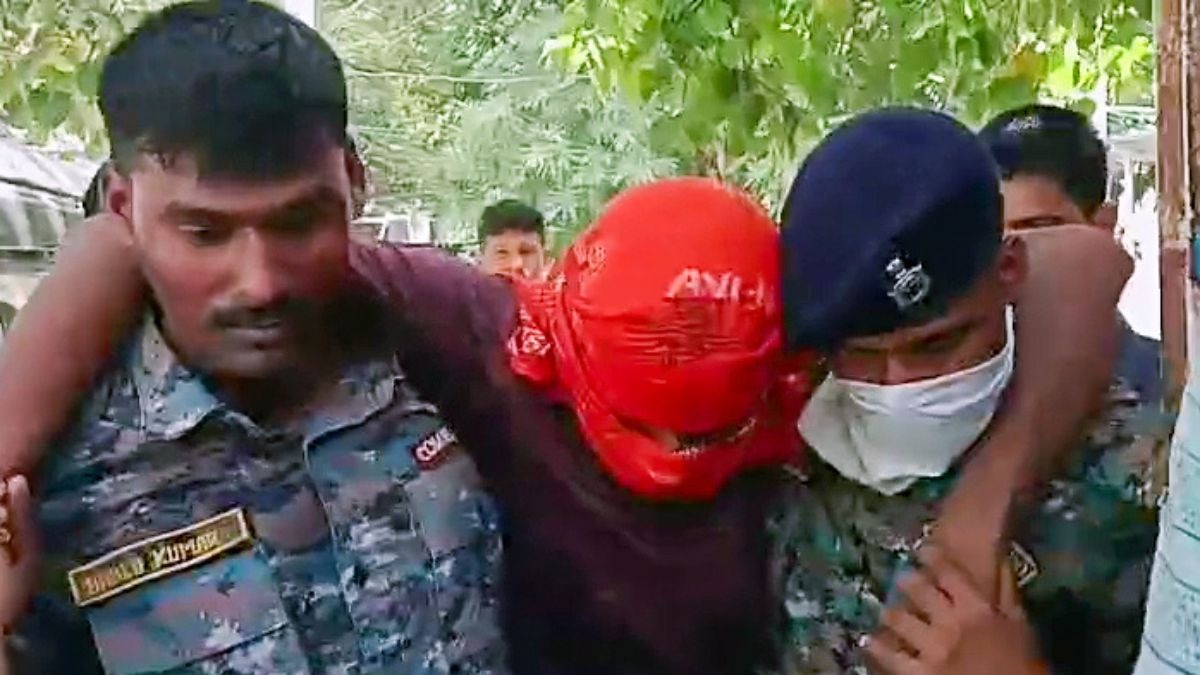
On September 22, three days after the abuse of a Class 10 girl in Bihar’s Jamui, a police bullet hit the left leg of Nandan Yadav, a man in his thirties named as the main accused and allegedly featuring in a viral video of the assault on her.
Police officers say Yadav was hiding near Marwa Pahad when a team moved in. He allegedly tried to flee; a clash followed, then the shooting, and he was arrested and taken to Jamui Sadar Hospital.
Eight people are in custody in the case, police said—five adults and three minors. One of the alleged perpetrators Hareram Yadav got injured while fleeing with Nandan Yadav and was hospitalised. Ramashish Chaudhary, who was allegedly at the crime spot, and two others, Kundan Kumar and Faiyaz Ahmed, were arrested for alleged circulation of the video.
Once the clip of the crime spread, the administrative machinery kicked in: the girl traced, FIR registered, special investigation team (SIT) set up, arrests made, cases filed against social media accounts, and then the shooting. But that speed of action isn’t the entire story.
The events of September 19That evening, two Class 10 students—a girl and a boy, both minors—were heading home after coaching classes through the Marwa hill area in Jamui, 160 km south-east of Patna, when a group of youths allegedly stopped them.Police say, and as the video also shows, both minors were abused and assaulted. The girl was inappropriately touched; the boy was beaten. When they tried to leave, the group allegedly came after them. The video that was filmed, police say, helped pinpoint the suspects.
No complaint was filed that night. But the police reached the assaulted minors on September 21, recorded statements and registered an FIR. On Jamui superintendent of police Vishwajeet Dayal’s order, an SIT was formed. Three minors were arrested as suspects that evening. The following day brought the remaining arrests and the police shooting.
A double-edged responsibilityYet, in between the chain of events, crops up a hard question. The police need to create enough fear of the law to deter a crime from being committed. And when eventually dealing with a suspect or accused, they must themselves operate within the law.
In this case, the Jamui police moved quickly once they knew. About 120 social media profiles were booked over circulation and disclosure of a minor’s identity. A police appeal asked people not to share the video and warned of action under the Protection of Children from Sexual Offences (POCSO) Act, Information Technology Act, Juvenile Justice Act and Bharatiya Nyaya Sanhita (BNS).
One crime cannot convict a whole police system. The facts still force the question: was the fear of the law strong enough? A group that can allegedly stop two schoolchildren on a public road, subject them to abuse, and film it makes that question unavoidable. While a police operation/encounter shows that the state can pursue a suspect, it does not prove deterrence existed beforehand.
The second crimeThe delay in reporting the case was not about indifference or consent. A frightened child does not follow the adult script: crime, police station, FIR. There could be fear of the assaulters, the family and scrutiny from immediate society.
The useful question thus is what enabling circumstances would have made reporting of the crime easier. Whom to call? Was the hill route a declared isolated/risky spot? Was a police patrol ever on it? In summary, the basics that crime prevention must begin with.
The assault was one crime. Filming and making it go viral was another. As the police said, even one social media share could harm the minor girl’s privacy and mental well-being, and protecting her identity was a collective duty. Indeed, the police can arrest the suspects in the frame, but not the internet. Circulation is irreversible damage done.
The immorality of moral policingWhy did the group believe it could waylay the minor boy and girl? The reported bits of the case point to moral policing: strangers demanding an account of a girl’s movement and her company. But a public road is not a moral court. Someone’s disapproval does not confer them the right to interrogate, intimidate or assault. That is where moral policing becomes violence—and where the file leaves the police thana and enters society.
The accused came from homes and neighbourhoods that should teach what is allowed. There is no FIR for a culture that sells domination as masculinity, no chargesheet for a family that polices daughters harder than sons, no lock-up for the laugh when a girl’s humiliation is a joke, no thana for the bystander who watches.
The video is disturbing not only for the crime it shows but the confidence with which it appears to have been perpetrated. That is a failure of social deterrence: the knowledge that another person’s dignity is not yours to violate, and that the people around you will not stand for it. For the assaulted minors, the aftermath is questions, wrong publicity, potentially disruption of education, and humiliation. The case will move through court but their horrific memories will perhaps stay forever.
What must changeFinish the investigation and prosecute under POCSO and the rest of the criminal law. Take the juvenile suspects through the juvenile system. Document and examine the police shooting as an encounter is not a trial. Establish who recorded, uploaded and circulated the video of the crime.
Also, audit Marwa Pahad and the coaching routes: lighting, police patrol at hours students walk that stretch. Make child protection real, not a poster. Teach consent, bystander duty and digital law in schools and coaching centres as safety, not a moral science sermon. Protect families from the pressure to compromise.
The police caught the accused. Whether the encounter was justified is for evidence and the law. At the same time, the police cannot be present on every lonely road. So the first line of deterrence has to be social. That line failed in this case.
The story began on a road, moved to a mobile phone recording the crime, then to the feed, the thana, the lock-up, and on September 22 to a police shooting. For the two children, however, it did not travel so neatly.
The state can punish the guilty but can it delete the nightmares created in the assaulted children’s minds? They will need privacy, counselling, a way back to school and a shield from the attention that has fallen on their families. The test of the Jamui case will not be how loudly the state answers while the cameras run. It will be what remains when the cameras have moved on.