Mike Waltz Won't Give Iran War End Date as New Poll Shows Voter Skepticism - Newsweek
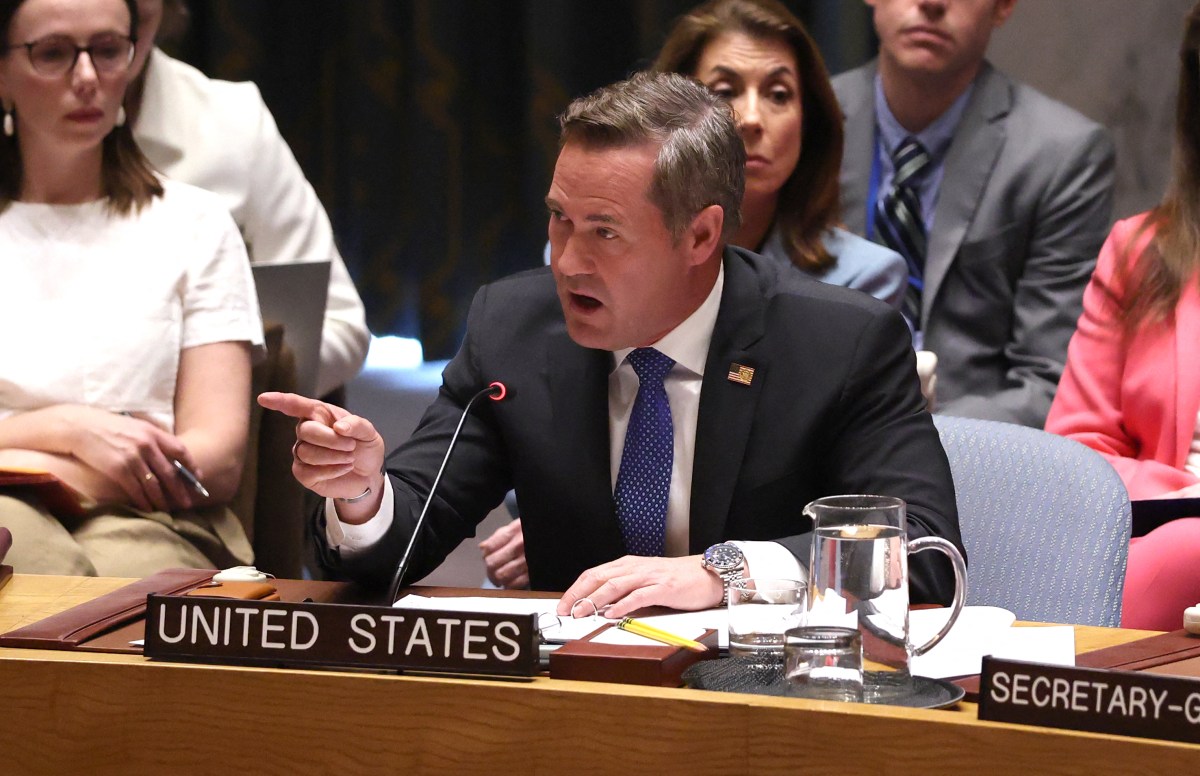
President Donald Trump's ambassador to the United Nations declined Sunday to provide any timeline for ending the Iran war, a conflict now approaching its seventh month despite Trump's earlier prediction that it would be over within weeks.
Mike Waltz's comments come as a new NBC News poll found widespread skepticism toward the conflict, with 62 percent of voters saying the war has not been worth it and 57 percent saying they would be less likely to support candidates who back it. The findings arrive amid growing Republican unease over the war's political costs, particularly in competitive midterm races.
Newsweek reached out to the White House for comment on Sunday.
Appearing on CNN's State of the Union, Waltz was pressed on reports that senior White House officials have privately discussed the possibility that the Iran war could continue for years.
"I wouldn't necessarily put a timeline on it," Waltz said.
The comments stood in contrast to Trump's earlier insistence that the conflict, launched on February 28, would be resolved within "four or five weeks."
Waltz argued that U.S. economic pressure and the naval blockade against Iran were working and said time remained on the administration's side.
His remarks came amid a worsening regional situation. Iran warned Sunday that any new U.S. attack would trigger sustained retaliation against American interests, while Iran-backed Houthi forces escalated attacks in Saudi Arabia and near the strategically important Bab al-Mandab shipping corridor.
Trump struck a different tone Wednesday, telling supporters in North Carolina: "That war is going to end very soon. Watch, you just watch."
The new NBC News poll suggested the war remains a political liability for Republicans.
The war appears to be contributing to Republicans' broader political challenges ahead of the November midterms.
The poll found Trump's approval rating at 41 percent, while 56 percent disapproved of his job performance. Fifty-five percent said Trump's policies had hurt the economy.
The survey also found that 43 percent of voters said their congressional vote was intended to signal opposition to Trump, compared with 27 percent who said it was intended as a signal of support. NBC said that was the highest such figure recorded in its pre-midterm polling over the past three decades.
The administration is also facing visible signs of dissent inside Republican ranks.
On Tuesday, seven House Republicans joined Democrats in voting for a resolution seeking to restrict further military action against Iran absent congressional authorization.
The measure was largely symbolic and is unlikely to affect military operations immediately. But it represented the largest Republican defection yet on the issue and highlighted growing concern about a conflict that has stretched far beyond its original expectations.
Among the Republicans supporting the resolution were Iowa Representatives Zach Nunn and Mariannette Miller-Meeks, along with South Carolina Representative Nancy Mace.
The vote came as Republicans prepare to defend a narrow House majority in a difficult political environment.
The positions taken by Nunn and Miller-Meeks were particularly notable because both represent highly competitive districts that Democrats hope to flip in November.
Nunn framed the issue as opposition to another prolonged military conflict.
"Having deployed multiple times and flown over 700 combat hours in the Middle East, I will not support another open-ended war," he wrote on X.
Miller-Meeks went even further, arguing that the administration must explain how the conflict ends.
"The President needs to present a plan to Congress and the American people for how this ends so we can focus on bringing our soldiers home and lowering prices," she wrote on X.
She has also described the Iran conflict as potentially becoming "another forever war."
The comments reflect concerns that extend beyond foreign policy and into pocketbook issues that have become central to many competitive races. Both lawmakers are campaigning in a state where economic issues and rising fuel costs remain major concerns.
The political risks surrounding the conflict are tied not only to military questions but also to affordability.
The latest NBC poll found that a majority of Americans believe Trump's policies have harmed the economy, while previous polling has found significant concern about the war's effect on energy prices.
Earlier surveys found overwhelming majorities saying the conflict was increasing oil and gas costs.
That issue has become especially sensitive in rural states, where farmers have faced record diesel prices during harvest season.
The war's economic consequences have also become a growing concern for some Republicans, particularly as voters continue to cite inflation and energy prices among their top issues.
Meanwhile, Reuters reported Sunday that conflict-related disruptions involving the Strait of Hormuz and the Bab al-Mandab shipping corridor continue to create uncertainty for global energy markets.
When Trump entered office for a second term, Republicans expected to run heavily on immigration, border security and crime.
Instead, inflation, energy costs and the Iran war have become central issues in the campaign.
The conflict has also exposed divisions inside Trump's coalition, including disagreements over how long U.S. involvement should continue.
At the same time, several Republican candidates in competitive races have sought varying degrees of distance from the administration's handling of the conflict.
For Democrats, that presents an opportunity to make the war part of a broader argument about economic hardship and government priorities.
Waltz's refusal to offer a timetable for ending the conflict is likely to intensify questions about the administration's long-term strategy.
Iran continues to threaten retaliation. Houthi attacks are expanding beyond Yemen. Global energy markets remain under pressure, and there is still no sign of a diplomatic breakthrough.
The White House maintains that its strategy is working and that economic pressure will eventually force Iran into concessions.
But as the war approaches its seventh month, some Republican lawmakers are openly discussing the need for an exit strategy, and new polling suggests many voters remain skeptical of both the conflict and its costs.
For Republicans heading into the final weeks before the midterms, the challenge is increasingly clear: persuading voters that a war originally presented as a short-term operation still has a path to a successful conclusion.