Meet the CEO who wants to make himself less necessary - IOL
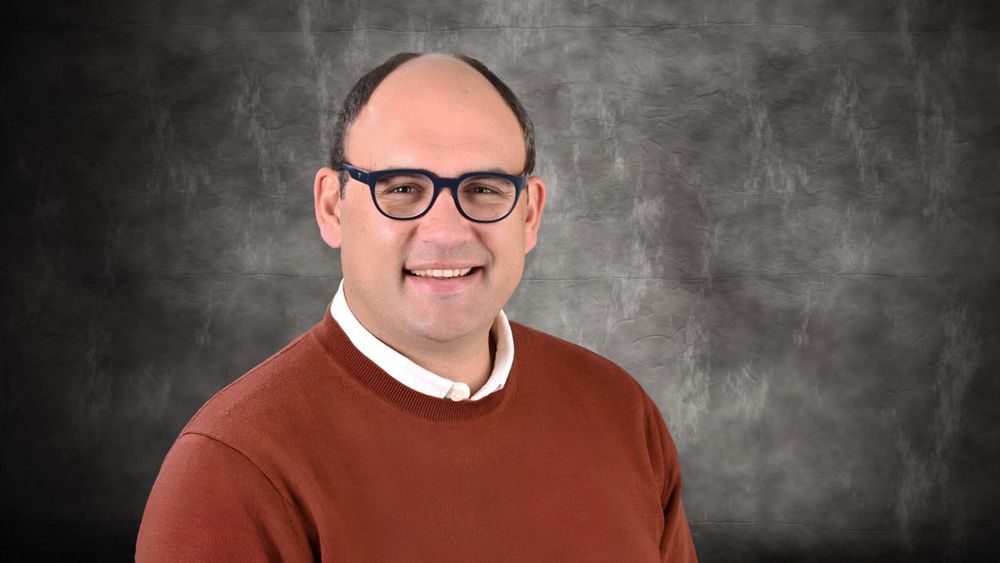
Sentinel Homes CEO Renier Kriek would rather explain the logic of a problem and let people use their judgement than give them a script for every eventuality.
It is an approach to management that may have something to do with the career he has always wanted instead; if he were not doing what he does now, Kriek says he would be teaching.
"I have always wanted to be a teacher. What appeals to me is the act of explanation: taking something that looks complicated, finding the organising idea underneath it, and helping somebody else see it clearly enough to use it for themselves."
Kriek sees much the same principle at work in management. "Good teaching and good management probably have something in common: the aim is to make yourself less necessary, not more."
Kriek is also conscious of the parts of his personality that can get in the way. Asked what he is terrible at, his answer is: "Keeping quiet when I think there is a better answer".
That instinct can be useful, Kriek says, but can also mean spending far too much time improving the final 10% of something that was already perfectly serviceable, or focusing on something practically irrelevant.
"I've had to learn that not every problem deserves the same degree of intellectual attention – there is such a thing as 'good enough', though it still pains me slightly because it can sound like a euphemism for laxity."
It has made him value people who are good at execution and prioritisation – and who know when to say something is good enough and move on.
Kriek has also ignored the advice to "stay in your lane". His career has instead become what he describes as "a mishmash of law, banking, property and entrepreneurship".
"Specialisation is enormously valuable, but some of the most interesting opportunities occur at the boundaries between disciplines, where one group assumes another group has solved or will surely solve the problem."
His curiosity, Kriek says, has never respected professional boundaries. "The lesson has been that breadth is not the enemy of expertise. Sometimes it is what makes expertise useful when there is no established playbook."
David Epstein makes a related argument in his book Range – that in complex, unpredictable fields, people who sample broadly and specialise later can have an advantage over those who narrow too early. "That resonated with me after the fact," Kriek says.
Kriek is equally willing to change his mind and has become less convinced that growth necessarily means progress.
"Growth can hide a surprising number of sins. I'm increasingly interested in whether something is economically durable, whether the unit economics make sense and whether the additional complexity is actually buying you anything."
Nor does Kriek see taking risks as an end in itself.
"Changing course is uncomfortable, particularly once you have argued publicly for something, but defending yesterday's opinion just because it was yours is a very expensive exercise."
That scepticism extends to one of Silicon Valley's better-known pieces of business advice: "Move fast and break things." Kriek considers it overrated. "It works much better as a slogan when the things being broken are your own and of little consequence."
In businesses such as home loans and insurance, Kriek says, decisions involve people's homes, investors' money, long-term contractual obligations and compliance risks.
"Speed matters, but so do reversibility and consequence. I would rather move quickly on decisions that are cheap to reverse and very deliberately on decisions that are not. The skill is knowing which is which."
There is also a less obvious influence on how Kriek approaches those decisions: philosophy. He says much of his thinking still draws on what he learnt from Stellenbosch University lecturer Paul Cilliers, particularly the distinction between something being complicated and being complex.
"Businesses, markets and people are generally more complex than complicated and are impossible to predict with satisfactory accuracy even though you may catalogue all the variables and inputs."
It has left him cautious about predictions and models, despite using them every day. "If you use one without understanding how it can fail, its apparent precision can be more dangerous than ignorance," says Kriek.
And when Kriek does get away from business, fiction is apparently still recovering from what university did to him. "I have not quite recovered from the fiction overload of studying Afrikaans for three years at university (although that was two decades ago), and so I don't read enough fiction to have a very defensible favourite."
The last novel that stayed with him was Susanna Clarke's Jonathan Strange & Mr Norrell, although his reading ranges from Breyten Breytenbach and Gert Vlok Nel to Bill Bryson and Malcolm Gladwell.
What draws him to them is much the same thing that draws him to teaching: finding a way through complexity.
"Complicated things become much easier to understand when you can find the story underneath them – particularly when that story strips away the clutter and exposes both the essentials and the surprising bits."