MAS warns of fresh global shocks and AI pullback, but says Singapore firms and households well-buffered - CNA
Economies benefitting from AI-related exports and investments can handle higher debt costs for now, but they are also the most vulnerable if the AI boom cools.
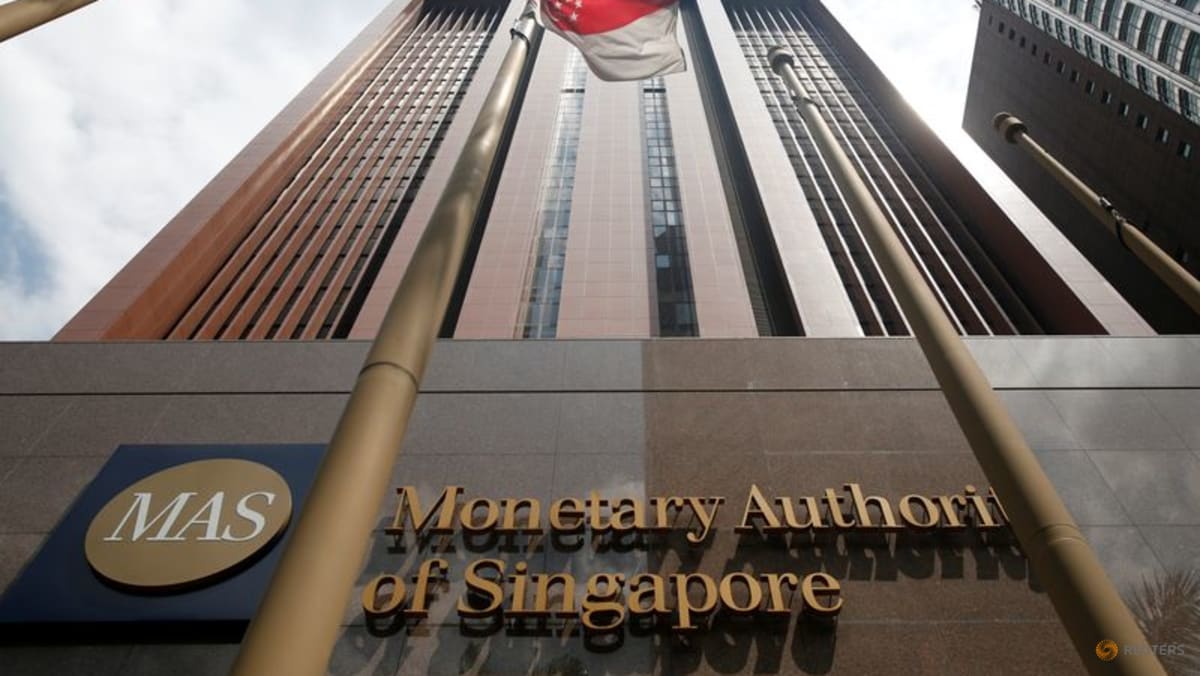
A view of the Monetary Authority of Singapore's headquarters in Singapore June 28, 2017. Picture taken June 28, 2017. REUTERS/Darren Whiteside
This audio is generated by an AI tool.
Ang Hwee Min 22 Sep 2026 01:00PM (Updated: 22 Sep 2026 01:18PM) Bookmark Bookmark Share WhatsApp Telegram Facebook Twitter Email LinkedIn Set CNA as your preferred source on Google Add CNA as a trusted source to help Google better understand and surface our content in search results. Read a summary of this article on FAST. Get bite-sized news via a newcards interface. Give it a try. Click here to return to FAST Tap here to return to FAST FAST SINGAPORE: Singapore’s companies, households and financial institutions have sufficient buffers, but should stay vigilant amid macroeconomic uncertainty, said the Monetary Authority of Singapore (MAS) on Tuesday (Sep 22).
At the onset of the Middle East conflict, Singapore’s financial stress index rose sharply, but the spike was brief and soon returned to historically low levels, said the central bank.
More recently, the index edged higher alongside rising global yields, it added. The index is an indication of stress and contagion in a financial system.
Looking ahead, shifts in global risk sentiment could generate renewed stress, said MAS, highlighting that heightened geopolitical tensions in the Middle East, further trade restrictions, or a correction in the artificial intelligence cycle could lead to volatility.
CNA Games Guess Word Crack the word, one row at a time Buzzword Create words using the given letters Mini Sudoku Tiny puzzle, mighty brain teaser Mini Crossword Small grid, big challenge Word Search Spot as many words as you can Show More Show Less MAS presented these findings in its annual financial stability review, which contains the central bank's assessment of the resilience of Singapore's financial system amid global risks and domestic vulnerabilities.
The rapid expansion of AI infrastructure has become an increasingly important driver of global capital demand, MAS said.
Higher global interest rates, rising semiconductor and electricity costs, and the increasing dependence on market financing have raised the hurdle rate for AI investments, it added. The hurdle rate refers to the lowest rate of return for a project that a firm or investor needs in order to move forward with it.
Even though AI investment continues to support economic activity and corporate earnings, the current equity valuations need strong, sustained revenue growth and “rather sizeable” eventual profitability of large investments in data centres and advanced semiconductors, MAS said.
A material shortfall in earnings or expected returns could trigger a broader reassessment of AI-related valuations, said the central bank, adding that losses could cut across public equity, corporate bond and private credit markets.
While economies benefitting from AI-related investments and exports can better absorb higher borrowing costs if strong earnings and investment continue, they are also more exposed to a pullback in AI, MAS noted.
In contrast, those with weaker links to AI, lower trend growth and larger fiscal or current account deficits tend to be more directly affected by tighter global financial conditions, it added.
MAS also highlighted renewed conflict in the Middle East and persistent uncertainty in trade policy adding to inflation risks.
While access to oil reserves cushioned the initial energy shock, diminishing spare capacity leaves commodity markets more vulnerable to price volatility, it added.
Higher tariffs and the prospect of more trade restrictions are also raising production costs, said the central bank.
Geopolitical tensions are increasing the likelihood of recurrent disruptions across energy markets, shipping lanes and supply chains for critical technology, it added.
“The increased frequency and duration of supply shocks could make inflation more volatile and unanchor expectations. Monetary policy may consequently have to be more restrictive for longer, tightening financial conditions across sovereign and corporate debt markets,” said MAS.
Domestic financial conditions have been generally accommodative against this global backdrop, said the central bank.
Domestic borrowing costs have eased over the past year, with the three-month Singapore Overnight Rate Average (SORA) extending its downward trend and Singapore investment-grade credit spreads tightening, MAS said.
The Straits Times Index rose 33 per cent year-on-year in the third quarter of 2026, and bank credit growth remained firm, it added.
“However, rising global interest rates could exert some tightening pressures in the period ahead,” MAS said in its annual review.
Most firms and households have strong balance sheets and are expected to remain resilient under stress, said the central bank, adding that its stress tests show that these two sectors have enough buffers to manage shocks to earnings, incomes and financing costs.
Highly leveraged firms or those with thinner liquidity buffers could come under strain, MAS said.
Among households, only a small proportion of borrowers with limited savings buffers could face cash flow constraints, it added.
“In view of the uncertain macroeconomic outlook, firms and households should manage their finances prudently and maintain adequate liquidity buffers against potential stress.”
MAS’ tests confirm that banks and insurers are well-capitalised and can withstand severe macro-financial shocks, it said. Investment funds also have enough liquidity to meet redemption requests under stress, added MAS.
But banks should continue to maintain sound risk management practices and healthy buffers amid the uncertain environment, said the central bank.
For insurers, a broad repricing of risk assets could lead to more fund redemptions and capital losses, it added.
“Investment funds should therefore maintain sound liquidity positions while insurers should ensure that they have adequate capital buffers,” said MAS in the report.
Our chief editor shares analysis and picks of the week's biggest news every Saturday.