Mark Kelly calls Trump's $5,000 check plan a "payoff" - Newsweek
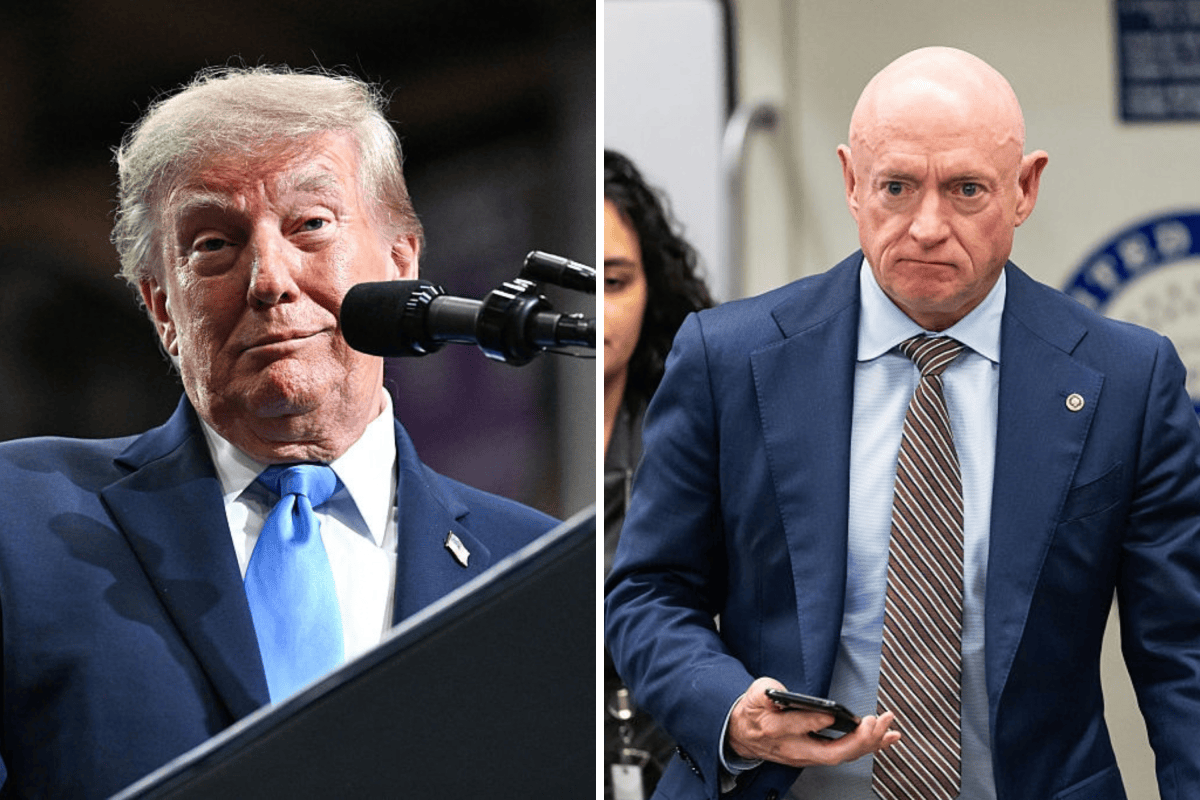
Senator Mark Kelly, an Arizona Democrat, accused President Donald Trump on Sunday of attempting to "buy votes" with his proposal to send $5,000 checks to every adult American if Republicans retain control of Congress after the 2026 midterm elections.
Appearing on CBS News' Face the Nation, Kelly was asked about a series of cash-payment initiatives announced by Trump, including one-time $90 payments for Medicare Part B beneficiaries and $500 Affordable Care Act refunds that are already being distributed to certain marketplace enrollees.
Asked whether he supported the efforts, Kelly, a vocal critic of Trump's, said assistance for seniors and working-class Americans was important but argued voters should view the $5,000 proposal skeptically.
Trump first unveiled the $5,000 payment or "Trump Dividend" concept during the Republican Party's first-ever midterm convention in September and renewed the pledge on Saturday in a video message. The president has said every adult U.S. citizen would receive the payment if Republicans maintain control of both the House and Senate.
The idea has generated significant attention because of its potential cost. Estimates based on the adult population suggest the proposal could exceed $1 trillion, and any such plan would require congressional approval.
Trump has not publicly provided a detailed funding mechanism or outlined the legislative path needed to implement the payments.
The proposal comes as the administration rolls out other direct-payment programs. Nearly 21 million Medicare Part B beneficiaries are expected to receive one-time $90 payments this month through the Medicare Improvement Fund, while roughly 950,000 HealthCare.gov customers are receiving $500 ACA-related refund checks funded through unspent user fees collected from insurers.
Those programs have fueled accusations from critics that the White House is using cash payments to bolster support ahead of the midterms. Trump and his allies have defended the initiatives as targeted relief for Americans facing rising healthcare costs and broader economic pressures.
During his interview with Face the Nation's host Margaret Brennan, Kelly reserved his sharpest criticism for the $5,000 proposal. While acknowledging that some Americans could benefit from financial relief, he said the timing and political conditions attached to the offer raised concerns.
"You got to remember, this is a guy that gave a big tax cut to the wealthiest Americans, to billionaires and millionaires, and then to partially pay for it, he's kicking people off of their healthcare, off of Medicaid," Kelly said about Trump. "He's taking food benefits away from people that are having a hard time affording food, even children, in order to help out his family and his friends. I think people should see this for what it is."
Referring specifically to the promise to issue payments if Republicans keep control of Congress, he added: "This is just a payoff, and he's trying to buy votes."
The comments reflect a growing Democratic effort to frame the payment proposal less as an economic plan and more as a campaign tactic. Other Democrats, including Maryland Representative Jamie Raskin, have similarly characterized the promise as a form of political inducement tied directly to election results.
In an interview appearance on CNN last month, Raskin called the president's plan a “political bribe,” adding that Congress controls federal spending.
“The doomers and naysayers have consistently doubted President Trump: when he pledged to create the historic Trump Accounts, lowered prescription prices with Most Favored Nations, secured the border with no crossings, cleaned up our streets, ended taxes on tips, grew real wages, renegotiated broken trade deals, and reshored key manufacturing back to the United States," White House spokesman Davis Ingle told Newsweek in an email on Sunday.
He added: "President Trump has consistently proven his doubters wrong, drawing a clear contrast with the Democrats’ record of historic inflation, unfettered illegal immigration, skyrocketing crime, and weakness on the world stage. With the continued support of the American people, President Trump will keep delivering real results.”
Pressed by Brennan on what Democrats would offer voters beyond opposition to Trump, Kelly pointed to legislation he said he is pursuing with Democratic Senator Chris Van Hollen of Maryland. According to Kelly, the proposal would raise taxes on individuals earning more than $1 million annually while providing tax reductions for many middle-income households. Van Hollen said it would be funded through a tiered surtax.
Kelly said the plan would provide relief to individuals and couples earning up to about $160,000 per year. He argued that targeted tax changes would be a more sustainable way to reduce financial strain than one-time payments tied to election outcomes.
The senator also identified two broader policies he believes contribute to higher household costs: tariffs and the ongoing conflict with Iran. Kelly argued that reversing Trump's tariff policies and ending the war would help reduce prices paid by American consumers.
Those positions are likely to become central talking points for Democrats heading into November's midterms. Rather than emphasizing direct cash payments, Kelly suggested Democrats would focus on tax policy, healthcare affordability and broader economic measures aimed at reducing costs over time.
Two recent polls point to a difficult political equation for Trump: some Americans like the prospect of receiving $5,000, but fewer believe the money will arrive or say the promise makes them more likely to vote Republican.
An Economist/YouGov poll found likely voters opposed the proposed checks by 45 percent to 43 percent. Meanwhile, 61 percent said Trump probably or definitely would not deliver them if Republicans retained Congress, while 22 percent expected him to do so.
The survey interviewed 1,461 registered voters from September 11 to 14 and had a margin of error of plus or minus 3.3 percentage points.
The wording produced a different result among the full registered-voter sample: 48 percent favored the government sending $5,000 to every adult citizen and 40 percent opposed it. Yet only 38 percent called the proposal a good idea, compared with 45 percent who considered it a bad one, illustrating how views shifted depending on how the policy was presented.
A separate Verasight survey measured electoral reaction rather than support for the payment itself.
Thirty-three percent said the pledge made them less likely to vote Republican, compared with 15 percent who said more likely, while 52 percent reported no difference.
Resistance was strongest among adults aged 18 to 29, who divided 41 percent less likely to 19 percent more likely.
Independents broke 31 percent to 12 percent in the same direction, while 63 percent of Republicans said the offer would not change their choice.
Verasight surveyed 1,500 U.S. adults from September 16 to 21. The weighted national sample had a margin of error of plus or minus 2.6 percentage points.
Speaking with reporters last week, Trump suggested that people living near a data center could receive a dividend because nearby residents would benefit “greatly” from the development.
Eligible service members received a $1,776 “warrior dividend” in December 2025, a payment the president cited in Saturday’s video message as evidence that he could deliver another round of checks.
“Everybody got their money,” he said. “I did it, and I do it again.”
The proposed DOGE Dividend emerged in February 2025 after Azoria CEO James Fishback advanced a plan to return 20 percent of savings generated by the Department of Government Efficiency. Trump and Elon Musk backed the concept of $5,000 stimulus payments to taxpayers, but the initiative remained a proposal.
A tariff dividend initially took the form of a possible $2,000 rebate for working-class families later that year. It subsequently evolved into the $5,000 campaign commitment now being promoted ahead of the midterms.
Newsweek’s reporters and editors used Martyn, our AI assistant, to produce this story. Learn more about Martyn here. Contact Newsweek editors for this story: Steve Mollman and Anthony Murray.