Marcos orders government to prepare for widespread drought
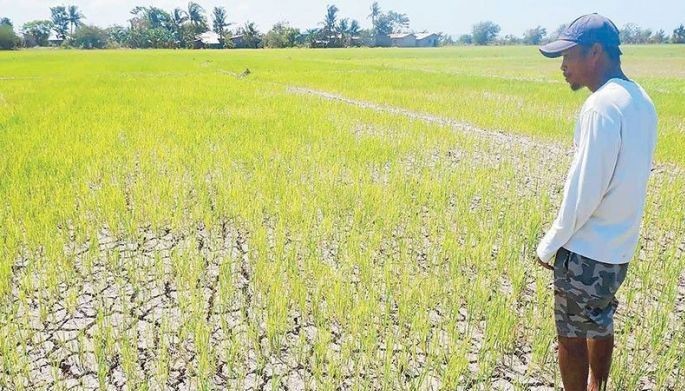
MANILA, Philippines — President Marcos has ordered government agencies to prepare for the worst-case scenario as nearly all provinces in the country are expected to experience drought or very dry conditions due to the looming “super El Niño.”
Marcos issued the directive yesterday during a meeting with the heads of various agencies, including the Department of Environment and Natural Resources (DENR), Department of Agriculture, Department of Science and Technology and its attached agency, the Philippine Atmospheric, Geophysical and Astronomical Services Administration.
According to Science Secretary Renato Solidum, all provinces could experience drought or very dry conditions by the end of March 2027, although the severity would vary depending on the amount of rainfall received in different areas.
Some provinces, he noted, may experience more pronounced dry conditions only in the coming months.
Environment Secretary Juan Miguel Cuna said the possible declaration of a climate emergency was not discussed during the meeting.
“Nothing specific like that was discussed earlier, but the directive is for us to prepare for the worst-case scenario. I think that was discussed extensively, ensuring that the various agencies and sectors are ready should that happen,” he said.
Cuna said the DENR would revive its water conservation campaign, stressing that everyone has a role in protecting the country’s water supply.
He added that the country could not continue with business as usual and called on the public to avoid unnecessary water use, including excessive water use for car washing, cleaning driveways and other nonessential activities.
As part of preparations for the expected dry spell, the Department of Public Works and Highways (DPWH) is also fast-tracking the construction of infrastructure for stormwater harvesting to support flood mitigation and disaster resilience.
Public Works Secretary Vince Dizon said the agency is prioritizing underground water detention basins in areas with floodwater pumping stations, including perennially flooded areas such as Roxas Boulevard and España in Manila, as well as parts of Bulacan and Pampanga.
During an inspection of an underground water detention basin being built by the DPWH-National Capital Region, Dizon said the project would link dedicated piping and pump systems to store rainwater from the Roxas Boulevard drainage network and nearby pumping stations.
The harvested water would then be routed to supply Maria Orosa Park, Plaza Rajah Sulayman and the Manila Baywalk area.
Civil works for the Rajah Sulayman retention facility are expected to be completed by February next year.
“This serves as DPWH’s direct contribution to preparing for incoming super El Niño dry spells,” Dizon said. “While we manage severe rainfall during the wet season, we are simultaneously building storage capacity so that harvested rainwater can be repurposed to maintain public parks during months of severe drought.”
To ensure stormwater reaches the underground network efficiently, the DPWH has launched a regionwide initiative across all engineering districts in Metro Manila to enlarge road inlets and catch basins.
Inlet expansion projects are underway along major arterial corridors, including España, G. Araneta Avenue, Mother Ignacia Avenue, EDSA and South Superhighway.
Dizon, however, stressed that enlarged drainage networks would remain ineffective if clogged by solid waste.
He appealed to local residents and barangay leaders to practice proper waste disposal and keep surface inlets free of debris. — Rainier Allan Ronda