Maharashtra poll chief wants ECINet discretion for staff — a demand ECs had flagged - The Indian Express
The Chief Electoral Officer of Maharashtra, the largest state now in the notice phase of the Special Intensive Revision (SIR), wrote to the Election Commission (EC) in New Delhi last week, seeking four changes to the ECINet software, each, in effect, a request that the software let Electoral Registration Officers (EROs) exercise a discretion the law already gives them, The Indian Express has learnt.
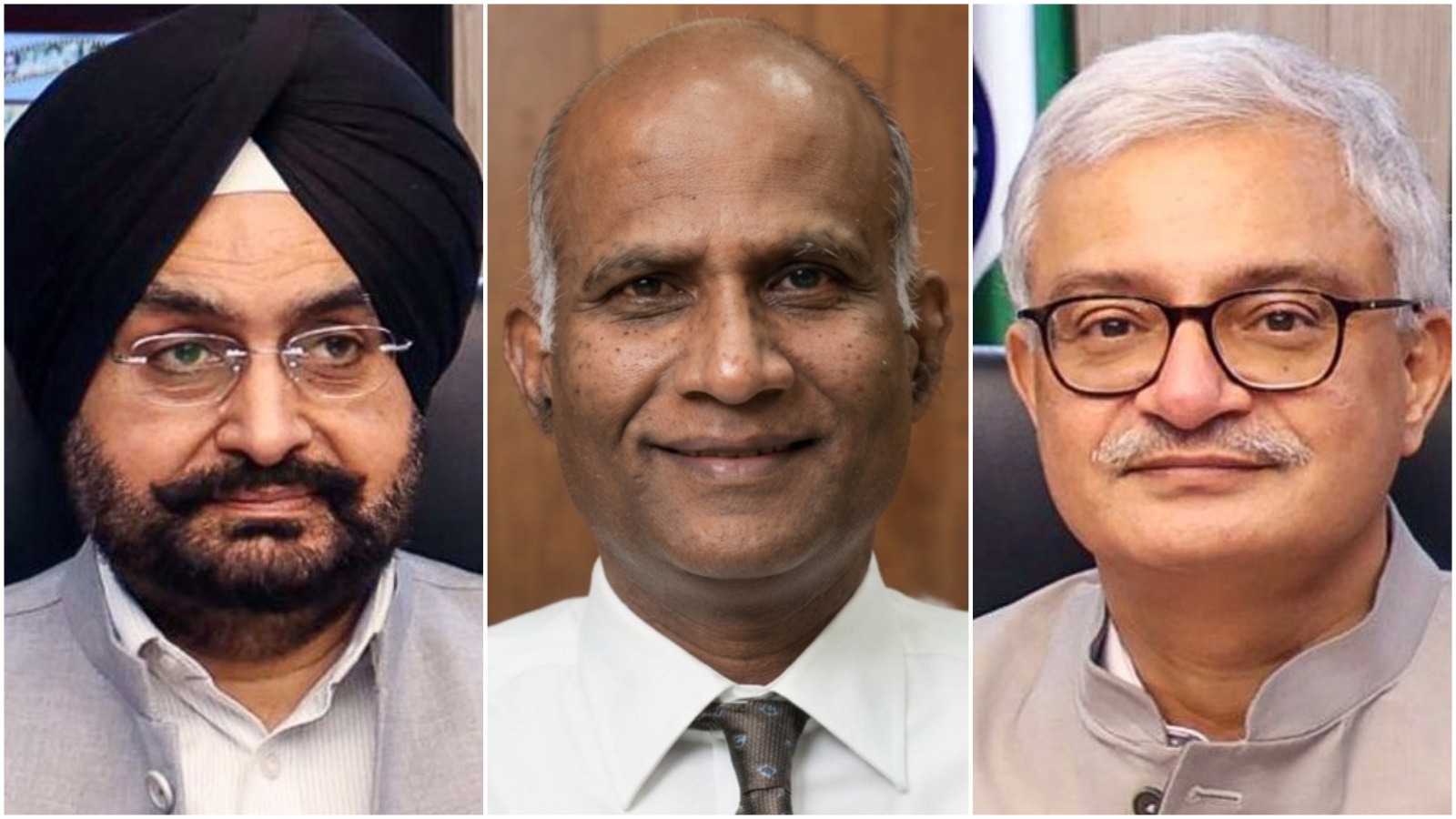
Maharashtra CEO S Chockalingam’s requests that EROs be allowed to decide which “logical discrepancy” cases need a hearing, what documents to accept and which discrepancies they can dispose of themselves, echo concerns already recorded by Election Commissioners Sukhbir Singh Sandhu and Vivek Joshi.
The CEO’s communication, addressed to Senior Deputy Election Commissioner Maneesh Garg, Director General of IT Seema Khanna and two secretariat officers, went out on September 24, a day after an investigation by The Indian Express revealed that the two Election Commissioners had flagged, on record, that the software was curtailing the powers of the EROs.
CEO Chockalingam could not be reached for comment Monday. The Indian Express sent a questionnaire to the ECI spokesperson who acknowledged receipt. A response is awaited.
The Maharashtra draft roll, published August 31, cut 21.1 per cent of the state’s electors. Its final roll is due on November 16.
A “logical discrepancy” is not a finding that someone is not a voter. It is a mismatch the Commission’s ECINET software throws up when it tries to link an elector to a parent or grandparent on the roll from the last SIR, such as a parent’s name that doesn’t match, an age gap between parent and child of under 15 or over 50 years, an age that doesn’t progress correctly between the old roll and the new, or a case where the elector submitted no document, or only Aadhaar.
As reported by The Indian Express, Sandhu wrote on August 14 that CEOs, DEOs and EROs, the statutory authorities for the voters’ list, were reporting they could not perform their duties, their powers “curtailed by centralised control of ERONet at DG(IT) level.” “It is strange,” he said, “that all the responsibilities regarding Electoral Roll lie on EROS, DEOs and CEOs as per law, but the access control has been centralised by DG(IT).”
The Maharashtra CEO’s communication of September 24, in effect, asked for the same freedom the two commissioners said ECINet had curtailed: four places where the law gives the ERO a decision to make and the software gives him no way to make it.
Hearings: The rules give the ERO “the discretion to require” a person “to appear personally before him,” the CEO wrote. ECINet’s “Take Action” menu has two options, and neither lets the ERO waive a hearing. He asked for a third, “Exempted from Hearing,” for electors who submit “valid and satisfactory documents,” so that senior citizens, the disabled and “other vulnerable groups” are spared “unnecessary inconvenience and apprehension”.
Documents: The 13 documents listed on the back of the notice are “indicative and not exhaustive,” the CEO wrote, and asked for a 14th option, “Other/Other Equivalent Document,” because electors from tribal, homeless and sex-worker communities “may not able to provide any document from the indicative list”.
Who decides: In some cases, an ERO cannot resolve a “logical discrepancy” on the basis of a Booth Level Officer’s statement alone. Supporting documents have to be sent to the District Election Officer (DEO) for verification. The CEO wants EROs to be able to decide these cases themselves when they are satisfied with the evidence. The request cites the law, which puts responsibility for the electoral roll on the ERO and says that, if satisfied that a person is eligible, the ERO should direct that the name be included.
A mandatory upload: The ECINet currently requires an “Extract of Last SIR” to be uploaded in every discrepancy case. The CEO said this should be optional because the discrepancy is already identified using the last SIR roll.
Written instructions: The EROs “have number of queries” about the process, the CEO said, and “oral instructions from ECI or CEO are insufficient”. He asked for FAQs explaining the notice, document submission, hearing and disposal process.
Four of the five are the same request in different clothes: the law gives the ERO a judgement to make, and the software does not give the ERO the button to make it.
The Representation of the People Act, 1950 and the Registration of Electors Rules, 1960 assign responsibility for the electoral roll to the Electoral Registration Officer, one for each Assembly seat.
An ERO is usually the sub-divisional magistrate or an officer of equivalent rank in the district administration. The ERO prepares the voters’ list, hears claims and objections and decides which names will stay and which get deleted. This is a deliberately decentralised system. For decades, the ECI has leaned on that design to answer political allegations of mass manipulation of electoral rolls. No single person is supposed to control the voters’ list.
On paper, the ERO still decides every name on the list. In practice, the ERO has been able to do only what the software allows: add a name, delete one, reverse a decision or process an appeal. What the software allows is controlled centrally by Khanna’s division in New Delhi.
On September 23, in its first response to The Indian Express investigation, the Commission had said its digital platforms “operate under strict data security protocols to prevent unauthorized tampering,” and that EROs and DEOs “function as per statutory powers for registration and deletion under law”. The Maharashtra CEO’s communication went out a day later.
On September 26, after a meeting of the full Commission, the Commission issued a statement that partially addressed the Maharashtra requests, giving EROs the discretion to exempt people flagged for logical discrepancies from personal hearings. It also said “various upgradations of the portal have already been made based on the inputs from State CEOs in the past few months,” and that “in case any further flexibility is required by the field officers, that will be made operational”.
The four-page note announced eight other decisions that addressed, point by point, several of the concerns recorded by the two Commissioners. Agendas will now be circulated before every Commission meeting and minutes issued afterwards. Officers’ foreign trips will need Commission approval. New IT modules and portals will go through a committee of officers before being placed before the Commission. The ECINet will be reviewed by a committee headed by a senior Deputy Election Commissioner and will include an independent expert from an IIT or IIIT. If field officers need more flexibility in the system, it will be provided. And directions issued by Commissioners to officers will be “meticulously complied with”.
These decisions map, almost item for item, onto the concerns the two Commissioners had put on file over 10 months: that agendas were not circulated and minutes not issued, that officers went abroad without the Commission’s approval, that new IT modules were built without its knowledge, that the electoral-roll database needed an audit by an independent expert, that field officers lacked “proper and complete access” to ERONet, and that an administrative order had altered the allocation of work around the IT division without them.
Vallabh Ozarkar is a Senior Correspondent with The Indian Express' Mumbai bureau, recognized as an authoritative and deeply knowledgeable voice on the politics, governance, and infrastructure of Maharashtra. With more than nine years of experience in major news organizations, his reporting delivers high standards of Expertise and Trustworthiness. Expertise & Authority Current Role: Senior Correspondent, The Indian Express, Mumbai bureau. Geographical Specialization: Provides exclusive and detailed coverage of Maharashtra politics and governance, operating at the epicenter of the state's decision-making in Mumbai. Core Authority: His reporting demonstrates deep Expertise across critical and often complex state matters, including: Political Dynamics: In-depth analysis of the ruling coalition (Mahayuti) and opposition (MVA), internal party conflicts, and crucial election updates, including local body polls and municipal corporation tussles. Governance & Policy: Focused coverage on significant state policies, such as the overhaul of Mumbai's 'pagdi system' (rent control for old buildings) and social welfare schemes (e.g., Ladki Bahin Yojana accountability). Infrastructure & Development: Reports on major urban and regional infrastructure projects, including the Mumbai Water Metro, Uttan-Virar Sea Link, and Thane Metro development. Administrative Oversight: Follows legislative actions, cabinet decisions, and reports on issues of accountability and alleged fraud within state departments. Experience Current Role: His role at The Indian Express—a leading national daily—validates the credibility and standard of his reporting. Career Foundation: Prior to The Indian Express, Vallabh contributed to other major metropolitan news outlets, including the Mumbai Mirror and DNA - Daily News & Analysis, providing a solid foundation in rigorous urban and political journalism. Evidence of Impact: His work consistently breaks down complex political developments and administrative failures, such as exposing discrepancies in government welfare schemes, cementing his reputation as a trusted source for ground-level, impactful news from Maharashtra. He tweets @Ozarkarvallabh ... Read More