
Made in Mzansi: It’s not inside, it’s onnnn topp! - IOL
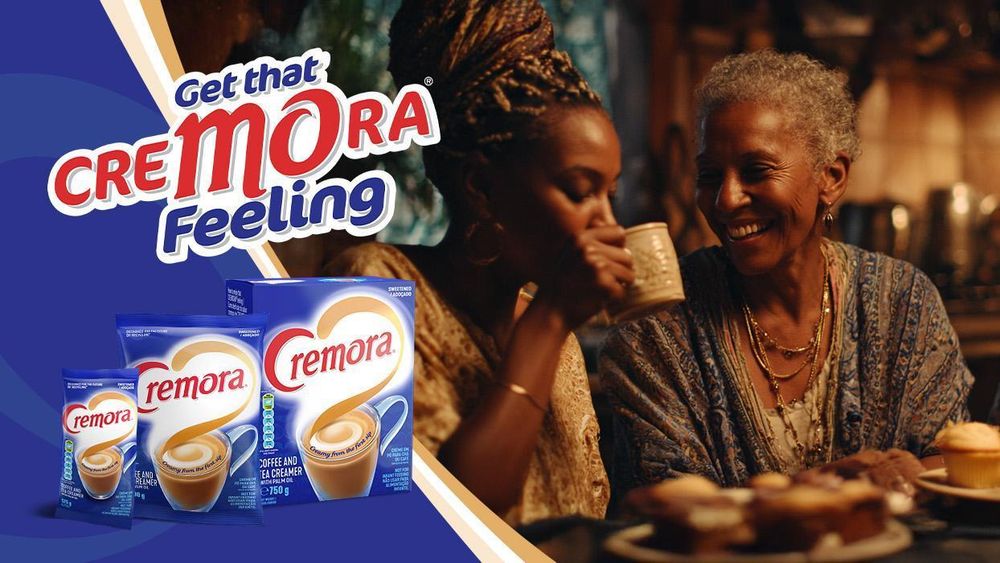
For generations of South Africans, “It’s not inside, it’s on top” needs neither a brand name nor an explanation.
Cremora has survived changing owners, a changing South Africa and several generations of coffee drinkers, but six words from a 1985 television advert may be its greatest legacy.
There are advertising slogans, and then there are phrases that escape the television set and become part of the language.
For generations of South Africans, “It’s not inside, it’s on top” needs neither a brand name nor an explanation.
The words come from a Cremora television advert first aired in 1985. A man making coffee searches increasingly frantically through the refrigerator for the creamer, before calling out to his wife that there is no Cremora in the fridge.
Her exasperated response has outlived the advert. “It’s not inside, it’s on top.”
The husband repeats it, stretching out the “on,” before finally looking upwards and discovering the Cremora sitting on top of the fridge.
Forty-one years later, the line remains so closely associated with the brand that when Cremora changed owners last year, its new owner, Lactalis South Africa, welcomed it using the hashtag #ItsNotInsideItsOnTop.
Like a woman, perhaps it is impolite to ask Cremora its age. That may be just as well, because even its owners have struggled to agree on the answer.
Nestlé said in 2012 that Cremora was first launched in South Africa in 1966, which would make the brand 60 this year. The company repeated the 1966 date when it revisited Cremora's history in 2021.
More recent corporate history has given Cremora rather more years. When Lactalis acquired the business, it described Cremora as having been a staple of South African households for nearly 80 years. Other material surrounding the transaction put the figure at 77 years, with its own .co.za website listing that age.
“Cremora is a beloved creamer brand that has been a staple in South African households for more than 77 years, widely cherished by coffee and tea drinkers,” the site says.
Cremora could therefore be 60, 77 or approaching 80 as a South African household name.
What is considerably easier to establish is that it has been around long enough to become part of South African popular culture.
The original “Mrs Cremora” commercial appeared in 1985, when Cremora belonged to US food company Borden. It proved difficult to leave behind.
When Nestlé acquired the brand in 1998, it remade the commercial for a new South Africa. The basic joke remained, but the couple was now black, and the wife was Thandi rather than Helen.
Nestlé explained years later that it wanted to introduce the advert to a younger generation while making it more representative of the country that had emerged after the first democratic election.
Then, in 2021, Cremora went back to the fridge yet again.
This time Nestlé produced five versions of the familiar story featuring South Africans who it said were under-represented in mainstream media, including a quadriplegic man, Palesa Moseia, who has albinism, an interracial couple and members of the LGBTQIA+ community.
The cast changed. South Africa changed.
Like a woman, perhaps it is impolite to ask Cremora its age. That may be just as well, because even its owners have struggled to agree on the answer.
By then the six words had long since taken on a life outside advertising. They continued appearing in everyday conversation and retrospectives of memorable South African advertising decades after the original commercial disappeared from television.
The line became sufficiently embedded in advertising history that writer Khanya Mtshali used it as the title of her 2021 book, It’s Not Inside It’s on Top: Memorable Moments in South African Advertising.
Ironically, exactly who deserves credit for putting Cremora “on top” is much less certain. Mtshali went looking for the person behind the line and found competing recollections and an advertising trail that had become difficult to reconstruct decades later.
Cremora was also becoming considerably more than an advertising line. By 2012, demand for coffee creamer was strong enough for Nestlé to spend R106 million buying and upgrading Specialised Protein Products in Potchefstroom.
The deal brought as many as 120 employees into Nestlé and created additional Cremora manufacturing capacity. Potchefstroom became Nestlé's 10th manufacturing facility in South Africa.
At the time, Nestlé said the investment was needed to increase local production in response to growing demand for non-dairy creamers in South Africa and elsewhere on the continent.
South Africans had meanwhile found uses for Cremora that its hapless television husband had never contemplated. The powder made its way out of coffee cups and into cooking and baking. Nestlé itself acknowledged by 2021 that consumers were using Cremora in food and baked goods.
And then, of course, there was Cremora tart. Recipes vary, but the familiar combination of Cremora, condensed milk and lemon on a biscuit base became another way the brand found itself embedded in South African kitchens.
Cremora had managed the peculiar trick of becoming both an ingredient and the name of the pudding made with it.
1965 Borden Cremora Non-Dairy Coffee Creamer print ad.
After decades under Nestlé, another change was coming.
Nestlé announced in September 2024 that it intended to sell the Cremora business to Lactalis South Africa. The transaction included its South African manufacturing operations.
The deal passed through competition authorities before Lactalis completed the acquisition in April 2025. It brought the Babelegi factory in Gauteng and Potchefstroom plant in North West into Lactalis, along with employees.
Lactalis, whose South African stable already included brands such as Parmalat, Melrose, Président and Steri Stumpie, said it intended to build on Cremora's heritage. That heritage now spans at least six decades, three owners, several versions of the same advert and one rather confused birth certificate.
Yet the remarkable part of Cremora's story may be much simpler. In 1985, a man couldn't find a tub of coffee creamer, his wife told him where it was, and South Africa never quite stopped repeating her.

:quality(30):format(webp):focal(0.5x0.5:0.5x0.5)/manado/foto/bank/originals/Chord-Gitar-dan-Lirik-Lagu-Take-Me-To-Church-Hozier-Nada-Dasar-C.jpg)
