Listening to the Universe's whisper
Direct Source Verification:
This story is aggregated from The Express Tribune (tribune.com.pk). Full reporting rights and copyright belong to the primary publisher.
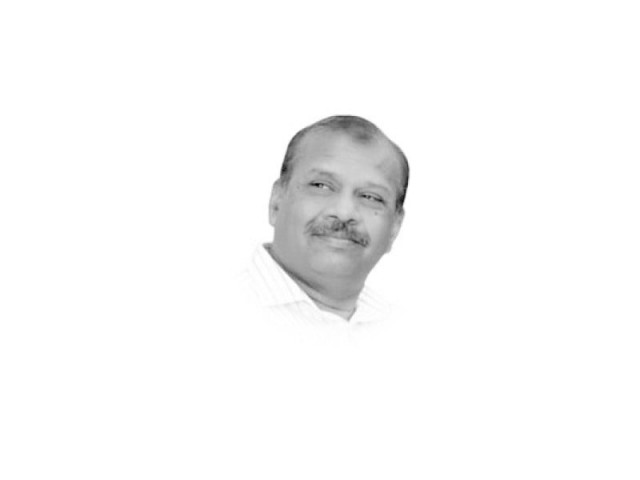
.
The return of Professor Nergis Mavalvala to Karachi in September 2026 is more than a distinguished scientist's homecoming. It is a reminder that curiosity nurtured in an ordinary childhood can eventually reach the farthest corners of the universe - and that geography need never define the boundaries of intellectual ambition.
Born in Lahore and raised in Karachi, Mavalvala attended the Convent of Jesus and Mary before leaving Pakistan in 1986 to study in the US. Her journey subsequently took her from Wellesley College to MIT, Caltech and the Laser Interferometer Gravitational-Wave Observatory, better known as LIGO. Today, she is Dean of MIT's School of Science and one of the world's leading experimental physicists.
Yet the most inspiring part of her story may lie in its modest beginnings. As a child, she enjoyed taking things apart, understanding mechanisms and repairing bicycles. These activities may have appeared unremarkable, but they cultivated the instincts essential to experimental science: curiosity, patience, mechanical intuition, confidence with tools and the willingness to try repeatedly after failure.
On Sept 22, Mavalvala is scheduled to deliver the University of Karachi's ORIC Distinguished Lecture, "Listening to the Universe Above the Quantum Din", in collaboration with the Department of Physics and the Institute of Space Science and Technology. Three days later, she will deliver Habib University's 10th Yohsin Lecture, "The Joy of Discovery: Curiosity, Science, and the Pivotal Role of Universities".
Since both lectures are yet to take place, their precise arguments remain to be heard. Nevertheless, their titles illuminate two complementary dimensions of Mavalvala's career: the experimental physicist attempting to measure some of nature's faintest signals, and the academic leader concerned with creating institutions in which curiosity can flourish.
Mavalvala's scientific work forms part of the extraordinary collective endeavour that transformed gravitational waves from a prediction of Einstein's general theory of relativity into observable signals. These waves are minute disturbances in space-time produced by violent cosmic events, such as colliding black holes. By the time they reach Earth, their effects are almost unimaginably small.
Detecting them required LIGO to measure changes in distance far smaller than an atomic nucleus. Scientists had to control seismic vibrations, thermal motion, laser instability, environmental disturbances and even quantum fluctuations in light. Mavalvala contributed to this effort through research in precision measurement and techniques involving "squeezed" light, which help reduce quantum noise and improve detector sensitivity.
In 2015, LIGO detected gravitational waves from two merging black holes. Humanity had acquired an entirely new means of observing the cosmos. We were no longer dependent solely upon light; we had learned, metaphorically, to listen to the universe.
That achievement offers a powerful lesson for Pakistan. Breakthroughs rarely emerge from impatience. They grow through decades of sustained inquiry, institutional support, collaboration and repeated failure. Fundamental science may not always promise immediate commercial returns, yet it frequently produces technologies and insights that could never have been predicted at the beginning.
Our universities must therefore become more than degree-awarding institutions. They should be places where questions are encouraged, laboratories function, merit is protected, mentors inspire, and young researchers are permitted to fail intelligently.
Mavalvala's visit should inspire celebration, but it should also provoke reflection. Pakistan must not be content merely to honour its talented people after other countries have provided them with the ecosystems necessary to succeed. We must create those conditions at home.
For every young person who has dismantled a machine, repaired a bicycle, stared at the night sky or asked one question too many, Mavalvala's journey carries a hopeful message: curiosity is not a distraction from achievement. It is where achievement begins. Karachi will soon listen to a scientist who helped humanity hear the universe. Our greater responsibility is to ensure that the curious minds listening to her are given every opportunity to discover their own worlds.
Original Source
https://tribune.com.pk/story/2630639/listening-to-the-universes-whisper