Layoffs Spark Record-Low Employee Confidence as Trump Approval Rating Drops - Newsweek
American workers' confidence in their employers' future prospects has fallen to another record low, according to Glassdoor's latest Employee Confidence Index.
This marks the third record-low reading of 2026 as layoffs continue across multiple sectors. Hiring has also remained sluggish in many white-collar fields.
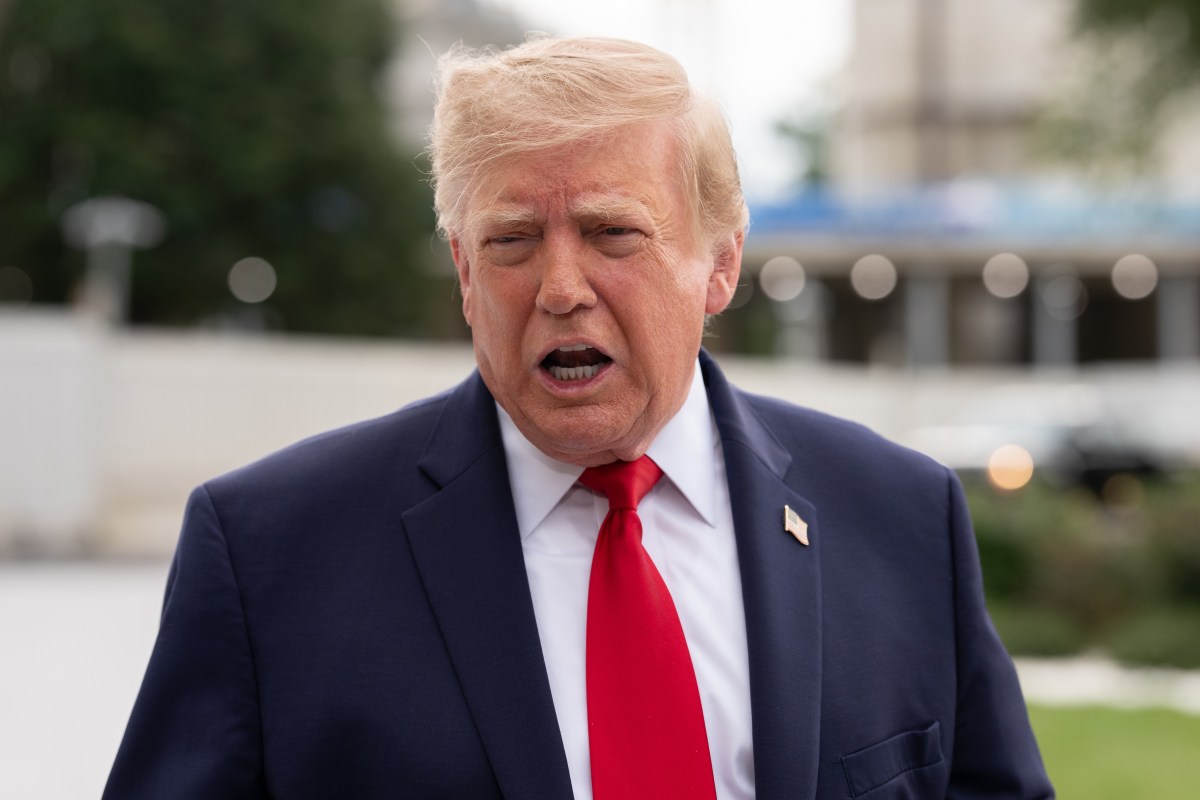
At the same time, President Donald Trump's approval ratings have fallen to some of the weakest levels of either of his terms, and economic dissatisfaction could be a major political challenge heading into the 2026 midterm elections.
“It’s not surprising employee confidence has been hitting new lows recently. The job market is as turbulent as ever, so current employees have either already been affected by a round of layoffs or saw their colleagues be laid off, Jan Hendrik von Ahlen, managing director and career expert at JobLeads, told Newsweek.
“Often, this is happening quite brutally: with accesses being removed in minutes and people getting bare minimum severance, if any.”
Worker sentiment is often viewed as a leading indicator of labor market conditions. When employees become less confident about their employers' prospects, they may reduce spending and delay major purchases. However, they also become less likely to change jobs and often increasingly worry about layoffs.
Political pressure is also mounting on the White House. Trump's approval rating has sunk to historic lows for his presidency, and economic concerns and rising costs are said to be key factors driving this voter dissatisfaction.
A Wall Street Journal survey found Trump's approval rating at 37 percent, the lowest pre-midterm reading recorded in the newspaper's polling dating back to 1990.
Glassdoor Chief Economist Daniel Zhao said that employee confidence fell to a new record low in September, marking the third time this year the index has reached an all-time low.
“Workers who aren't in a job are feeling frozen out of the job market. And even workers who are in a job are feeling stuck without any outside options to find a better fit,” Zhao told Newsweek.
“And workers have a lot to be anxious about with the rapid development of AI, layoffs, policy uncertainty, resurgent inflation all contributing to the growing anxiety workers are feeling. With slow hiring preventing workers from finding a better job on the open market, workers are increasingly sitting tight and stewing.”
According to Glassdoor, employee confidence, which measures the share of workers who report a positive six-month business outlook for their employer, fell to 42.9 percent from 44.5 percent in the September report.
“The White House can describe the economy as booming, but workers judge the economy from inside their own company. Are we hiring? Are people getting laid off? Are costs rising? Does my job feel more or less secure than it did a year ago?” Michael Ryan, a finance expert and the founder of MichaelRyanMoney.com, told Newsweek.
Workers are becoming increasingly pessimistic about future business conditions as layoffs remain elevated in several white-collar industries.
Mentions in Glassdoor reviews of layoffs grew 13 percent in the last year, meanwhile the mention of uncertainty and AI grew by 84 and 164 percent respectively.
“Of course, there is also the whole ‘AI doom’ in place. The question ‘will AI kill my job?’ has been asked millions of times at this point,” Hendrik von Ahlen said. “And while it has definitely made work easier for many, it has also multiplied work for some: those whose colleagues were laid off with the promise of ‘AI improving efficiency’ often didn’t see the expected returns and ended up with even more work on their plate.”
Several factors appear to be contributing to rising worker anxiety, but experts say a mix of ongoing layoffs in tech and media as well as slower hiring rates are driving the most uncertainty.
"This doesn't look like one single Trump policy suddenly crushing confidence. It's a pileup... Inflation and higher costs, interest rates, layoffs in some industries, AI and workers feeling that changing jobs isn't as easy as it was a few years ago,” Ryan said. “When people feel stuck in the job they have while also worrying that the job may become less secure.”
It’s difficult for a worker to feel secure when their company is freezing hiring, reorganizing or asking how much work AI can replace, Ryan said.
“A common mistake is thinking employer confidence is only tied to consumer demand for their business. The reality is many employers are focused on the months and years ahead, wanting to maintain growth similar to or more than what they currently enjoy,” Alex Beene, a financial literacy instructor for the University of Tennessee at Martin, told Newsweek.
“The current economic factors they're encountering are more than just inflationary pressures that are restricting many consumers' spending: the greater concern is uncertainty over where spending and demand are headed.”
And while many workers remain employed, finding a new position has become significantly more difficult than during the post-pandemic hiring boom of 2021 and 2022.
“The concept of ‘if you don’t like your job, get a better one’ doesn’t work anymore,” Hendrik von Ahlen said. “The average job search today takes about six months, with many people looking for more than a year. Experienced professionals have to send hundreds of applications to get just a couple of responses, often full-on AI-generated.”
A recent Wall Street Journal poll found that 65 percent of Americans viewed the economy negatively, while 60 percent said Trump's economic policies had made conditions worse.
Despite these widespread concerns, several sectors are continuing to add workers and show signs of resilience, according to Glassdoor.
“I don't think record low confidence has to become the new normal, but employers have to give workers an actual, genuine, true reason to feel secure,” HR consultant Bryan Driscoll told Newsweek.
“That means fewer rounds of perpetual restructuring, more transparency about business conditions and AI, and investing in the people they already employ instead of continually asking smaller teams to absorb more work for no additional pay.”
Driscoll said Trump’s approval ratings reflect the increasing anxiety and frustration of employees, especially in the industries experiencing the highest numbers of layoffs.
“Trump's economic policies are part of the picture, yes, and they're generally catastrophic. He ran on making life more affordable and workers are perfectly capable of looking at their bills, looking at gas prices, looking at food prices, and deciding whether that happened,” Driscoll said.
“At some point, you can't keep telling people the economy is great when their lived experience tells them otherwise.”
Economists will be watching upcoming labor market reports to determine whether the worsening worker sentiment is actually translating into a precarious job market.
Additional layoffs could push employee confidence even lower, but any stabilization in hiring could help restore employees’ optimism.
“Many employers do not have a favorable outlook of buying activity over the next few months, if not longer,” Beene said. “What would restore confidence is more long-term certainty, and right now, they're not getting it.”
Newsweek’s reporters and editors used Martyn, our AI assistant, to produce this story. Learn more about Martyn here. Contact Newsweek editors on this story: Edward T. Cummins