
Kremlin accuses Andy Burnham of ‘stoking anti-Russian sentiment’ in UN speech
Want to bookmark your favourite articles and stories to read or reference later? Start your Independent Membership today.
Moscow has rebuked prime minister Andy Burnham over a UN General Assembly speech in which he accused Russia of spreading falsehoods, arguing that his comments will do nothing to ease tensions across Europe.
Addressing the summit on Tuesday, Burnham announced London would establish a new National Centre for Information Defence, singling out Moscow over what he termed disinformation.
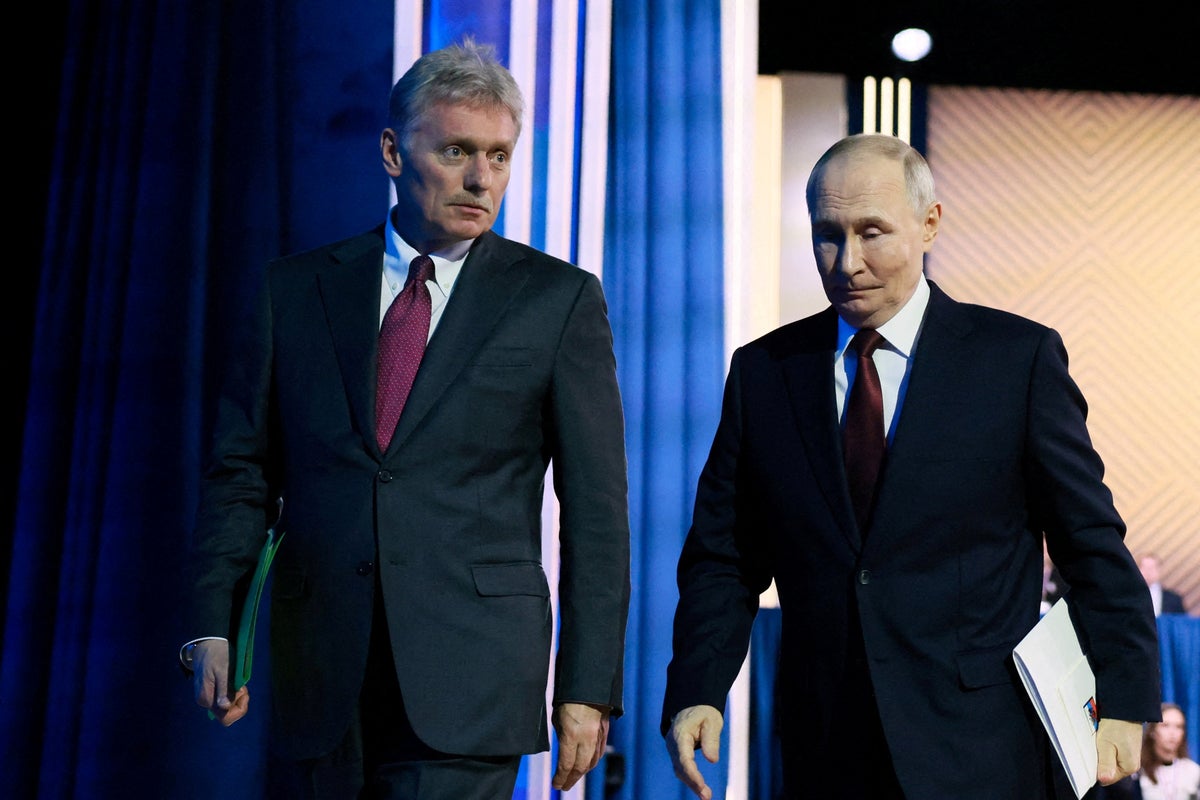
Kremlin spokesman Dmitry Peskov characterised the approach taken by Burnham and other European nations as fundamentally flawed.
"Well, the British prime minister said nothing new. That is the first point. The second is that stoking anti-Russian sentiment and fostering an atmosphere of total Russophobia is what Britain is doing. And now, presumably in unison with Britain, the Germans, the French and a number of other European states are doing the same thing," said Peskov.
"From our point of view, this is an utterly short-sighted policy. It in no way brings us any closer to any steps that might, in the long term, lead to a reduction in tensions and de-escalation on the European continent."
The prime minister unveiled plans for a new National Centre for Information Defence to tackle Russian information warfare as he addressed the United Nations General Assembly in New York.
Russia has previously been accused of using illicitly acquired documents about UK-US trade talks to try to influence the 2019 contest.
The new unit is initially being led out of the Office for the Prime Minister and Cabinet, with the new centre working alongside intelligence agencies, government departments, the police and social media companies.
He told world leaders that the UK and its allies had been subjected to an “industrial-scale assault” by hostile states, including Russia, to “prey on people’s fear”.
The prime minister said misinformation had worsened in recent years, accusing Vladimir Putin’s agencies of interfering with the 2019 general election and falsifying newspaper articles.
“It is now ten years since Brexit, my country has lived through the destruction, and it has given us a unique perspective that I want to share with you today,” he told the UN.
He added: “In recent years we have seen an industrial-scale assault by hostile actors on the information environment in the UK and many of our allies. Russian agencies have used every means at their disposal to spread lies and disinformation and prey on people's fears.
“I know this is a shared challenge. So we are going to use our experience in the UK – and the fact that we have already been through this shock – to help other countries.”


