Kennedy Center Honors Timeline as Gala Moves Amid Trump Threats - Newsweek
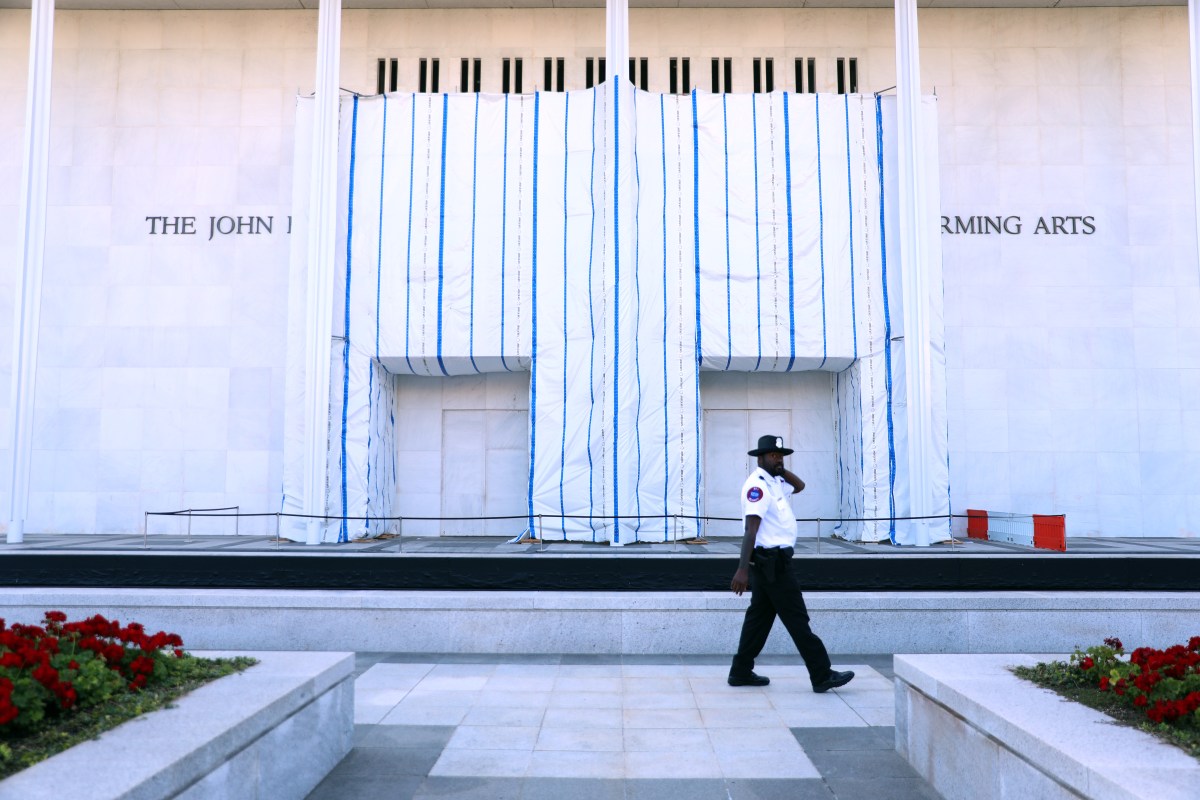
The Kennedy Center Honors will be held outside the Kennedy Center for the first time in the event's nearly 50-year history, as the institution remains closed amid a sweeping renovation plan and a fight over President Donald Trump's future involvement.
The Kennedy Center announced Friday that the 49th annual Honors will take place December 7 at Capital One Arena in downtown Washington, D.C. The center said its main building is closed because of planned renovations and ongoing safety assessments. The 2026 honorees will be announced at a later date.
It marks a dramatic departure for an event traditionally staged inside the Kennedy Center's Opera House. It also comes less than three weeks after the center's board voted to close the main building for what it has described as an extensive renovation addressing structural and infrastructure problems.
The closure has unfolded alongside a legal battle over Trump's effort to put his name on the Kennedy Center and his repeated statements tying his support for the renovation to receiving recognition for his role.
Trump has said that if his administration does not receive that recognition, the center could ultimately close permanently or be "ripped down." He has also said the planned reconstruction will not proceed if courts ultimately reject the board's effort to recognize him.
The 2026 Kennedy Center Honors will be held at Capital One Arena on December 7.
The downtown Washington arena has a capacity of roughly 20,000, compared with about 2,300 seats in the Kennedy Center's Opera House, where the Honors have traditionally been held. The Kennedy Center said the relocation is necessary because its main building is closed for planned renovations.
The Honors have been presented annually since 1978, recognizing artists for major contributions to American culture through the performing arts. Even during the COVID-19 pandemic, when the 2020 ceremony was delayed until 2021, performances were recorded at locations across the Kennedy Center campus rather than moving the celebration entirely off-site.
The honorees had not yet been announced as of Friday, with the ceremony approaching less than three months away.
The Kennedy Center's board voted in September to close the main building and pursue a major renovation, citing deteriorating infrastructure and safety concerns.
The decision followed a September 4 incident in which a section of plaster from the Grand Foyer ceiling fell after heavy rain. No one was injured. Kennedy Center officials later cited additional deterioration, including water intrusion and other infrastructure problems, to argue that the building required extensive work.
The renovation plan is expected to address structural and mechanical systems as well as other aging infrastructure. Congress has appropriated $257 million for capital improvements at the Kennedy Center, according to court records and congressional officials.
But the closure became entangled with the separate legal battle over Trump's name.
On September 15, after a federal judge again blocked the board from placing Trump's name or another memorial on the building without congressional authorization, the board voted to close the center immediately.
Trump has repeatedly argued that his administration should receive recognition if he is expected to oversee and help finance the Kennedy Center's reconstruction.
On September 15, after the board voted to close the building, Trump wrote on Truth Social that the closure would begin immediately but said the reconstruction was contingent on the legal fight over his name.
“The Renovation and Reconstruction, which is a very large and complex job, cannot begin until such time as the D.C. Circuit rules on the Board’s approved name,” Trump wrote.
He added: “If the ruling is a negative one, which it should not be, and is not overturned by the U.S. Supreme Court, the Reconstruction and the Renovation of The Kennedy Center will not take place.”
The following day, Trump went further when asked why his name should be associated with the building.
“I think that the Trump administration should certainly have recognition,” Trump told reporters. “Because frankly, if we don’t do that, it’s going to close. It’ll end up being ripped down.”
Trump has also described the Kennedy Center as being in extremely poor condition and said his involvement would be necessary to raise money and oversee its reconstruction.
The comments have fueled concern that the current closure for renovations could become permanent if the legal fight over his name is not resolved in his favor. For now, however, the official reason for the Honors' relocation is straightforward: the Kennedy Center's main building is closed.
The current crisis began with Trump's takeover of the Kennedy Center's leadership after he returned to office in 2025.
Trump replaced members of the institution's existing board with his own appointees and became chairman. The changes represented a major shift in the leadership of an institution that had traditionally operated with bipartisan board participation.
The new board subsequently pursued changes to the center's programming and leadership while Trump criticized some of its previous artistic choices.
The changes prompted several artists and performers to withdraw from Kennedy Center engagements.
Congress originally authorized the National Cultural Center in 1958. After Kennedy's assassination, Congress amended the law in 1964 to rename the institution the John F. Kennedy Center for the Performing Arts and designate it as a memorial to the former president.
Trump added his name to the exterior in December 2025.
In May 2026, U.S. District Judge Christopher Cooper ruled that the board lacked authority to change the name and ordered Trump's name removed. Trump's name was subsequently removed from the facade in June 2026.
But the board continued exploring ways to recognize Trump, including proposed inscriptions describing his role in renovation and fundraising rather than formally changing the institution's name. They argued that recognizing Trump's role in renovating and financing the center would be different from formally renaming it.
The proposals also included calling the surrounding grounds "President Donald J. Trump Plaza."
Opponents have argued that the board cannot circumvent Congress simply by describing Trump's name as an inscription, acknowledgment or recognition.
On September 15, Judge Cooper accused the board of engaging in "linguistic gymnastics" and ruled it could not install a memorial to Trump at the Kennedy Center without congressional authorization.
No confirmed plan exists to demolish the Kennedy Center, but demolition has become part of the public and legal dispute because of Trump's own comments. On September 16, Trump said the center could be "ripped down" if his administration did not receive recognition.
The next day, photographs emerged appearing to show Trump aboard Air Force One examining a presentation board containing partially visible text that appeared to read "Kennedy Center DEMOLISHED." Neither the White House nor the Kennedy Center confirmed that the image represented an actual demolition plan.
The Kennedy Center said at the time that "nothing is being demolished.”
A federal judge subsequently ordered the administration to provide at least 30 days' notice before making major physical changes to the center, specifically including any demolition of the main building.
The issue has since reached Congress. On Friday, bipartisan lawmakers introduced legislation seeking to require congressional authorization before the Kennedy Center could be demolished.
For the moment, the Honors will proceed, just not in the building that has hosted the ceremony for decades.
The Kennedy Center remains closed while safety assessments and plans for a major renovation move forward. At the same time, litigation continues over the board's authority to recognize Trump on the building and over the scope of the center's closure and future physical changes.
Relocating the Honors makes the consequences of that dispute visible to a national audience. The ceremony will still celebrate American performing arts. But for the first time since the Honors began in 1978, it will do so somewhere other than the Kennedy Center itself.
Contact Newsweek editors on this story: Samantha Beech and Sam Wilson.
/https://i.s3.glbimg.com/v1/AUTH_63b422c2caee4269b8b34177e8876b93/internal_photos/bs/2026/Q/4/6sfHjNToy46RHJVD6ezA/estudio-globo-debate.jpeg)