Justin Ling: Who does Mark Carney really listen to? I asked the insiders - Toronto Star

It’s become clear that the prime minister would much rather circumvent problems than fix them.
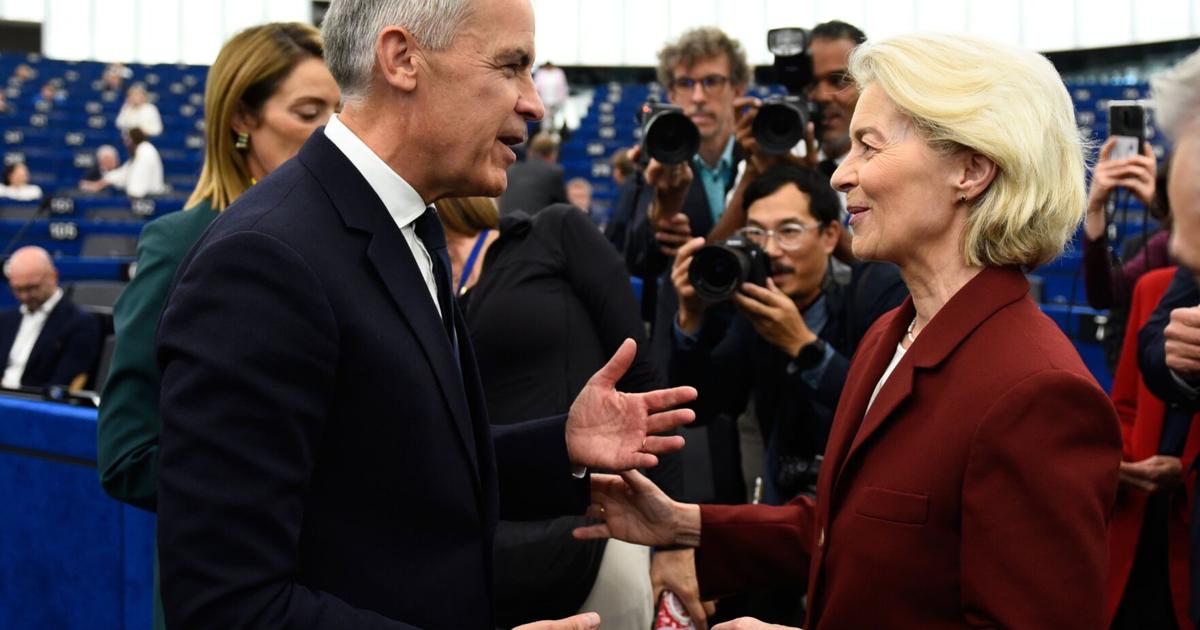
There’s no doubt that Prime Minister Mark Carney runs the show in Ottawa, writes Justin Ling.
Justin Ling is a staff columnist for the Star and an investigative journalist based in Montreal. Reach him by email: jling@thestar.ca
It’s bad form, in writing, to mix your metaphors. But this summer, speaking to an array of people in and around the Carney government, there were two I kept hearing used to describe how things work in Ottawa these days, both of them apt.
One is the ancient parable of the blind men and the elephant. Each man touches a part of the pachyderm, and each comes to different conclusion about what the mysterious object really is. The man who grabs the trunk think it’s a snake, the one holding a tusk thinks it’s a spear and so on.
Those outside the uppermost echelons of Prime Minister Mark Carney’s team see a government that moves quickly, travels everywhere and makes announcements often — but nobody is quite sure how it actually works, beyond whatever part they can reach out and touch.
The second metaphor is one I hear from staff: the Carney government is a plane that’s being built as it flies. It has a lean, purpose-built crew that had inherited a broken-down aircraft, and it’s scrambling to build something sky-worthy.
But in talking to prominent Liberals over the past few months, it’s become increasingly clear that this government is both things at once: an elephant-airplane that’s putting itself together on the fly, and that no one quite knows the shape of. It’s also a government that would rather circumvent problems than fix them.
Yet Carney can’t change Canada, never mind the world, if he doesn’t get the fundamentals right.
I’m told that when Carney took office, he was aghast at the amorphous org-chart he’d inherited. His predecessor preferred a flatter, more decentralized Prime Minister’s Office, one from which power seemed to flow out in all directions. Carney wanted a hierarchical system in which roles and responsibilities are clearly defined. In this pyramid, he is — obviously — at the top. And he is, as just about everyone told me, “a tough boss.”
The prime minister expects his staff to work as hard as he does. He is unfailingly punctual and expects others to be as well. If his staff can’t answer basic questions during briefings, he’s been known to cut them off and tersely suggest they come back when they know their files. When staff lay out a reasonable timeline for announcing a new project or releasing an upcoming strategy, he’s been heard to shoot back: “Oh, no — I need to announce this tomorrow.” He projects the image of an “old-school executive,” as one civil servant told me. And I’m told Carney’s pace and the expectations he sets are sometimes impossible to keep up with.
Carney has assumed control of a huge number of files himself. If he promises an MP funding for an Acadian festival, he’ll personally follow up on it on a flight back from a summit in Asia weeks later.
But his demands, and the tone in which he makes them, occasionally crosses into being “counterproductive,” one Liberal told me. (I heard some colourful adjectives in the course of my reporting.) In meetings, staffers have been “blown away” by the sharp tone he takes with senior advisers and certain cabinet ministers, as one told me.
This trait has made it into the press, usually cast in a negative light. But those I spoke to who have worked for Carney were unanimous: they appreciate that he expects a lot of his staff and himself. I heard again and again that it’s better to face a demanding boss who delivers results than a pleasant boss who tolerates mediocrity (which describes the previous government well). Carney is “toughest on the ones he knows the best,” an ex-staffer told me. He has yelled at Members of Parliament in caucus, two Liberals confirmed, but only after they’d failed to deliver on a specific promise.
The PMO is now run, at least culturally, like a business.
The pyramid below Carney is considerably smaller than what you’d find in a traditional government. Two Liberals estimated there are roughly 100 fewer political staffers, between the PMO and cabinet offices, in Carney’s government than there were in Trudeau’s.
Carney has already gone through one round of senior staffers, big-L Liberal advisers lacking in the private-sector gravitas the prime minister was after. “They didn’t really have a Carney decoder ring,” one source told me. Carney has spent the past year installing staffers and advisers who either understand his methods or cut a similar figure.
Marc-André Blanchard, his chief of staff, is a corporate lawyer and ex-ambassador to the United Nations who seems to rival Carney in terms of work ethic, giving the impression that he’s everywhere at all times. MPs can (and do) text him at all hours, and staffers are effusive about his ability to keep the trains running on time.
Blanchard’s opposite is Principal Secretary Scott Gilmore, a former foreign service officer, a columnist and a long-time friend of Carney’s. Gilmore was initially hired to advise on foreign policy and security, but his new job involves more political strategy, which has some Liberals puzzled, as Gilmore’s last big foray into politics was an attempt to revive the Progressive Conservative Party.
Then there’s Maia Johnson. An American, she worked on Hillary Clinton’s 2016 United States presidential campaign and was Carney’s right hand when Carney was chair of Bloomberg. She’s now Chief Operating Officer, a new title.
Johnson’s job is “process, process, process,” one Liberal told me. She knows how to get Carney what he wants when and in the form he wants it, without his needing to spell it out. “There are very few people around who can manage his —” here my source paused “— complex personality.” That’s where Johnson comes in. (The Liberals who spoke to me did so on background, as Carney’s office does not like to discuss staffing.)
Those who do well in Carney World tend to have CVs that go beyond politics. Tim Krupa was recently promoted deputy chief of staff and chief economist. Andrée-Lyne Hallé is Carney’s chief adviser on Quebec and chief surrogate to the Liberal caucus. Both worked for the Trudeau government, but both also spent time in the private sector before rejoining politics — Krupa at Goldman Sachs, Carney’s old stomping grounds.
When he needs more candid advice, Carney calls outside counsel, including Gerry Butts, a long-time friend who also served as one of Trudeau’s closest advisers and now chairs the Eurasia Group; and Bruce Anderson, a pollster and analyst. The prime minister has also consulted frequently with Jean Chrétien, who held his job for a decade.
Then, of course, there’s Diana Fox Carney. An economist in her own right, she has worked for a variety of think-tanks, focusing on international development and climate change. She’s seen as a voice of conscience reminding her husband not to forget about the climate crisis in facing a geopolitical crisis (something that doesn’t seem to be working, more progressive Liberals lament).
Most Liberals I spoke to number Carney’s inner circle in the single digits, and nobody seems entirely sure who’s on the full list of his confidants. His personal Rolodex includes a lot of very rich and powerful people, one Liberal noted, including billionaire Michael Bloomberg.
Carney also leans on Michael Sabia, his clerk of the Privy Council and the head of the civil service. Sabia had been recruited by Trudeau, too, first to run his Canadian Infrastructure Bank, then as deputy minister of finance. He lasted less than three years in the latter job — frustrated, as the Globe and Mail reported at the time, by an inability to make change — before leaving to head Hydro-Québec.
Now he’s at the helm of the entire federal bureaucracy, and he’s bringing urgency to the role, one civil servant said, adding that Carney and Sabia have made it clear there’s a “new way of operating” and that the bureaucracy is trying to “adapt.” The civil service, for example, knows Carney will read everything, albeit very quickly, so memos now contain a BLUF: a bottom line up front.
That civil servant said the bureaucracy is moving faster than many inside it had thought possible. Yet that doesn’t mean the trend will continue. “Things don’t break,” the civil servant told me. “So they keep pushing.” Eventually the system will push back.
When Carney arrived in politics, a majority of Canadians agreed with the phrase “Canada is broken.” It described worsening services, an inability to get things built, mismanagement of systems Canadians were once proud of and a general feeling that our attempted solutions only seem to make things worse.
These impressions are shared by many of those working in the Canadian government. There are far too many executives and middle managers, and the system is rife with redundancies, all making for a system that produces subpar advice, takes too long to acquire adequate technology, costs too much to run and fails to deliver on big initiatives.
Yet when Carney has slimmed down the civil service — there are about 22,000 fewer bureaucrats today than there were when he took office — the cuts have overwhelmingly been to contract, student and intern positions. This risks exacerbating brain-drain and making our bureaucracy more top-heavy.
“They’re not there to fix the public service,” one Liberal told said. Instead, Carney and Sabia have turned the Privy Council Office into an “incubator” for new agencies and offices to execute his agenda.
It’s here that Carney has installed some of his most influential operators.
When he set up the Defence Investment Agency to take over responsibility for procurement, Carney tapped former banker (and current friend) Doug Guzman. He created the Major Projects Office to shepherd big projects through thickets of government reviews and approvals, and he appointed oil and gas executive Dawn Farrell to lead it. Building homes now falls to the cleverly named Build Canada Homes, run by former Toronto deputy mayor Ana Bailão.
These bespoke agencies are set to have an enormous amount of power to approve, buy, and build things. It is a direct attempt to do an end-run around a rusty bureaucracy.
Meanwhile the team which is supposed to be responsible for whipping those departments into shape, his cabinet, is distinctly less relevant than the historical norm.
Some Carney ministers are quite influential. Energy Minister Tim Hodgson, a former colleague of Carney from Goldman Sachs, is known to be his close confidant. Housing Minister Gregor Robertson has become an internal critic, albeit a “constructive” one, of Carney’s plans for a West coast oil pipeline, sources tell me. But Carney, prickly as he can be, prefers hearing that criticism to not. “People try and tell him what he wants to hear, and he views those people as not smart,” one source told me.
This cabinet was slapped together by Carney’s previous team of advisers, and it is clearly not working. Carney has opted to divvy up some of their responsibilities, transferring them to his new team of executives and their agencies, or in some cases taken responsibility himself. He is his own foreign minister, leaving Foreign Minister Anita Anand — who is widely seen as competent but fundamentally ill-equipped for the role — to manage the less important bits of the job.
Treasury Board President Shafqat Ali — technically responsible for reforming the civil service — doesn’t seem to understand the basics of his file. Immigration Minister Lena Diab, who presides over one of the most consequential files of the moment, has been a disaster. This summer, the Canadian Muslim Public Affairs Committee — generally friendly to the government — issued an open letter calling for her firing, citing “a sustained loss of confidence in Minister Diab’s leadership.” Other ministers seem to approach their roles as part-time jobs.
Calls have been mounting for Carney to shuffle this cabinet and install more Liberals who fit his mould. But I’m told Chrétien, in particular, convinced him cabinet shuffles are more trouble than they’re worth.
Parliament has become less relevant under Carney, too. Omnibus bills, a means of ramming big legislation through the House of Commons without much debate, have returned.
Carney does regularly attend caucus meetings at which MPs pitch ideas, communicate their concerns and make requests, and he seems to take these pretty seriously. His MPs serve as a useful foghorn, warning of approaching political danger. When a group of Atlantic Canadian MPs told him tariffing seafood products was a stupid move, Carney backed down. When MPs from Toronto suggested coming out against plans to expand Billy Bishop airport, he listened.
But the fact is that his MPs have less to do, and their optimism that hard work would earn a cabinet promotion is dwindling.
In Carneyworld logic, the prime minister has only so many hours in a day to change the world. He can’t spend too many of them worrying about civil service reform or managing tricky egos.
This also helps explain his disdain for the Parliamentary Press Gallery. He has been irked, I know, by questions he deems inane — When did you last speak to President Trump? for example. Carney believes Canadian media is too fixated on process and misses the forest for the trees. (On that point, he is not entirely wrong.)
Carney does hold regular press conferences, taking 20 minutes of questions and generally providing detailed answers. Beyond that, though, there’s not much. He doesn’t do one-on-one interviews with Canadian media, preferring to talk to the New York Times or Bloomberg. (He has spoken with Bloomberg’s Ottawa bureau.) His office doesn’t explain much about what Carney is working on or plans to do next, reminiscent of former prime minister Stephen Harper’s notoriously icy relations with the press.
The difference is that Carney and his team obsessively read Canadian media. They are sensitive to criticism from it, so they’ve simply opted to go around it. Carney’s semi-frequent “Forward Guidance” YouTube videos offer perhaps the clearest insight into his thinking and plans.
“My goal,” Carney said in one of those videos, “is to explain as plainly as I can what we’re doing as your government, why we’re doing it and what we’re working to achieve.”
But as one Liberal pointed out to me: “You can get away with a lot when you’ve got a 10-point lead.”
There seems to be broad national agreement that Carney is getting things mostly right.
Even opposition leaders agreed axing talks with the Americans was wise. They all want to diversify to Europe and beyond; they all believe Canada could be the nucleus of a new middle-power alliance; and they are all in relative accord with Ottawa’s direct aid to business. The progressive parties aren’t keen on the defence spending or oil development, and the Conservatives’ main complaint seems to be that Carney won’t manage to achieve everything.
That won’t last forever. The adrenaline rush Carney and his staff are riding will end, as in every government. And Canadians expect to see changes to our broken systems, something that can happen only if Carney widens his team of competent actors.
This session of Parliament will see “the most consequential legislation,” Carney told his caucus last month, in “decades.” Not all of it will be popular — his government has some pretty controversial bills that will carry over from spring. He’ll need a competent cabinet and supportive caucus if he hopes to navigate that.
And if he wanted to manage expectations and explain failures, he would be wise to talk to Canadians — not just through press conferences, YouTube videos and the American press. Restoring Canadians’ trust in their own media should be a strategic goal unto itself. The more Carney can communicate progress, the more likely he’ll be to turn ambition into reality.
There are some indications that the Liberals are taking a beat to consider how to make their government more effective. Gilmore, I hear, is soliciting views on what’s working and what isn’t from more and more outside voices. Blanchard is canvassing for views on which cabinet ministers aren’t up to the job. And Carney himself has been talking more seriously about how to get the general public running at his pace.
If Carney can get everyone doing their jobs, get the engine tuned up and explain the bumpy ride ahead in a way that prevents his passengers from screaming, he might just get us to where we’re going in one piece.
Alternatively, if he can’t even communicate the nature of his own government, things could go awry. One version of the ancient elephant parable ends with some of the blind men arguing “the elephant is like this, not like that” and others arguing “the elephant’s not like that, it’s like this.” Unable to come to consensus, they start fighting.
Error! Sorry, there was an error processing your request.
There was a problem with the recaptcha. Please try again.
You may unsubscribe at any time. By signing up, you agree to our terms of use and privacy policy. This site is protected by reCAPTCHA and the Google privacy policy and terms of service apply.
Opinion articles are based on the author’s interpretations and judgments of facts, data and events. More details
Justin Ling is a staff columnist for the Star and an investigative journalist based in Montreal. Reach him by email: jling@thestar.ca