Judge considers restoring journalists' access to White House after Trump's ban
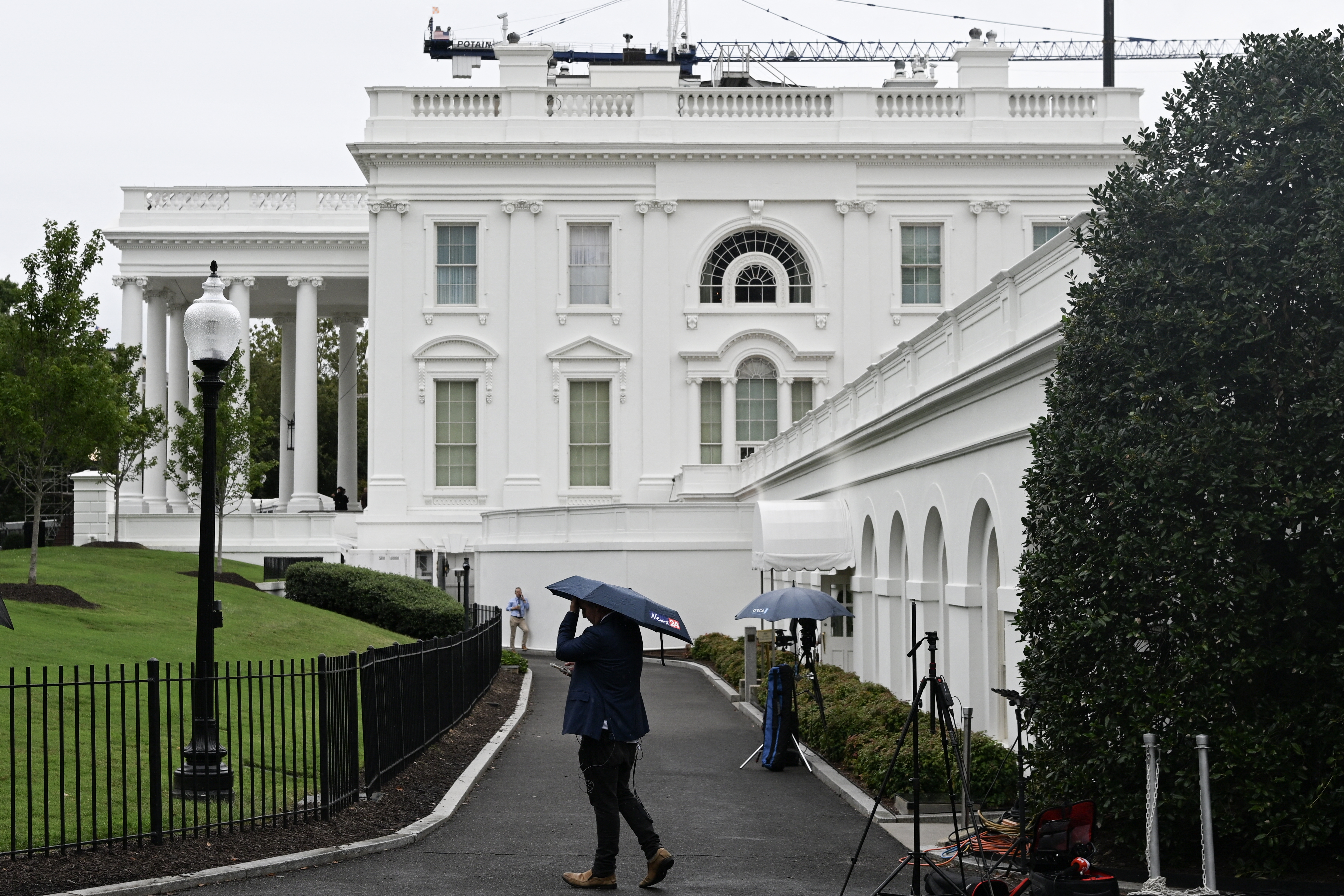
Members of the press are seen outside the White House in Washington, D.C., on Sept. 21. Alex Wroblewski/AFP via Getty Images hide caption
A federal judge appeared inclined to order the White House to restore — at least temporarily — the press passes of journalists for CNN, Politico and MS NOW (formerly MSNBC).
On Wednesday afternoon, U.S. District Judge Timothy J. Kelly, who was nominated by Trump in 2017, held an emergency hearing after the news outlets filed a lawsuit seeking to undo the ban.
In his introductory remarks, Kelly said it appeared the White House had violated the news outlets' constitutional right of due process — which was set out in previous court decisions — when it abruptly blocked the access of journalists who held permanent credentials to work in the building.
Media DOJ defends White House media ban, urges court to reject lawsuit Theodore J. Boutrous, a lawyer representing the three news outlets, said the White House ban took place " without a semblance of due process."
He also argued that the move was in violation of CNN, MS NOW and Politico's First Amendment rights and called it a form of retaliation for their coverage of the president, adding that it was "probably the clearest case in history" of viewpoint discrimination.
In threatening to ban the news outlets on Friday, Trump had told reporters at the White House, "They purposely write negative news, and they do that because they want to try and diminish the Republicans and a Republican administration."
Boutrous further contended the news organizations were suffering irreparable harm by being locked out of the White House at a time of war, and on the eve of Trump's meeting with Chinese President Xi Jinping at the White House.
Politics White House launches 'Trump TV' after ban on major news outlets " The constitutional violation is against the public interest," he said.
Justice Department lawyer Michael Velchik, on the other hand, argued that access to the White House was a "privilege," not a right. He also cited national security concerns as a reason for the continued ban. In its legal filings, the department had included White House letters to the three news organizations taking issue with stories on a variety of topics, including construction of a "top secret" bunker under the White House ballroom, talks with Iran and whether there were "very bad" vibes at the recent Republican convention in Dallas.
Boutrous pushed back on the claim, asserting that the first mention of national security came only days after the ban was imposed.
" I guess the light bulb went off and they all decided 'Start talking about national security,'" Boutrous said.
Kelly did not rule from the bench, adding that he will consider both sides and make a decision as soon as possible.
NPR does not offer or accept money for coverage or interviews. Anyone who makes such an offer or request is not an NPR employee and does not represent NPR.